


Even before I started deer hunting, I had a pretty good idea about home meat processing. My college buddy Steve had killed a small buck on public land outside of Kirksville, and he requested my help to retrieve it and get it to his dad for butchering.
The dad, Big Ken, was a union meat cutter for National supermarkets and a virtual magician with a boning knife. I watched in awe as he turned that carcass into steaks, chops, roasts, and a pan of meat that would become ground venison and eventually, delicious deer bratwursts.
That was not my first introduction to dead animal amelioration. Every fall and winter of my childhood, we would go to my grandparents’ farm near High Ridge to butcher hogs and beef cattle. I eventually worked my way up from a little kid in everyone’s way to operating the grinder, skinning, fat trimming, and strong-boy sawing.
In addition, I knew how to turn the squirrels, rabbits, and doves we shot into table fare. Similarly I could wield a knife for cleaning fish, turtles, or frogs. Still, when I saw the state Department of Conservation offering a free program about converting a dead deer into suppertime staples, I signed up.
Field to Freezer is offered annually at the Jay Henges Shooting Range and Outdoor Education Center near High Ridge. This year the presentation is scheduled from 6 to 8 p.m. on Tuesday, Oct. 4. Pre-registration is required through the online link at short.mdc.mo.gov/4cX.
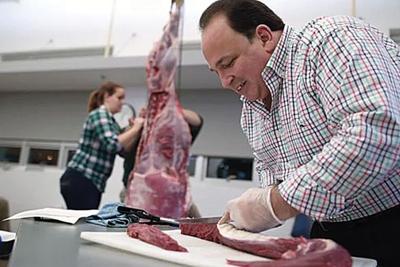
Led by local processors and conservation department staff, those who attend the program will see a step-by-step demonstration that takes the deer apart piece by piece. Beginning with a discussion about field dressing techniques, participants can watch how to skin and butcher their own venison.
The program will highlight equipment that makes each step easier with a focus on safety, not only with the sharp objects, but also in making sure the meat doesn’t get contaminated and how to prepare packages for long-term storage.
In the session I attended a couple of years ago, the most common concern was how quickly the hunter had to act in the field to make sure the food source stayed safe. Obviously it is more essential earlier in hunting seasons. Bowhunters last week had a chance to harvest their buck on days when the heat index topped 100 in Missouri.
The cooling process begins with field dressing. Opening the body cavity and removing the internal organs allows the body temperature to decrease more rapidly. During the November portion of the firearms season, it is usually much cooler, but any delay should be avoided if possible. Putting blocks of ice, like frozen water-filled milk jugs, inside the deer can offer some protection, but getting the job done efficiently is the best strategy.
Removing the hide makes a significant difference in the meat’s ability to dissipate body heat. As is the case with squirrels, rabbits and other small game, the sooner you can begin skinning your deer, the easier it will go.
A few years ago I started using a procedure that skips the field dressing process. The “gutless” method is used most frequently for those hunting in remote areas where hauling the entire animal out is difficult. It is also an option for hunting in areas with chronic wasting disease because carcasses should not be removed from those management locations.
A conservation department video shows the process, which starts with skinning and removing the back-strap muscles. Each of the four legs (quarters) are removed without opening the body cavity. I keep unscented plastic trash bags for temporary storage to get the meat to cleaning with a cool water rinse and eventual refrigeration.
Removing the meat from the bones is the final step before grinding or cooking. The Field to Freezer program identifies specific cuts of venison and explains which are best for the grinder. To turn those parts into chili, spaghetti, bratwursts or summer sausages, you have to rely on your own special recipes.
John Winkelman has been writing about outdoors news and issues in Jefferson County for more than 30 years and is the Associate Editor for Outdoor Guide Magazine. If you have story ideas for the Leader outdoor news page, e-mail ogmjohnw@aol.com, and you can find more outdoor news and updates at johnjwink.com.