


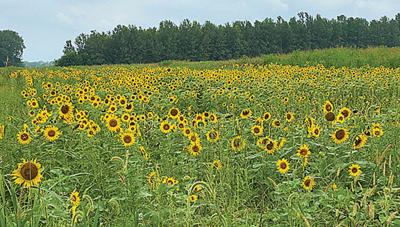

This time last year I wrote about the sunflowers at Columbia Bottom Conservation Area. The big blooms are a magnet for photographers in the late summer and a productive destination for dove hunters in the fall.
Those two things are not going to change, but a big conversion is coming for one of the largest tracts of public land in the St. Louis region. The state Department of Conservation has decided to turn much of the management of Columbia Bottom over to Mother Nature.
The combined forces of the Missouri and Mississippi rivers have always dominated the area. After historic river levels in 1993 and 1995 swamped the land at the confluence, the conservation department purchased the 4,318-acre area for public use in 1997.
Over the next 10 years the state implemented a vision to bring conservation education and outdoor activity opportunities to an urban corner of the metro area. Then a decade of high-water events devastated those efforts and cost the department a lot of money in a repetitive cycle of damage and repairs.
Floods in 2008, 2013, 2015, 2017 and 2019 caused closures of the area, and even after the waters receded, silt, debris and damage were left in their wake. The area was under water for six months in 2019 and sediment from the flooding measured as high as four feet deep in some areas.
A major component of the new plan is to remove portions of levees built to control the river flows and allow the area to flood naturally. The change will return the bottom land to its original wetland status, allowing it to hold and slow down flood waters.
A new levee will be built at the southern end of the property to protect downstream neighbors, but more than 3,500 acres of the area will be allowed to return to their traditional floodplain functions. The $27 million project will be paid for by the conservation department and American Rescue Plan Act funds.
By abandoning the strategy of artificially flooding areas of the property to create wetlands pools for waterfowl hunting, the state will save the cost of replacing the damaged river pumping system and dredging the ponds. Instead the department will manage duck and goose hunting opportunities by planting winter-wheat fields that would flood naturally in wet weather.
Planting and manipulating sunflowers and other small grain crops that attract doves will continue as part of the new management plan. Dove hunting season opens on Sept. 1 and continues through Nov. 29. The daily limit is 15 and the possession limit 45. Hunters are required to have a small-game permit and an annual migratory bird hunting permit.
Sunflower plantings for doves attract more than just migratory birds. Photographers and other visitors flock to the area looking for wildlife. By allowing the river and low-lying lands to revert to their inconsistent traditional cycles of high-water flows, benefits are expected for fish, migratory birds, plants, amphibians, reptiles and other wetland-dependent species.
Reports and photos I have seen of the sunflower bloom this year have looked very good despite the dry stretch of midsummer. When we were there last year, we also enjoyed looking for the less obvious attractions, like wildflowers and pollinators. Those opportunities are likely to increase significantly with the future management plans.
John Winkelman has been writing about outdoors news and issues in Jefferson County for more than 30 years and is the Associate Editor for Outdoor Guide Magazine. If you have story ideas for the Leader outdoor news page, e-mail ogmjohnw@aol.com, and you can find more outdoor news and updates at johnjwink.com.