


The big question about chronic wasting disease in deer is its potential to infect humans. While the standard answer is “there is no evidence” that it can spread between species, I know that at the very least, my obsession with CWD can be described as unhealthy.
Fortunately the deer I shot this year tested negative for the degenerative brain disease, so we are enjoying the fruits of the fall hunting season in delicious tenderloins, lean ground venison and homemade summer sausage.
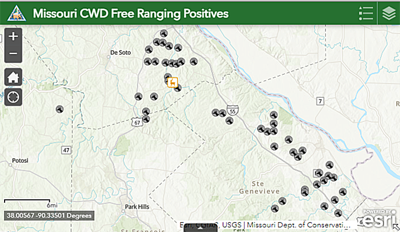
Even though my deer came back clear, I can’t keep from checking the surveillance information posted online by the state Department of Conservation at mdc.mo.gov/cwd. During a cursory glance last week, I was surprised to see the first positive test in the state this year showed up in southern Jefferson County, very near the place CWD was discovered locally in 2016.
The result was based on a test submitted voluntarily by a hunter. The only mandatory sampling is conducted during the first two days of the November portion of firearms hunting season, and those results had not been posted to the state website prior to Thanksgiving.
The hundreds of deer that were delivered to the stations set up in Herculaneum, De Soto and Cedar Hill, and throughout management zones statewide, will inflate the data in the coming days. The volume of deer harvest Nov. 11-12 is the reason for the mandatory testing that weekend. Statewide, hunters checked more than 90,000 deer in those two days, providing many tissue samples and causing a backlog at the testing lab.
The other detail that stands out in the data posted earlier this month is the first-ever positive test for Randolph County, directly south of Linn and Macon counties, where the first case of CWD was discovered in the state in 2012. That region is still one of the hot spots in the state, so it is a little surprising that Randolph County deer had skirted detection until now.
The three-county combinations of Linn, Macon and Adair in north central Missouri, and Jefferson, Franklin and Ste. Genevieve close to home, account for about two thirds of the 400-plus positive tests in the state. Everyone who harvests deer in those areas should be taking advantage of the voluntary sampling options.
Similar to mad cow disease, symptoms of CWD in deer and elk include excessive salivation, drooping head, tremors, emaciation, lack of coordination, and change in behavior. The disease is transmissible from deer-to-deer and is always fatal, but it can take up to two years before an infected animal begins to display symptoms and eventually die.
The conservation department’s information indicates that while there are no reported cases of CWD in humans, some studies raise concern about the potential risks. The federal Centers for Disease Control and Prevention recommends that hunters strongly consider getting deer tested, especially those harvested in areas where the disease has been found in the past.
Other suggested precautions include not eating meat from an animal that tests positive; not shooting or handling a deer or elk that appears sick; wearing rubber or latex gloves while field- dressing or processing harvested deer; minimizing handling of internal organs and brain or spinal tissue, and not using household knives or other kitchen utensils for field-dressing harvested animals.
The state’s popular Share the Harvest program, which enables hunters to donate venison through approved processors, requires that deer taken in any of the management zones be tested. John’s Butcher Shoppee in Festus is the only processor in Jefferson County in the CWD testing and Share the Harvest program.
With more than 50 of the state’s counties already included in management zones this year, and the certain addition of Randolph County next year, more than half of the state is likely to be included in future testing. Interested observers can keep track of the disease on the conservation department’s online map, but be forewarned, the information can be addictive.
John Winkelman has been writing about outdoors news and issues in Jefferson County for more than 30 years and is the Associate Editor for Outdoor Guide Magazine. If you have story ideas for the Leader outdoor news page, e-mail ogmjohnw@aol.com, and you can find more outdoor news and updates at johnjwink.com.