


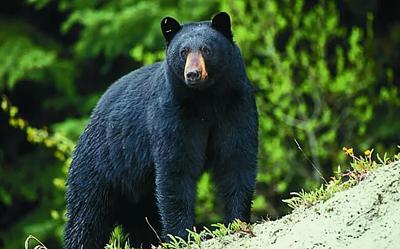
Although it doesn’t quite match the anticipation of annual visits by the Easter Bunny and Santa Claus, Jefferson County residents should prepare for another visitor who could appear any day. When he does, there is bound to be a lot of excitement.
Over the past decade our area has been the wanderlust target of at least one young black bear each year. Prior to that their visits were not as frequent, but a few centuries ago they were likely more common than people in these parts.
A map on the state Department of Conservation website shows Jefferson County in the “core range” for black bears in Missouri. Another map there highlights locations where black bears were recently sighted throughout the state. A zoom tool allows users to identify 15 spots inside the county lines.
Most of those visits took place in late May or early June. Each spring the conservation department issues a press release encouraging area residents to be “Bear Aware,” with a trite tagline, “a fed bear is a dead bear.” When people provide easy access to food, knowingly or not, it increases the potential for nuisance interactions.
“When bears lose their fear of humans, they could approach people in search of food or become defensive around food sources or territory they associate with people, which can make them dangerous,” said Nate Bowersock, state black bear biologist. “When this happens, the bear cannot be relocated and has to be destroyed.”
The spring visitors to Jefferson County are almost exclusively young males being dispersed by their mothers. The baby bruins are looking for new territories with adequate habitat to claim as their own. To prevent inadvertent feeding, the first step is to eliminate easy-to-reach treats.
The conservation department provides these additional tips:
■ Store garbage, recyclables and compost inside a secure building until trash pick-up day.
■ Keep grills and smokers clean and store them inside.
■ Don’t leave pet food outside. Feed pets a portion at each meal and remove the empty containers.
■ Refrain from using bird feeders in bear country from April through November.
■ Use electric fencing to keep bears away from beehives, chicken coops, vegetable gardens, orchards and other potential food sources.
Local residents who plan summer camping trips into the Ozarks need to be even more vigilant. An estimated 900 black bears call the deep woods of south-central Missouri their home. Campsites should be kept clean, and all food, toiletries and trash should be stored in a secure vehicle or strung high between two trees. Do not keep food or toiletries in a tent, and do not burn or bury garbage or food waste.
The state also offers a cooperative, multi-state educational resource called BearWise to help prevent run-ins with bears. The bearwise.org website features easy-to-navigate information, tips for gardeners and pet owners, educational materials, and more.
In addition to the maps, the conservation department website includes links to report bear sightings, a state research project and the 30-page Black Bear Management Plan. Coincidental to the annual spring dispersal, the application period for hunters who want to participate in a drawing for hunting permits is open all May. The state will issue 400 permits and have harvest quota of up to 40 bears across three management zones. The season will be open from Oct. 16-25, unless the quota for each zone is filled sooner.
For more information on black bears in Missouri, visit mdc.mo.gov.
John Winkelman has been writing about outdoors news and issues in Jefferson County for more than 30 years and is the Associate Editor for Outdoor Guide Magazine. If you have story ideas for the Leader outdoor news page, e-mail ogmjohnw@aol.com, and you can find more outdoor news and updates at johnjwink.com.