


Occasionally, I get asked by local civic organizations or other clubs to talk about the wonders of the outdoor world. I don’t consider myself an expert at anything, but I’ve been around long enough to know a little about a lot of stuff that happens in Missouri’s woods and waters.
This week I was invited to the High Ridge Rotary Club luncheon to share some insights on the armadillos that are becoming more noticeable along Hwy. 30 and throughout Jefferson County and the entire Midwest, for that matter.
Traditionally considered a creature of the southeastern U.S., we expect to see them in places like Texas, Oklahoma, and Florida. But since the mid-1970s they have found hospitable homes in the Show-Me State. Reported sightings have been documented in all but a few northeastern counties, all the way to Iowa.
Their migration progress is limited by their aversion to cold weather. They have very little hair and limited body fat, so extended periods of freezing temperatures are often referred to as “dilla killas.” In addition to shivering their timbers, winter’s rock-solid frozen earth limits armadillos’ ability to dig up the worms and insect larva that make up most of their diet.
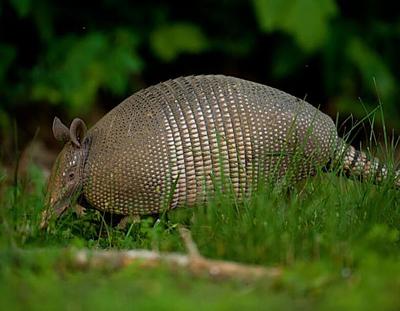
Officially known as nine-banded armadillos, they get their name from the nine movable hard plates that fit together between their shoulders and hips. They are very similar in size to our more common Virginia opossum. Averaging about two feet long, including a tail that is almost half of its body length, adult armadillos weigh between 10 and 15 pounds.
In addition to seeing them as roadkill all over the county, they are frequently recognized by the yard damage they leave behind when they dig for food. Small v-shaped holes may be up to three inches deep and five inches across. They appreciate well-watered lawns for the easy excavation.
Because they are primarily nocturnal, especially in the summertime, live armadillos are rarely sighted. As their population and range continues to expand, more interactions are likely, and that will mean more roadkill to come, thanks to one of several peculiarities about the critters.
When startled, an armadillo frequently leaps straight up into the air. Whether such a defensive maneuver is meant to make itself appear larger or get a jump start on fleeing, it is a poor strategy in the path of an oncoming vehicle.
One curious armadillo fact has to do with their reproduction. Breeding takes place in the summer, but pregnancy doesn’t occur immediately. During the months-long delay, the embryo divides into four cells before being implanted into the uterus, resulting in four genetically identical quadruplets born the following spring.
The armadillo’s other claim to fame, if you can call it that, is its proclivity to contract and carry the leprosy bacterium. The state Department of Conservation reports no confirmed cases of disease transmission to humans in Missouri. But they recommend using gloves when handling armadillos (alive or dead) and thoroughly cooking the meat before eating. (I’m quite certain I would prefer going hungry to dining on a “Hoover hog,” regardless of how well prepared; the nickname comes from the many impoverished Americans who ate armadillos out of necessity during the Great Depression, in the 1929-1933 presidency of Herbert Hoover.)
Armadillos can be caught in traps, but they are not often attracted to bait like other mammals. The recommended set-up includes using long boards to funnel them to the cage’s door. With their poor eyesight, they bump themselves along the borders and into the opening.
The Wildlife Code of Missouri allows landowners to use lethal methods for controlling wild animals that are causing property damage. Depending on local ordinances, shooting is permitted as a method of last resort.
Other than the rough lawn aeration, the primary trouble caused by armadillos is when they dig their burrows under buildings, sidewalks or patios that provide substantial protection at the tunnel opening. The burrows are about eight inches in diameter and can be up to 15 feet long.
One of my favorite discussion topics is invasive species, but armadillos don’t officially qualify as such. They are not displacing or negatively affecting the plants and animals that have evolved with the area. The benefits they provide include insect control and use in leprosy research.