
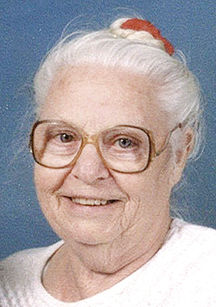
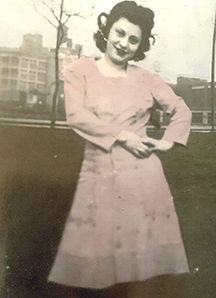
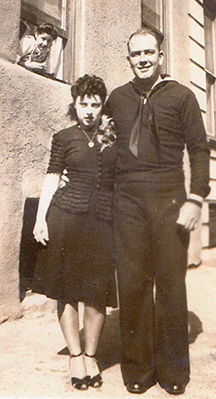
About four years ago, George Chance was headed to visit his mother, Frances “Billy” Chance, at home when he found her walking briskly down the road.
“I said, ‘Mom, you out for a walk?’ and she said, ‘No; I’m going up to help a lady with her eye drops.’
“That was my mom. She was still helping people clean houses, run errands, whatever she could, at 90 years old.”
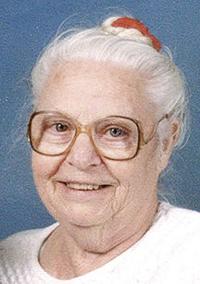
Mrs. Chance died May 4 at age 94 of complications from COVID-19.
She grew up in Philadelphia, the fourth of seven sisters whose father was a racehorse owner/trainer.
“They were South Philly poor,” George said. “His whole life he bought and sold horses on the eastern racing circuit. He never really made any money at it.”
After graduating from high school, young Frances went to work at the U.S. Mint as a press operator.
“She did that for a few years, but as soon as the Japanese bombed Pearl Harbor, she went down to the naval shipyard and volunteered,” George said. “They trained her to be a welder, and she worked three years. Because of her small stature, she could get in places men couldn't go.”
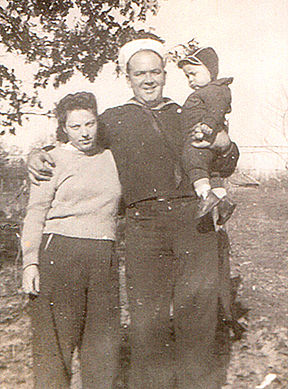
In the shipyards, she met George Chance, a sailor who had been on the USS Utah when it was sunk at Pearl Harbor. They were married in 1944, and baby George was born in October 1945.
The family lived in Chicago for a time, then moved to a log cabin in Caledonia, near where the older George had grown up.
“It had no electric, no bathroom, no running water,” George said. “I remember my mom – a city girl – cooking on a wood stove every day and loving it.
“When my brother was born, they paid the doctor with a pig.”
In 1954, the family moved to Horine.
“My dad went to work at National Lead, where the River City casino is now,” George said. “He worked there 27 years, and ran a little repair shop out of our house. My mother was a stay-at-home mom. They both wanted that.”
George remembers an “almost perfect” childhood, with his mother serving as surrogate mom to all the neighborhood kids.
“There were always kids at our house, learning to fish and trap from my dad. My mom fed them all, of course, sewed patches on their Scout uniforms, anything they needed.”
George said his mom was a good sport about most of her sons’ activities.
“The only thing she asked us to do was clean our pockets before we put our clothes in the hamper,” he said. “She’d say, ‘I don’t want to find worms and grass and who knows what in the washer.’”
After a few years, the family made improvements to the house, even adding a telephone in 1963.
“They went to the National Lead Credit Union to borrow $1,000, and they took us kids along,” George said. “My mom showed it to us – $1,000 in cash in an envelope – and asked, ‘Did you ever see a thousand dollars in one place?’ Shoot, I had hardly seen $10.”
He said the money funded the addition of storm windows and an electric well pump, enabling indoor plumbing.
Mrs. Chance was an enthusiastic gardener.
“She would can hundreds of quarts of stuff each summer,” George said. “Beans, corn, potatoes, different fruits – she did a little bit of everything.
“And cook? She could make a box of rocks taste good. Anything we'd catch, she'd cook.”
With one condition, however.
“She told us all up front, ‘I am not cleaning fish.’ But she would cook them.”
George said his mother was a deeply faithful woman, although not religious.
“She'd talk to anybody about what the Lord had done in her life,” he said. “Not preachy or aggressively, just gently.
A guy came to her funeral and he said, ‘You don't know me, but she talked to me so many hours after I came home from Vietnam. I was on drugs and she talked with me and helped me get straightened out.”
In her early 90s, Mrs. Chance began slowing down a bit, and went to live at Festus Manor nursing home in 2018.
“She started to not be able to remember things,” George said. “She had aches and pains in her joints, and the dementia got worse.”
But even then, she remained mentally sharp in some ways.
“A hospice nurse came in not long ago and asked Mom if her parents were alive and my mom said no,” George said. “Then she asked Mom if she knew what her father had died from, and mom said, ‘Amyotrophic lateral sclerosis.’ Just reeled it off like a doctor.”
Mrs. Chance had been on long-term hospice for several months before the coronavirus pandemic hit.
“She tested negative at first,” George said. “Then they called one day and said she had come up positive and they would have to move her over to the quarantine ward.
“She died on the third day of treatment. Her lungs weren't great anyway, and her 94-year-old body just couldn't fight it.”
George said his mother’s funeral wasn’t sad.
“This sounds strange, but it was a joyous occasion,” he said. “She looked happy. She had said, so many times, ‘I need to go be with Dad.’ and that was that.
“She had no aspirations to be famous; she just wanted to be a good wife and a good mom.”
“Life Story,” posted Saturdays on Leader Publications’ website, focuses on one individual’s impact on his or her community.