


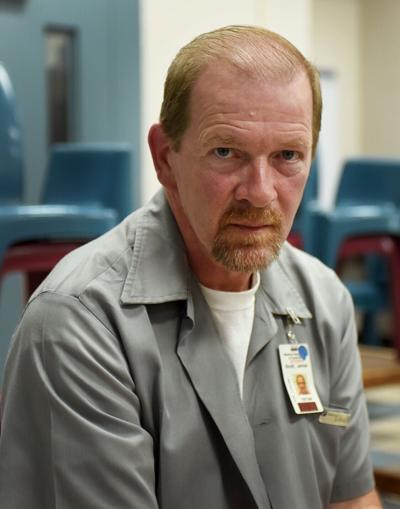


James Scott was granted parole Tuesday, but he must wait two years before he walks out of the Jefferson City Correctional Center.
Scott was sentenced to life in prison after being convicted of starting the Great Flood of 1993. Since then, he has been incarcerated for 33 years.
His parole date was set for July 6, 2028, according to a friend who stood in for his family during the hearing. Adam Pitluk said he spoke with Scott over the phone Tuesday after the decision was delivered by the Missouri Board of Probation and Parole.
Once he is released, Pitluk said Scott has a list of things he wants to accomplish, including a visit to the graves of his parents and a brother, who have died since he was sentenced to prison.
“There’s a lot of changes he’s got to get used to,” Pitluk said. “But he’s excited to learn. He wants to put his feet in the ocean for the first time. He’s never been to a mountain. He's never been in an airplane.”
Scott, now 56, was 24 when he joined a sandbag crew to combat floodwaters near West Quincy in 1993. While he was loading bags onto a levee, he noticed a trouble spot, transferred several bags from another spot in the levee, notified the National Guard and walked away.
Later that day, that levee failed, and the Mississippi River burst through, flooding the town. Over the next three months, the flood destroyed 20 million acres of land across nine Midwestern states.
Scott was prosecuted under a 1979 Missouri law that makes it a crime to purposefully cause a catastrophe. He became eligible for parole in 2011, although his first hearing was not held until this summer.
Scott was “very excited” about the board’s decision, Pitluk said. “He wanted to thank everybody who's ridden with him on this journey for all these years, and he doesn’t even know how to thank everybody,” he said.
Pitluk, a professor in South Carolina, published a book in 2007 called “Damned to Eternity: The Story of the Man They Say Caused the Flood,” which explores Scott's case. He covered the trial while he was a student at the University of Missouri School of Journalism.
During the parole hearing, members of the parole board questioned Scott about his actions during the flood, his previous charges of arson and burglary and his plan forward should he be given his freedom.
The board shared a file of Scott’s record, Pitluk said, which contained 42 certificates of positive behavior and four violations of prison policies.
He said he believes the parole date could potentially be pushed earlier than 2028 or that Scott could also be moved to a lower-security prison.