

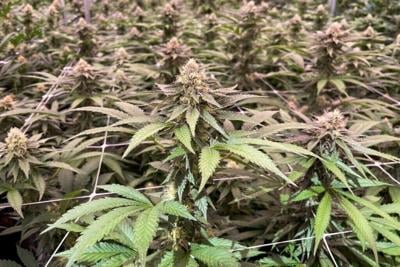
The first state-funded study since cannabis was legalized for recreational use in November 2022 found that Missouri’s regulated market has captured 93% of all marijuana transactions, and sales are evenly distributed across the state.
The study also found that most consumers purchase flower or “weed” rather than alternatives, and monthly expenditures among all cannabis products averages $161.18 per consumer.
Their purchasing decisions are largely driven by price, convenience and strength of the psychoactive substance THC, according to the study results.
Overall, the study concluded that the cannabis market is stable and consumers are satisfied with the legal supply available in the state.
Marijuana in Missouri
Missouri has recognized medical marijuana as legal since 2018, and recreational marijuana became legally available to buy in February 2023. Most adults age 21 and older can possess up to 3 ounces of cannabis without penalty.
Dispensary licenses have since been distributed equally across the state’s eight U.S. congressional districts. The law also mandates a lottery system that will issue licenses to microbusinesses, with priority given to low-income applicants and those harmed by the long history of marijuana prohibition.
The recent study was commissioned by the Missouri Department of Health and Senior Services to look at consumer purchasing behavior and market conditions in the state’s regulated cannabis industry.
Key findings
The sample consisted of 1,200 Missouri residents who had legally used cannabis within the past 30 days.
Among the study’s key findings:
- Legal dispensaries capture about 93% of money spent on cannabis in Missouri.
- Flower makes up about half of cannabis spending, followed by vape products and edibles.
- Medical patients use more and spend more on cannabis products than recreational users across almost every category.
- Price, THC strength and convenience are the driving sales factors for consumers, rather than legal status.
- Although spending habits differ by region, legal dispensaries account for more than 90% of cannabis spending in every congressional district, proving that legal access is strong across the state.
- Based on the data within the study, Missouri’s legal cannabis sales remain competitive with no signs of overconcentration.
Based on the key findings, the study recommended a set of policy considerations for cannabis regulation.
Recommendations
Going into the study, a possible outcome was to consider removing the fixed caps on licenses and let the market determine store locations.
One recommendation from the study suggests that the state drop rules tying cannabis licenses to population limits and congressional districts. Instead, future store openings should be guided by consumer demand and market conditions to boost competition, improve efficiency and let the market adapt naturally.
Study results recommend issuing new dispensary licenses only in congressional districts with higher market concentration in order to boost competition where it is needed. This would also improve consumer access and help decrease prices.
Findings from the study indicate that consumers rarely use alternative cannabis products, and there is little evidence showing that they are taking customers away from Missouri’s legal customer market.
Continued monitoring is advised as federal policies and consumer habits change.