





When it comes to using plants to decorate for the Halloween season, by far the most popular is the carved pumpkin, or jack-o’-lantern. Americans are projected to spend more than $800 million on Halloween pumpkins this year, University of Missouri Extension horticulturist David Trinklein said.
According to the History Channel’s website, Americans can thank Irish immigrants for our Halloween pumpkin-carving tradition.
The practice comes from the Irish myth of “Stingy Jack,” a tale about a cruel ne’er-do-well who tricked the devil into agreeing not to take his soul. Upon his death years later, Stingy Jack was not allowed into heaven. He then went to hell but was barred entrance there, too, due to the devil’s promise. Stingy Jack was then cursed to wander forever in the dark netherworld between heaven and hell with only a lump of coal from the fires of hell inside a carved-out turnip to light his way.
Irish people began to make their own versions of Stingy Jack’s lantern by carving scary faces into turnips and placing them in windows and near doors to frighten away Stingy Jack and other evil spirits during the Celtic festival of Samhain, which also is celebrated on Oct. 31. After coming to America, Irish immigrants found pumpkins to be larger and easier to carve than turnips and a new tradition was born.
According to Consumer Reports, approximately 44 percent of Americans carve a pumpkin each year.
Other scary plants
While a carved pumpkin is the king of Halloween decorations, there are other spooky plant options for those feeling a little more adventurous, but beware because many of them are poisonous.

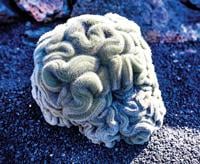
Brain cactus (Mammillaria elongata) is native to central Mexico and is named for its resemblance to the folded wrinkles of the brain.
■ The brain cactus, native to central Mexico, is named for its resemblance to the folded wrinkles of the brain. The plant is covered in hairy spines and grows to be approximately 6 inches tall. It thrives in warm environments with full sun and requires little water. Missouri gardeners may grow the brain cactus indoors.
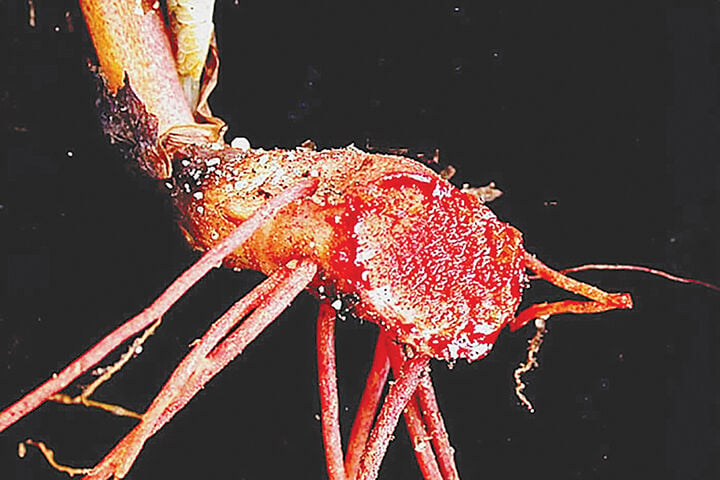
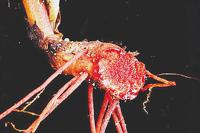
Bloodroot (Sanguinaria canadensis) is native to Missouri woodland areas. Its roots exude a poisonous red juice that can cause rashes and scabs if it touches the skin.
■ Bloodroot is native to eastern North America and can be found in many areas throughout Missouri, usually in woodland areas and near streams. While the plant creates white-petaled flowers with yellow centers in the spring, hiding under the ground are roots that exude a poisonous red juice that can cause rashes and scabs if it touches the skin.
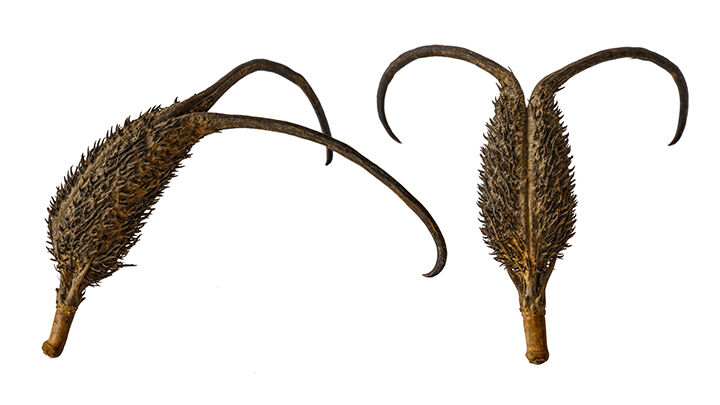
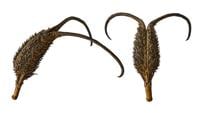
Devil’s claw (Proboscidea louisianica) is said to have a distinctive acrid odor. After the fruit of the plant has fallen away, the remaining long, curving, claw-like pods split into two horns that entangle easily into the fur of passing animals.
■ Devil’s claw is native to North America and can be found along the Missouri River and in some southern counties in the state.
The plant has lobed lavender-colored flowers with yellow nectar guides in the center. The plant is said to have a distinctive acrid odor. After the plant’s fruit has fallen away, the remaining long, curving, claw-like pods split into two horns that easily become entangled in the fur of passing animals.
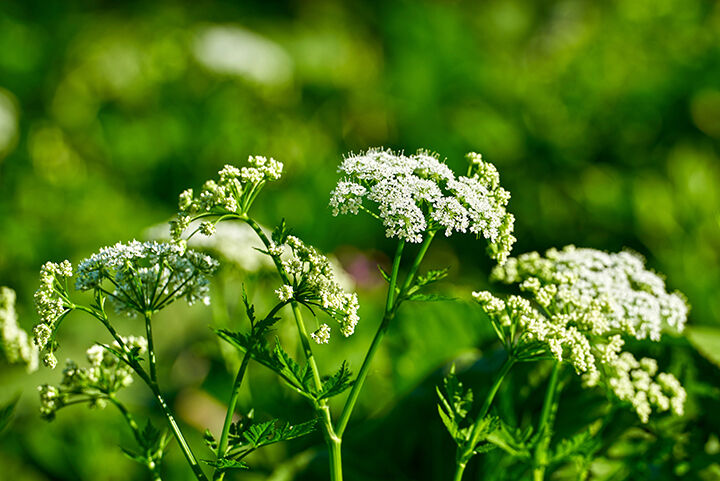
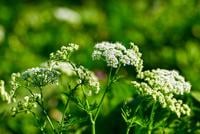
All parts of the poison hemlock (Conium maculatum) are toxic, but the seeds and roots are especially so. The hollow stems can remain deadly for up to three years after the plant has died.
■ As the name indicates, poison hemlock is a highly poisonous plant. It is native to Europe but can be found in North America, including in Missouri. All parts of the plant are toxic, but especially the seeds and roots. The plant can grow up to 10 feet high, and the hollow stems can remain deadly for up to three years after the plant dies. According to the Missouri Poison Center, hemlock poisoning is more common among livestock, which may ingest it while grazing in fields, than in humans.
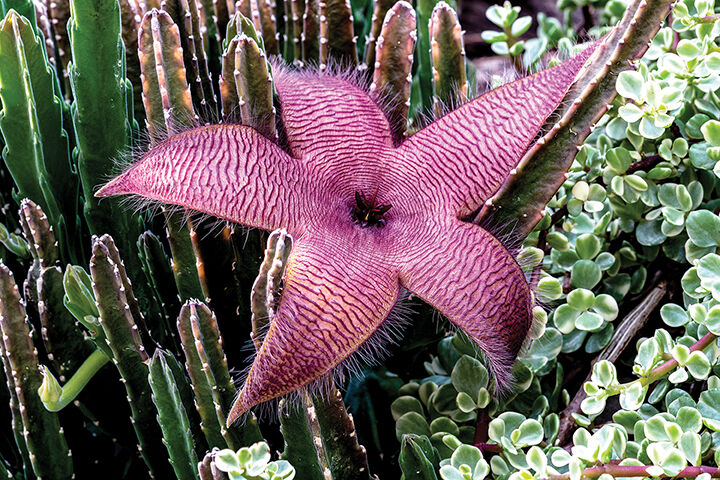
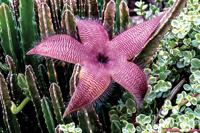
The carrion plant (Stapelia gigantea) is a star shaped flower which produces an odor that smells of rotting flesh to attract flies for pollination. The plant is native to southern Africa but can be found in public green houses such as the Missouri Botanical Garden.
■ The carrion plant is a star-shaped flower that produces an odor like rotting flesh to attract flies for pollination. The plant is native to southern Africa but can be found in public greenhouses, like the Missouri Botanical Garden in St. Louis.

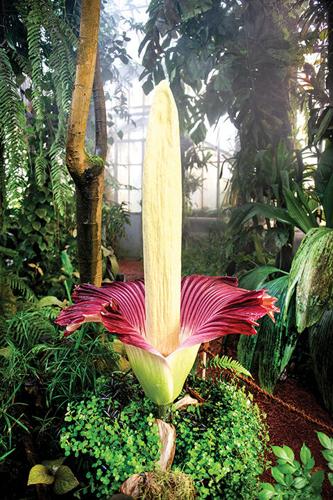
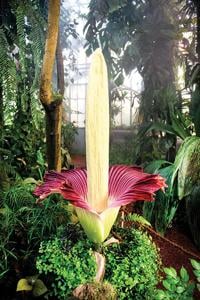
Visitors flocked to the Missouri Botanical Garden in August to see (and smell) the corpse flower (Amorphophallus titanium) in bloom. Its 8-foot tall flower has a strong, putrid odor.
■ Another odoriferous plant, the corpse flower, is a large Indonesian plant that, after five to 10 years, can produce an 8-foot tall flower. At its peak bloom, the flower has a strong, putrid odor that lasts about six to 12 hours. The blooming of a corpse flower is a highly anticipated event at the Missouri Botanical Garden, where the last blooming occurred in August.

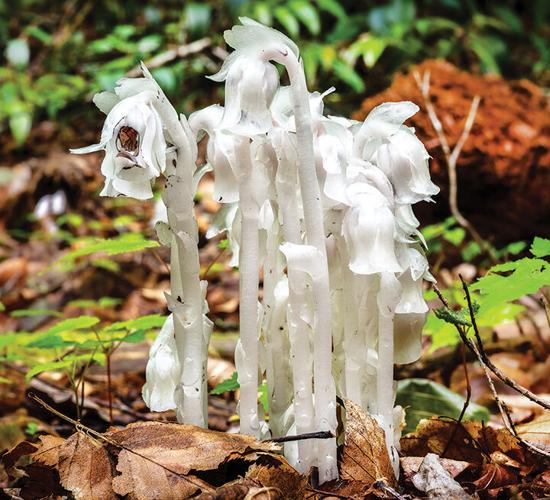
The spooky ghost plant (Monotropa uniflora) contains no chlorophyll and can often be translucent, giving it a ghostly appearance.
■ The spooky ghost plant can be found growing in Asia, South America and North America, including in Missouri, mostly in shady areas. The waxy white clusters typically are under 1 foot tall. The plants often look translucent, giving them a ghostly appearance, because they do not contain chlorophyll, the substance that gives plants their green color.
Other spooky plants not mentioned in Mizzou’s list that Missouri gardeners might be interested in include wolfsbane, doll’s eyes and black mondo grass.

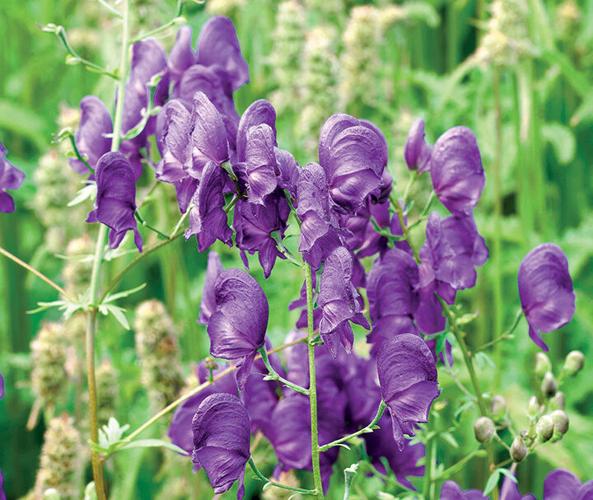
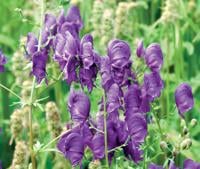
Aconitum (Aconitum napellus), also known as wolfsbane, is extremely poisonous, with the roots having the most toxins.
■ Aconitum, also known as wolfsbane, has large blue, purple, white, yellow or pink flowers. It can be found in mountainous areas in Asia, Europe and North America and has been reported on rare occasions in Missouri. The plant is extremely poisonous, with the roots containing the most toxins, and must be handled very carefully, according to the Missouri Poison Center.
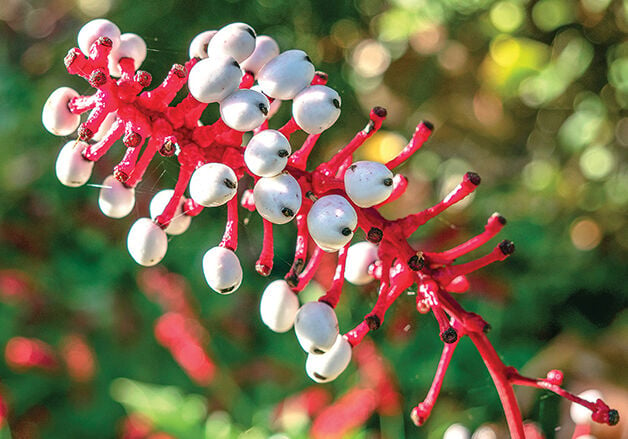
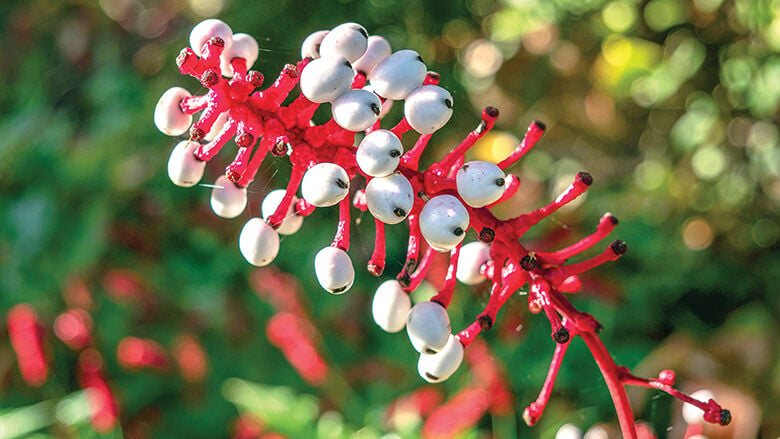
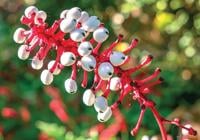
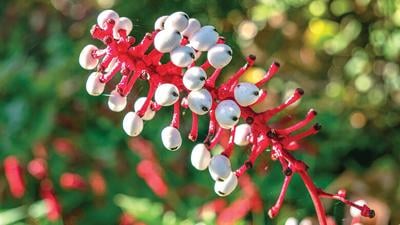
Delicate and deadly, the doll’s eyes plant (Actaea pachypoda), found in forests in Missouri, contains toxins that, if ingested, can lead to cardiac arrest and even death.
■ The doll’s eyes plant, also known as white baneberry, is native to North America and may be found in Missouri forests. The plant has white berries with purplish-black “eyes” at the end of red stalks. According to the Missouri Department of Conservation, the doll’s eye plant is toxic, and ingesting the berries or stems may lead to cardiac arrest and death.

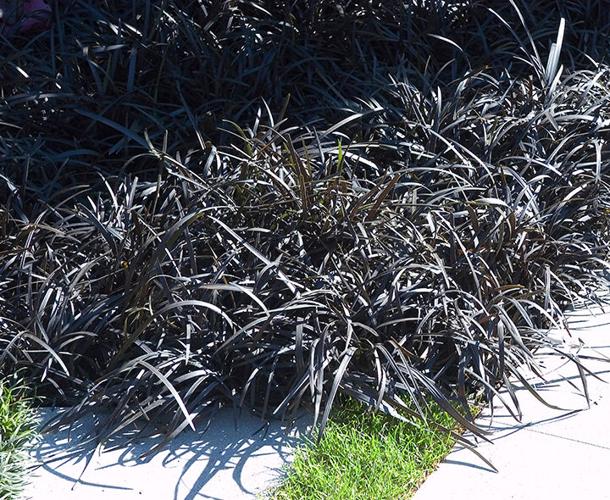
Black Mondo Grass (Ophiopogon planiscapus) is an evergreen perennial that grows tufts of dark colored grass-like leaves. Native to Japan, it can be cultivated in many places in zones 6-10 (which includes Missouri), according to Better Homes and Gardens.
■ Black mondo grass is not technically grass as the name would indicate but instead is an evergreen perennial that grows tufts of dark colored grass-like leaves. The plant is native to Japan but can be cultivated in many places in zones 6-10 (which includes Missouri), according to Better Homes and Gardens.
Whether gardening enthusiasts are looking for traditional fall plants, such as pumpkins, mums and gourds, or something more off the beaten path, Missouri has many spooky options to tickle the imagination.