


Jefferson County residents who care for someone with dementia or other cognitive impairments now have the opportunity to enroll their loved one in Project Lifesaver, a program that makes it easier for police and other first responders to find a person who has wandered off.
The High Ridge Fire Protection District has participated in the nationwide program since 2014, offering the service to those who live within that district.
Now, the Jefferson County Health Department has teamed up with High Ridge Fire, along with the Jefferson County Sheriff’s Office and Jefferson County 911 Dispatch, to expand Project Lifesaver countywide.
The Sheriff’s Office received a $40,000 grant from the Jefferson Foundation in November 2019 to work with the Health Department to bring the program to the entire county, Sheriff’s Office spokesman Grant Bissell said.
The Health Department enrolls residents in the program, and the Sheriff’s Office and 911 Dispatch jump into action to find a participant who is reported missing, according to a written statement from the Health Department.
Anyone at any age with a medically diagnosed cognitive disorder, which includes dementia and autism, may be enrolled in the Project Lifesaver program, said Jaclyn Brown, the Health Department’s health network coordinator.
The $40,000 grant will allow the Health Department to enroll up to 100 people in the program for free, she said.
Typically, it costs about $300 to provide people with the equipment needed to participate in the program, Brown said.
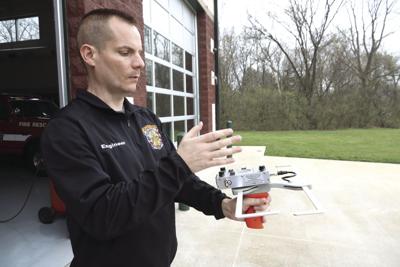
She said participants wear a small radio transmitter on their wrist or ankle. The transmitters emit an individualized signal, and first responder agencies have receivers that track the radio signals for each participant.
Participants also will receive a battery that must be changed about every two months.
“We have (enough) batteries to last about two or three years, depending on the need,” Brown said. “So, at this time, we’re hoping to be able to continue the program for at least two years.”
After two years the Health Department and other agencies will evaluate the program and look for more grants or other funding sources to keep it going, Brown said.
“We’re hoping this is a program that will continue for many, many years to come,” she said.
Brown said she hopes the program will help those caring for people with cognitive impairments.
“I think peace of mind is incredibly valuable during times like this,” she said.
Brown said the program also could save law enforcement and other first responder agencies both time and money.
It normally takes first responder agencies about 10 hours to locate a person who has wandered off, she said.
“With Project Lifesaver, it consistently is around 30 minutes or less to locate someone,” Brown said. “A child or someone who is elderly missing in the middle of February for 10 hours versus half an hour can be a difference between life and death.”
Brown said Health Department officials wanted to expand the program earlier but concerns about COVID-19 delayed the launch.
The program is ready to go now, though, the Sheriff’s Office reported.
“The equipment is available to anyone who is on duty, and someone trained to use the equipment is always on duty,” Bissell said.
He said John Barton, an engineer with High Ridge Fire, provided Sgt. Matt Moore of the Sheriff’s Office with training for the program, and Moore has trained others in his department.
“We will have the opportunity as time goes on to train more of our deputies and detectives on how to use this equipment,” Bissell said.
He said the Sheriff’s Office role in the program is to respond if someone is missing. “It can really help an agency looking for someone who is missing or has wandered off and lives with a cognitive, life-changing issue. It can greatly reduce the amount of time spent on a search,” Bissell said. “If you have something on you that broadcasts your position and there is someone on the other end with a receiver that says this is the direction we need to go, it will save you a lot of time, effort and resources while searching for a missing person.”
Barton, who has a family member with a cognitive impairment, said he knows firsthand how valuable the program can be.
“As a caregiver, I know what it’s like to lose sleep every night because you are worried about your loved one wandering from home,” said Barton, who is also Missouri Project Lifesaver Coordinator. “As a first responder, I know the difficulties and sometimes tragic outcomes of searching for a missing person.”
High Ridge Fire currently has eight residents in the program, and three of those likely will move to Health Department management to make battery changing easier, Barton said.
Brown said caregivers may call the Health Department at 636-797-3737 and schedule an appointment to enroll in the program.