


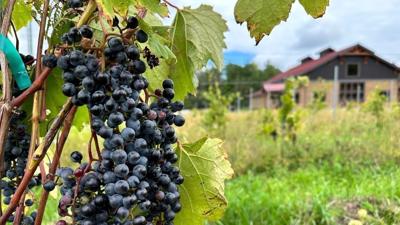
Wisconsin’s wine country is ready to be taken seriously. Six wineries on a limestone ridge in northeastern Wisconsin have agreed to a rule that most American wine regions wouldn’t: each makes its own version of a dry white wine called Ledge Blanc. Before any of them can put that name on the bottle, the wine must score at least 90 out of 100 points from a blind tasting panel of outside professionals.
It’s a bold thing to do in a state better known for sweet cherry wine, but it’s one of the best reasons to visit Door County right now.
Ledge Blanc is a shared style with a shared name, much like European wine. Old World regions like Burgundy, Champagne, and Chianti are defined by place rather than grape. The six wineries each make their own wine from their own vineyards, but it has to taste as if it came from this specific stretch of northeastern Wisconsin before it can use the name.
“The goal {of the Ledge Blanc Project} is to foster a cooperative winemaking culture and celebrate the region’s unique style through a recognizable appellation wine,” says Amy Gale, Owner of Anchored Roots Vineyard and Winery.
Namely, a crisp, refreshing, light-bodied wine with pronounced aromatics, delivering vibrant acidity while maintaining overall balance. It’s light and not oaky. If you order Sauvignon Blanc or Pinot Grigio, Ledge Blanc is the same part of the wine list.
Most importantly, it’s a food wine, meant to be at home with Wisconsin cheese, a Friday night fish fry, and a nice meal out. Until recently, cold-climate winemaking in the Upper Midwest was pushed toward sugar to balance punishing acidity, hence the plethora of sweet, fruity wine the region is known for.
Then in 2017 the University of Minnesota released Itasca, its fifth cold-hardy wine grape and, by the university’s account, the first with acidity low enough to make a high-quality dry white. Itasca now anchors most Ledge Blancs; less than a decade ago, the wine being poured today was much harder to make here.
Tasting the Ledge
Arguably, the best way to explore a region is through the local food and drink scene. The Wisconsin Ledge spans the northeastern part of the state along the Lake Michigan coast. Six wineries currently make Ledge Blanc, and four are in Door County, spaced along the peninsula’s spine, which makes for a perfect one-day wine trip: Parallel 44 Vineyard & Winery in Sturgeon Bay; Mixed Meadia Wines and Anchored Roots Vineyard & Winery, both in Egg Harbor; and Whitecap Winery in Ellison Bay. The other two, Wolf and Fox Winery and Ziegler Winery, are farther south near Lake Winnebago.
“We are taking the grape-to-glass concept to the next level by giving visitors destinations that have been vetted for quality standards and an opportunity to get to know our region one sip at a time,” says Gale.
Start in Sturgeon Bay and head north; Highway 42 will take you past orchard markets filled with apples and cider, ideal stops between tasting rooms. The circuit takes a little over an hour of driving, which leaves plenty of time to relax between stops.
Begin at Parallel 44, where the tasting room looks out over the vineyards. Try the Ledge Blanc, of course, but also their ice-wine styles and Glacier Fumé, a dry white with honey and oak. Twenty minutes north in Egg Harbor is Anchored Roots; their most recent Ledge Blanc contains 81% Itasca grapes, so compare how they taste across the different wineries.
Also in Egg Harbor is Mixed Meadia, a winery and meadery that sources fruit and honey entirely from the Wisconsin Ledge. Its Ledge Blanc is estate-grown, and make sure to taste their cherry pét-nat, with local tart cherries in the style of a dry wine.
Gale adds that every Ledge Blanc is different, but all share a crisp, aromatic, refreshing style.
Now is the Time to Go
Door County’s high season is July, with an average nightly lodging rate of $324, according to the Door County Tourism Zone Commission. October is a different story, with the average nightly rate at only $266, about $58 cheaper. Occupancy also drops to about 60%, which in practice means easier parking and less waiting for a table.
“Fall in Door County can be full of energy with our many weekend festivals or serene with colorful fall drives, crisp morning hikes and leisurely dinners featuring local ingredients,” says Jen Rogers, Director of Media Relations for Destination Door County.
Festival weekends are the busiest weekends; Sister Bay’s Fall Fest returns for its 80th year October 16-18th, with nearly two dozen bands, an arts and crafts fair with 100 vendors, food booths, a Lions Club fish boil and a Saturday parade following the pancake breakfast.
The weekend before, Egg Harbor’s Pumpkin Patch Festival has carnival rides and live music, and two Ledge Blanc producers within a few minutes’ drive.
Rogers adds that, “It’s truly exciting to see what this group of Door County winemakers has created with Ledge Blanc. It showcases not only how well cold-hardy grapes can grow in Door County, but also the exceptional wine that can be crafted from those grapes.”
Where to Stay
Ephraim is a practical base, though any of the 19 communities that make up Door County put you within reach of fall festivals and tasting rooms. Each has its own character: Sturgeon Bay is a working city with a shipyard, Fish Creek has shops and the state park, and Ephraim is the white-clapboard postcard of Door County.
The Hillside Waterfront Hotel is Ephraim’s last surviving grand hotel. It began as a four-room log cabin and has since expanded to include a 110-foot wraparound porch, five luxury suites, and two cottages. It joined the National Register of Historic Places in 1985 and, for small-town Christmas movie fans, appears in A Cherry Pie Christmas, shot entirely on location in Door County and streaming on several platforms.
A short walk away, the Old Post Office Restaurant serves fish boils Monday through Saturday during the season in the same building that held Ephraim’s post office in the early 1900s.
Make sure to show up early and stand by the fire. Scandinavian immigrants brought the method to the area for feeding a crowd: whitefish, potatoes, and onions go into a kettle over an open fire. At the end, the boil master throws kerosene on the flames, allowing the fish oils and soot to go over the side, and dinner is ready. Everyone heads inside for dinner, along with a slice of local cherry pie at the end.
It’s also the exact meal these wines were built for: a high-acid white pairs well with buttered whitefish. As Gale notes, heading to Door County now is “a perfect time to cozy up outside with patio heaters and fire pits while still enjoying the seasonal views of the woods and vineyard surrounding us. And of course, no shortage of wine!”