


American travelers are booking Toronto at a pace the city hasn’t seen in years. Summer travel searches for the city are up 24% year over year, according to data, and the draw isn’t the CN Tower or the waterfront. It’s a food city that took generations to build, and visitors are only now catching up to what locals have known all along.
Toronto is home to more than 200 nationalities. According to Statistics Canada’s 2021 census, 55.7% of the city’s population belongs to a visible minority group, a figure higher than any other major Canadian city. That’s not a marketing statistic, but the reason the food scene here operates differently than anywhere else in North America. The restaurants visitors find weren’t built for them; they were built by communities feeding themselves, which is exactly what makes them worth finding.
The neighborhoods that built Toronto’s food identity
Kensington Market is the most compressed food corridor in the city, a few walkable blocks west of the downtown core, where Jamaican patties, Portuguese custard tarts and Mexican birria sit within a few blocks of each other. No chains have ever been established here; the vendors are owner-operated, the streets are narrow and the whole thing resists the kind of curation that turns neighborhoods into dining districts. It is one of the few places left in any major North American city that still feels genuinely accidental.
Chinatown, located along Spadina Avenue and Dundas Street West, is one of the densest Chinese food corridors on the continent. Dim sum houses that have been running the same service for three decades sit alongside newer Sichuan and Shanghainese spots that draw serious eaters from across the city. The depth here is generational, and the prices mirror a neighborhood feeding its own, not a tourist corridor inflating for visitors.
Little Italy on College Street is the original immigrant strip, now layered. Second- and third-generation Italian-Canadian cooking shares storefronts with wine bars and late-night spots that moved in as rents changed. The recipes at the old-guard spots haven’t changed in 40 years. That’s not nostalgia, and that’s the point.
Greektown on the Danforth runs along Danforth Avenue east of the Don Valley and is one of the largest Greek commercial corridors in North America. The souvlaki and loukoumades at the institutions are the obvious draws, but the neighborhood tavernas that haven’t updated their menus since the 1980s are the real reason to make the trip east.
Little Portugal along Dundas Street West is lined with pastelarias, bifanas and bacalhau, with Brazilian and Cape Verdean communities layered into the same corridor over decades. It feeds itself first and happens to welcome visitors, and there is nothing quite like it in any American city.
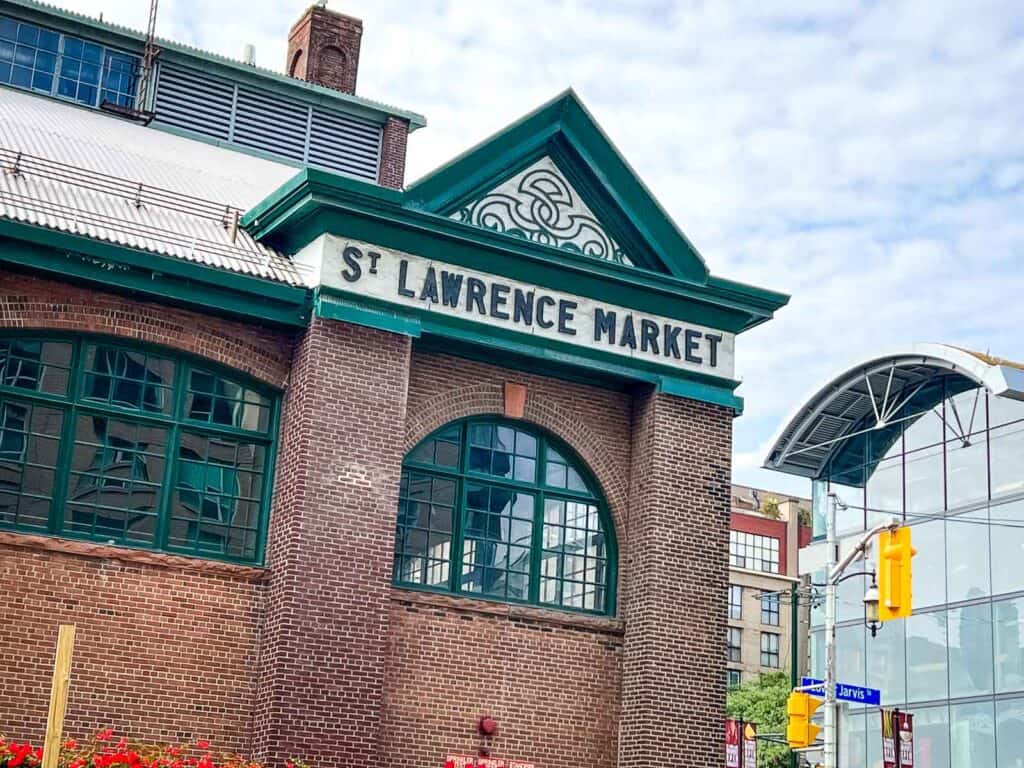
St. Lawrence Market, open since 1803, was named one of the world’s best food markets by National Geographic in 2011. The Saturday-morning peameal bacon sandwich from Carousel Bakery is the non-negotiable first stop. Everything else, such as the cheese vendors, the fish stalls, the produce from Ontario farmers who have been showing up at dawn for two centuries, follows from there.
For the food-curious: Step outside the usual haunts
The neighborhoods above will fill a long weekend. These five reward the traveler who wants to eat where the city’s newest and oldest communities actually live.
Gerrard India Bazaar on Gerrard Street East is North America’s longest South Asian commercial strip, running through what Toronto calls Little India. Chaat counters, dosa spots and mithai shops stack up along several city blocks. It draws far fewer visitors than it should.
Corso Italia along St. Clair Avenue West is the other Italian strip, quieter and older than College Street, with less scenery and considerably better espresso. The regulars have been coming for decades, and that fact alone is reason to go.
Roncesvalles still showcases its Polish heritage at the institutions, where pierogies, kielbasa and borscht remain the draws, while the surrounding blocks have absorbed a wave of serious independent restaurants that haven’t displaced the neighborhood’s working-class food identity. Both versions coexist without friction.
Scarborough, the city’s eastern district, is the pick that Toronto food writers have been pushing for years and visitors rarely act on. Authentic Tamil, Sri Lankan, Caribbean and Chinese cooking at prices the downtown core cannot match. The 30-minute transit ride from Union Station is the only barrier, and it is not a real one.
Koreatown along Bloor Street West near Christie Street is compact, walkable and best visited after 9 p.m., when the Korean BBQ grills run at full output, and the army stew spots fill up. Banchan shops and late-night noodle counters are spread across a few dense, walkable blocks.
The moment to go is now
Destination Toronto reported a record 28.2 million visitors in 2025, generating $9.1 billion in direct spending. TripAdvisor’s Summer Travel Index flagged Toronto as a trending Memorial Day weekend international destination for 2026. The FIFA World Cup arrives this summer with six matches at BMO Field, and the city’s international profile is about to get significantly louder. All just a part of what’s driving the increased searches for summer travel to Toronto.
Toronto’s food scene grew from the inside out over decades. No single chef moment put it on the map, and no James Beard wave rewrote the story. What American travelers are finding in 2026 is a city that was already complete before anyone outside Canada was paying close attention. The food will be the same when the crowds arrive, but the experience of finding it first will not.
Jennifer Allen is a retired chef turned traveler, cookbook author and nationally syndicated journalist; she’s also a co-founder of Food Drink Life, where she shares expert travel tips, cruise insights and luxury destination guides. A recognized cruise expert with a deep passion for high-end experiences and off-the-beaten-path destinations, Jennifer explores the world with curiosity, depth and a storyteller’s perspective. Her articles are regularly featured on the Associated Press Wire, The Washington Post, Seattle Times, MSN and more.
The post Toronto is one of 2026’s fastest-rising travel destinations. The food neighborhoods are why. appeared first on Food Drink Life.