
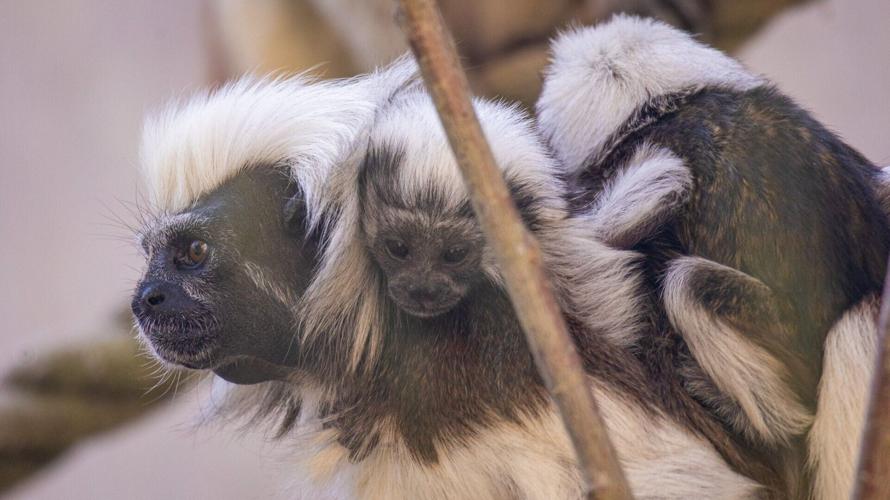
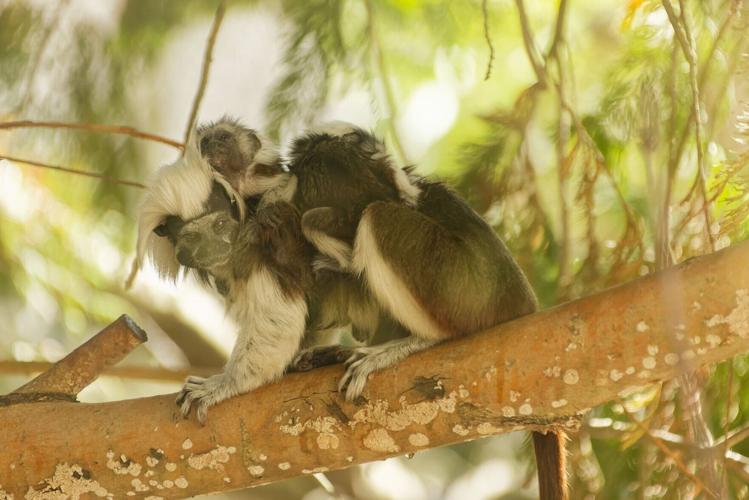
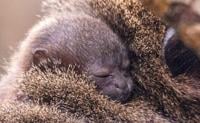

The Cotton-top tamarins twins who recently arrived. (Twycross Zoo via SWNS)
By Ed Chatterton
Zookeepers are celebrating the birth of three adorable baby primates as part of conservation efforts to help save them from extinction.
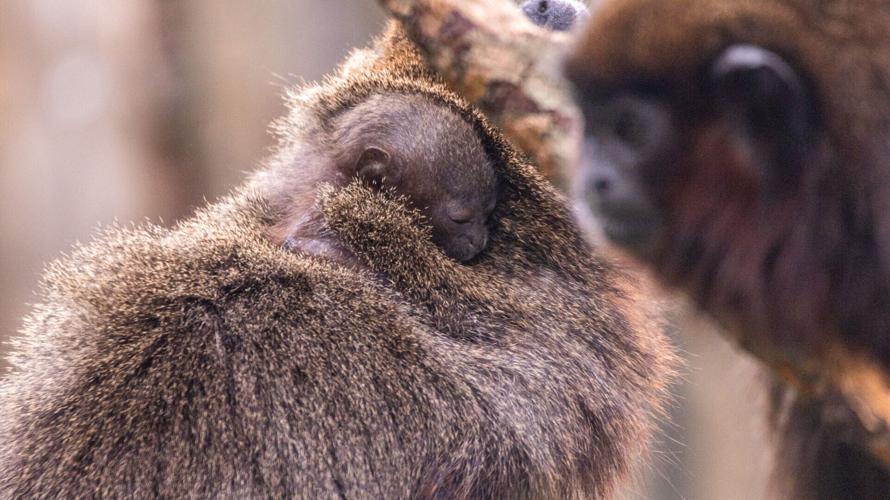
Twycross Zoo has recently welcomed a coppery titi monkey as well as critically endangered cotton-top tamarin twins.
Heartwarming images show the infants clinging tightly to their parents as they explore their new surroundings at the Leicestershire attraction.

The Coppery Titi Monkey on its mother Sirena. (Twycross Zoo via SWNS)
Conservationists hope the births will help safeguard the wild populations of both species where they continue to face threats.
Matt Ford, primate curator at Twycross Zoo, said: "We're thrilled at the birth of our two cotton-top tamarins, and it marks another milestone in our conservation mission.
"The species is critically endangered and it's believed there's only 2,000 remaining in the wild.
"This number is continuing to decline as their native habitat becomes severely damaged by human action, making this ex-situ conservation work vital to safeguarding the species from extinction.

The Cotton-top tamarins twins at the zoo. (Twycross Zoo via SWNS)
"The birth of the coppery titi monkey is exceptionally special, as the mother Sirena was born at Twycross Zoo back in 2010 and has been cared for by our amazing team of keepers ever since."
Cotton-top tamarins commonly give birth to twins, with fathers taking on the role of primary caregiver.
The father carries the babies around for the first few months, only handing the babies to the mother to suckle.
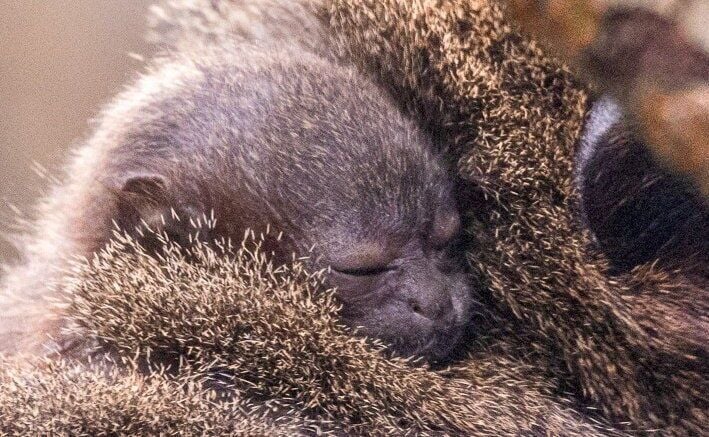
The Coppery Titi Monkey on its mother Sirena. (Twycross Zoo via SWNS)
They are among the most endangered primates in the world and are native to the tropical forests in northwestern Colombia.
Coppery titi monkeys are not yet endangered but are said to be under threat from bushmeat hunting and the illegal pet trade.
They are native to the rainforests of Brazil and eastern Peru and will also rely on their fathers to carry them for the first six months of their life.