

(NASA via SWNS)
By Dean Murray
A "son of Concorde" that could fly from London to New York in under four hours has passed a milestone test.
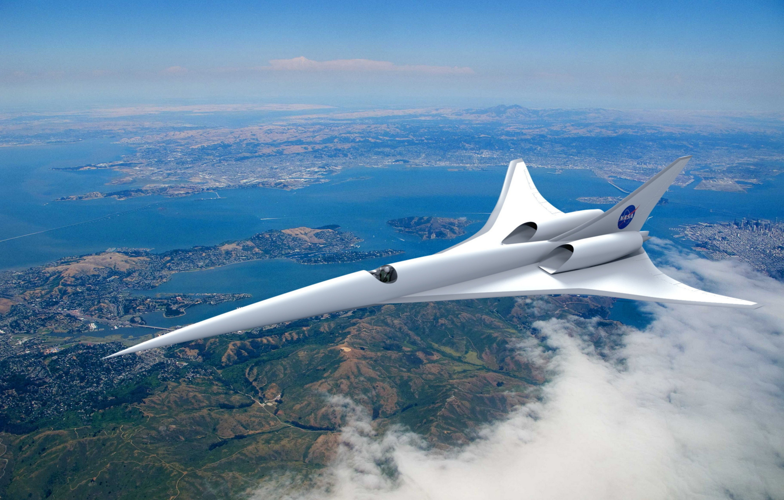
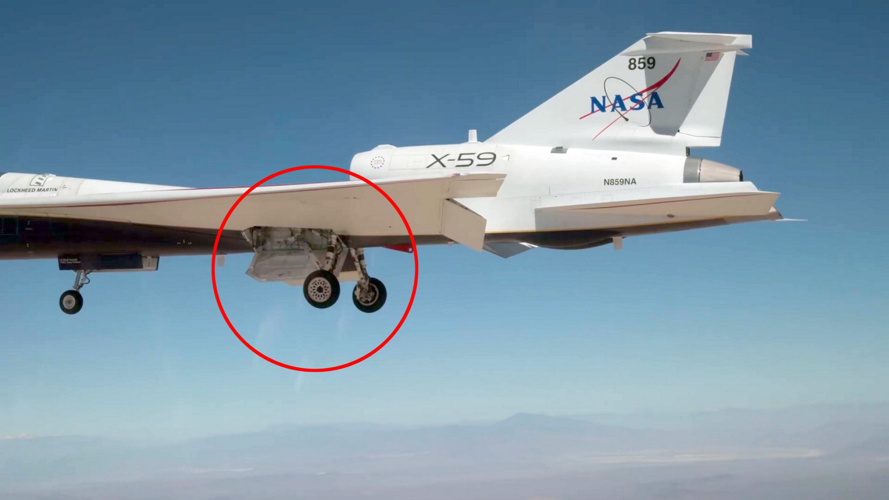
NASA’s X-59 quiet supersonic research aircraft flew with its "wheels-up" for the first time this month.
The important step of flying with the landing gear up paves the way for researchers to examine the aircraft's streamlined profile, a key design element that ensures the Xâ59 can fly faster than the speed of sound with just a quiet thump instead of a loud sonic boom.
The aircraft is projected to fly at Mach 1.5, or approximately 990 mph (1,590 kph), meaning it could potentially fly nonâstop from the UK capital to the Big Apple in approximately three hours and 44 minutes.
Concorde could reach a maximum cruising speed of Mach 2.04, or 1,354 mph (2,179 kph), which is more than twice the speed of sound. This supersonic speed allowed it to reach New York City in about three hours.

(NASA Quesst via SWNS)
Normal commercial flights generally take around seven to eight hours.
The X-59 aircraft’s relatively quiet flight properties should help solve the noise problem that has made such planes unsuitable for flying over populated areas.
NASA said experimental aircraft typically make their earliest test flights with the landing gear down, then begin retracting it after successfully meeting performance benchmarks. The Xâ59 flew wheelsâup for the first time on April 3.
Piloted by NASA test pilot Jim “Clue” Less, the aircraft departed from its home base at NASA’s Armstrong Flight Research Center in Edwards, California, and flew for 90 minutes, reaching a maximum altitude of 20,000 feet.
NASA said on Wednesday (April 15): "The X-59 has made eight flights as of April 10 as it continues its test flight envelope expansion campaign. The Xâ59 is at the centre of NASA’s Quesst mission to enable quiet commercial supersonic flight over land."