








Photo by Antonius Ferret via Pexels
By Lauren Wilkin
In the wake of government screen time guidance issued for under-5s, new research from the University of Exeter has revealed how essential time spent outdoors is for children's mental health.
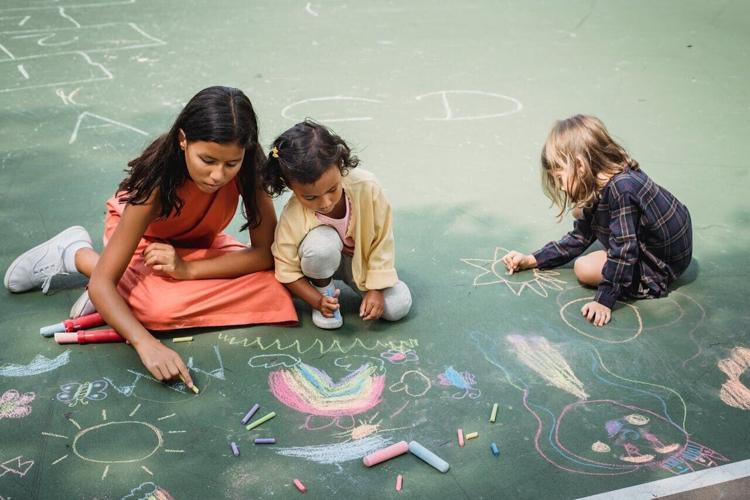
The new study, published in the Journal of Child Psychology and Psychiatry, suggests the more often children play outdoors as preschoolers (ages 2 to 3), the more likely it is that their mental health problems will be low through to middle childhood (age 8).
Researchers analyzed data from 4,151 children and looked at symptoms of mental health when children were 4, 5, 6, and 8 years old.
These symptoms included both external, like aggression and hyperactivity, and internal, like anxiety and depression.
The research found those who played outdoors more frequently at ages 2, 3, and 4 were more likely to remain in a low-symptom, good mental health group through to middle childhood.
In fact, the results showed that for each additional day that a child plays outdoors during the preschool years, the odds of that child having a healthy profile of mental health symptoms through to age 8 increases by between 6% and 14%.

Photo by Ketut Subiyanto via Pexels
"Providing young children with more opportunities to play outside could be a simple, low-cost way to support better mental health," says Dr. Helen Dodd from the University of Exeter who led the study.
Dodd says government policy should ensure there is adequate funding for the maintenance of playgrounds, parks and other green spaces. "These public spaces are especially important for people without access to a garden,” she adds.
"This evidence shows that our young children will benefit significantly from more play opportunities and better spaces to play," Marguerite Hunter Blair, chair of the U.K. Children’s Play Policy Forum, said.
But time children spend outdoors has greatly reduced as average screen time has increased.
A report published by Raising the Nation Play Commission in 2025 says that the amount of time children spend outside has declined by 50% in a generation.
While the education committee said that there has been a 52% increase in screen time among children between 2020 and 2022 alone.

Photo by Andrea Piacquadio via Pexels
In guidance published by the government in March, parents of under-5s have been advised on how to regulate children's screen time. Instructions include:
- Under-2s: Avoiding screen time other than for shared activities that encourage bonding, interaction and conversation.
- 2- to 5-year-olds: Trying to keep it to no more than one hour a day. Avoid at mealtimes and in the hour before bed.
- Content: Choosing slow-paced, age-appropriate content. Fast-paced, social media-style videos and AI toys or tools should be avoided for young children.
- Co-viewing: Watching or using screens together — talking, asking questions and engaging with the content — is better for children’s development than solo screen use.
But wider calls have been voiced for guidance on screen use among older children and teens, too.
Now, Keir Starmer is set to announce a social media ban for under-16s.
However, Rachel de Souza, the children’s commissioner for England, has said the ban should extend to 17-year-olds, who she said should not have “lesser protection.”