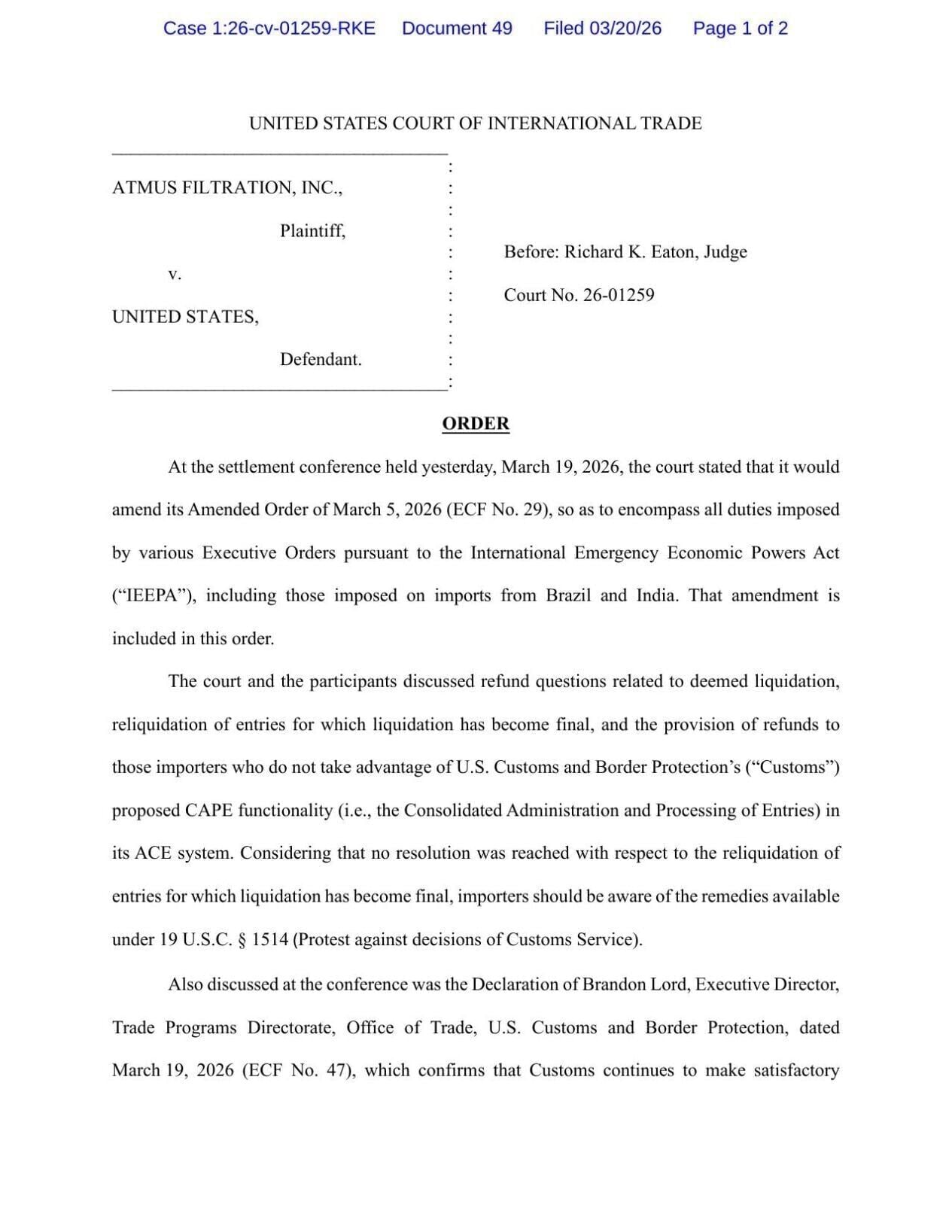


(The Center Square) – A judge ordered the U.S. Customs and Border Protection to provide an update on the agency's progress toward issuing refunds for tariffs invalidated by the Supreme Court.
The ongoing legal battle over tariffs imposed by President Donald Trump has left importers, businesses and consumers in financial limbo, with billions of dollars in potential refunds at stake. As courts deliberate the future of these tariffs and the government scrambles to establish a rebate process, the cases have political ramifications, especially as voters blame tariffs for rising prices ahead of the midterm elections.
Judge Richard Eaton set a deadline for CBP to report its progress by the end of the month. The agency recently detailed its efforts to launch a rebate program to handle tariff refunds.
Brandon Lord, executive director of trade programs at CBP, wrote in a declaration that "CBP is developing a new capability within its system of record for imported merchandise ... to prepare to calculate and provide valid refunds."
He outlined a plan that called for building a claim portal, mass processing, reviews and refunds.
In April 2025, President Donald Trump imposed the highest tariffs in nearly a century. Earlier this year, the U.S. Supreme Court ruled that Trump exceeded his authority by using the International Emergency Economic Powers Act to levy tariffs globally. However, the justices did not specify what should happen to the estimated $175 billion in import taxes already collected.
Importers and consumer groups are fighting in court for refunds. However, the U.S. Treasury Secretary has said that consumers are unlikely to see any of that money returned.
Within hours of the Supreme Court’s decision, Trump invoked Section 122 of the Trade Act of 1974 to announce a 10% tariff on all imports.
The administration maintains that the law empowers the president to levy tariffs of up to 15% for up to 150 days in response to international payment issues.
Democratic-led states and several small businesses have filed two separate lawsuits in the U.S. Court of International Trade, both challenging the Section 122 tariffs. While the cases remain distinct, they are moving forward in tandem.
The Court of International Trade has ordered the federal government to respond to both lawsuits by April 3.
With the midterm elections looming, Trump’s tariffs remain unpopular among voters. Many see them as policies that increase costs for American consumers rather than bolster U.S. businesses. According to The Center Square Voters’ Voice poll, a plurality of voters believe consumers bear the brunt of these import taxes. The question of who pays for tariffs could shape voter sentiment and influence election outcomes.
About 42% of voters say American consumers primarily pay the cost of tariffs, while 38% believe the burden is shared by all parties involved in trade. Just 12% think foreign countries pay, and only 8% say American businesses absorb the costs.
Economic research has shown that U.S. consumers and businesses bear the bulk of the cost of import taxes.