


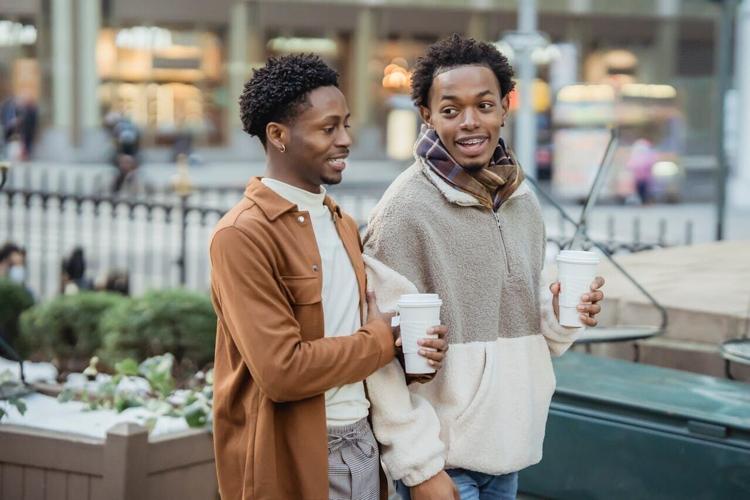







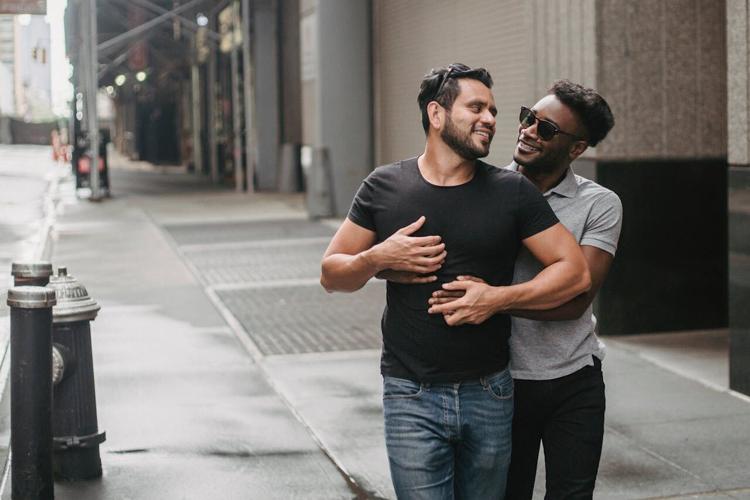


(Photo by Uriel Mont via Pexels)
The average gay or queer man can tell a potential partner’s intentions within just 43 minutes of meeting, according to new research.
A survey of 1,000 gay and queer men who are single, casually dating or with their partner for less than three years found that respondents need less than three-quarters of an hour to tell whether someone else is looking for a hook-up or a long-term partner.
But some need even less time, as over a quarter (28%) need under 20 minutes to tell what a potential partner is interested in.
Conducted by Talker Research on behalf of ARCHER, results found that when discovering goals are misaligned, respondents are still more likely to try to have an honest conversation about intentions (45%) or give them a chance anyway (38%) than they are to finish the date and end all communication afterward (22%) or to end the date early (18%).
This may be because nearly four in five (79%) believe that it’s time to redefine the norm when it comes to dating as a gay or queer man and usher in a new era that aligns with their future goals and breaks traditional stereotypes.

(Photo by Ketut Subiyanto via Pexels)
Almost half of those polled (48%) have shifted their dating and relationship goals in the last 12 months. These respondents are now seeking someone who aligns with their long-term future (48%) or are aiming to be clearer about what they want from a partner (43%).
About one-third (32%) are shying away from meaningless matches and are trying to be more intentional about their date choices, while a similar number (31%) are looking to leave hook-ups in the past.
In fact, respondents are now twice as likely to seek out serious relationships as they are to look for hook-ups (48% vs 21%).
Overall, more than three-quarters of those polled (76%) agree that there’s too much focus on hook-ups over relationships when it comes to gay and queer men.
When asked about the biggest change they’d like to see in terms of gay and queer culture, respondents reflected on their own experiences. One man said that “gender roles shouldn’t exist in the gay community,” while another said there’s “a lot of focus on kinks and not a lot of focus on authenticity and substance.”

(Photo by Nicholas Swatz via Pexels)
Others hope for “more focus on relationship compatibility than sexual attraction,” “openness around casual encounters,” or “a decrease in toxic masculinity all around.”
According to the results, only 14% of those polled believe that gay and queer men are portrayed “very accurately” on TV, while nearly double (25%) feel the same about social media portrayals.
Almost two-thirds (63%) would even go so far as to say it’s their duty to pave the way for the next generation of gay and queer men.
“For too long, gay and queer men have been defined by stereotypes instead of by our full, complex selves,” said Michael Kaye, Head of Brand Marketing & Communications at ARCHER. “What the data shows is what many in our community have felt for years, and we’re in the middle of redefining what queer dating looks like. There’s a real desire for authenticity, connection, and intentionality. We’re seeing a shift away from the old norms and into something deeper.”
The survey also asked respondents about their sexual role and how they feel about it. According to the results, 95% of those polled fall somewhere on the spectrum, ranging from tops (26%) and bottoms (29%) to switches (41%).

Hoi An Photographer
Most of these respondents (86%) feel confident in their sexual role, and many would go so far as to say their role is part of their identity (67%).
Of those, a little more than a third (35%) say it’s who they are, or at least a part of them (32%) — but 11% of respondents admitted they can also feel boxed in by their role.
No matter their role, those polled find that an emotional connection (38%) and humor (32%) are bigger turn-ons than a physical (31%) or sexual (31%) connection in a potential partner.
"Roles have always been a part of gay and queer culture, but they were never meant to define us. For many men, their role is a source of confidence and even identity, but the data also shows how often the media and society have boxed us into narrow expectations,” said Kaye. “With only 31% of respondents feeling their role is positively portrayed in gay culture, it’s no surprise that 67% are actively working to break free from those traditional stereotypes. What we’re seeing is a community rewriting the narrative: choosing connection, humor, and emotional compatibility over outdated labels, and embracing a more expansive, authentic version of who they are."

(Photo by Ketut Subiyanto via Pexels)
Research methodology:
Talker Research surveyed 1,000 gay and queer men who are single, casually dating or in a relationship less than 3 years who have access to the internet; the survey was commissioned by ARCHER and administered and conducted online by Talker Research between Nov. 14 and Nov. 24, 2025. A link to the questionnaire can be found here.
To view the complete methodology as part of AAPOR’s Transparency Initiative, please visit the Talker Research Process and Methodology page.