




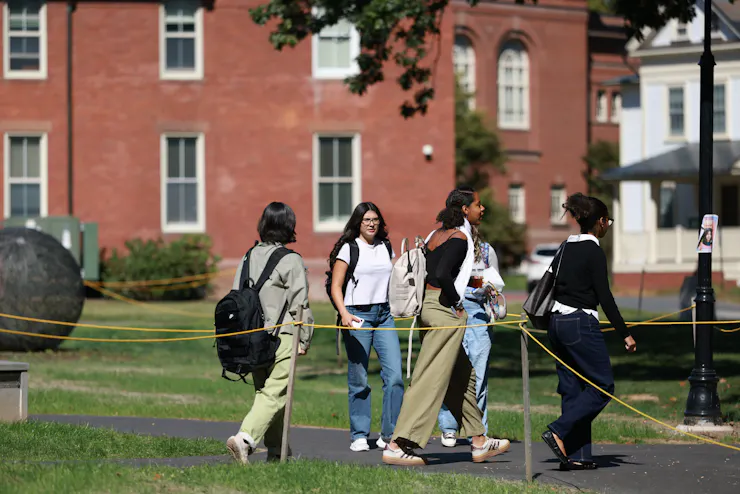
Since 2015, Smith College, one of the largest and most prestigious women’s liberal arts colleges in the United States, has allowed any student who identifies as female to apply to and attend the school.
Over the past decade or so, most other women’s colleges in the U.S. have taken similar steps, permitting transgender female students to apply.
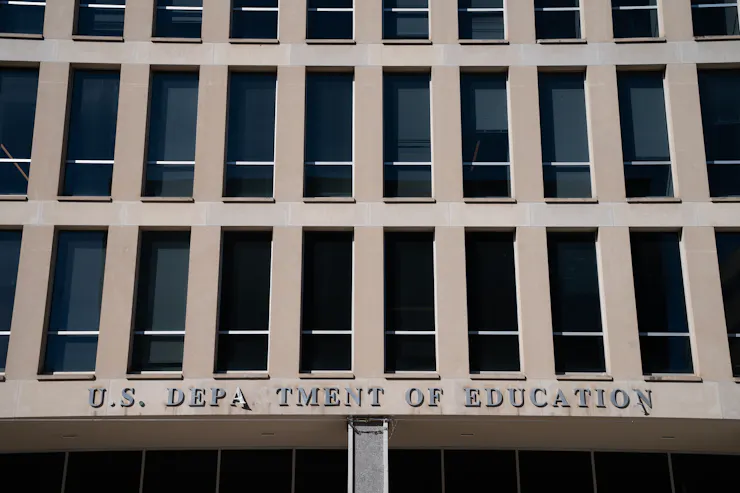
The Trump administration is trying to end that practice. The Department of Education announced on May 4, 2026, that it had opened a Title IX investigation into Smith for admitting transgender students.
“Allowing biological males into spaces designed for women raises serious concerns about privacy, fairness, and compliance under federal law,” Kimberly Richey, the assistant secretary for civil rights at the Department of Education, explained in a statement.
The Education Department’s announcement signals a new front for the Trump administration. Until now, the administration’s battles over transgender students have largely focused on restricting their participation in team sports and preventing them from using bathrooms based on their gender identity.
As a legal scholar who has written extensively on gender identity nondiscrimination laws, I find it notable that the administration invokes Title IX of the Civil Rights Act, a 1972 law that prohibits sex discrimination in any educational program that receives federal funding.
What is striking is that this law does not, under any circumstance, apply to Smith’s admissions decisions. Title IX’s language is clear that law does not cover the admissions decisions that private colleges and universities make.
At the same time, the investigation adds to the mounting pressure colleges and universities have faced since President Donald Trump returned to office in 2025. So, even if the investigation ultimately does not result in a lawsuit or court case, the probe still has high stakes for schools around the country.
What Title IX says – and leaves out
Title IX protects against sex-based discrimination in any educational program or activity that receives federal financial assistance.
The law’s scope is broad: It guarantees equal opportunity in all aspects of education. That includes academics, athletics, events, extracurricular activities and financial aid. The law also requires schools to address sexual violence, sexual harassment and stalking. These safeguards extend beyond students, protecting faculty and staff at schools.
Since the law applies to all educational settings that receive federal financial assistance, it reaches nearly all public and private schools, from elementary schools through universities.
But Title IX still has limits. For example, it allows single-sex schools, like Smith, to exist.
Smith is one of 30 women’s colleges in the U.S. There are also four men’s colleges in the country.
Additionally – and crucially for the Education Department’s investigation – Title IX is clear that it does not apply to the admissions decisions that private undergraduate institutions make.
Title IX states that the law applies to the admissions decisions of “only institutions of vocational education, professional education, and graduate higher education, and to public institutions of undergraduate higher education.”
Private undergraduate colleges, like Smith, are not on the list.
The Trump administration’s use of Title IX
There is no legal basis for the Education Department’s decision to investigate Smith “for admitting biological men.” Nevertheless, the investigation could still spell trouble for the college – and other colleges and universities.
The second Trump administration has repeatedly targeted schools with transgender-inclusive policies.
In March 2025, the White House froze US$175 million in federal funding to the University of Pennsylvania because the school allowed transgender women to compete in female team sports.
It released the funding after Penn reversed its policy on transgender athletes.
In early 2026, the Education Department also announced Title IX investigations into 18 universities and colleges because they allowed transgender students to participate in women’s team sports.
The Education Department has additionally launched Title IX investigations into K-12 schools based on their bathroom policies. In August 2025, for example, it determined that Denver Public Schools were in violation of Title IX for allowing transgender students to use the restrooms that align with their gender identity.
Title IX battles
The Education Department appears to be basing its investigation into Smith on the fact that Title IX permits educational institutions to maintain some sex-segregated spaces. These include sports teams and bathrooms. But how transgender students fit within the statute’s framework is an open question.
In 2024, the Education Department under the Biden administration determined that Title IX protects the rights of transgender students to live according to their gender identity. It produced regulations requiring schools to comply with this interpretation of the law.
This followed a 2019 Supreme Court ruling, Bostock v. Clayton County. In that case, the court determined that Title VII of the Civil Rights Act, another law that prohibits sex-based discrimination in workplaces, protected against gender identity discrimination.
In January 2025, however, a federal district court in Kentucky ruled that the Biden administration’s regulations were invalid. Since then, the Trump administration has taken the position that sex is assigned at birth and unchangeable.
Because of this back-and-forth, Title IX’s protections for transgender students have depended on who is in the White House.
The investigation’s broader implications
Title IX does not reach Smith’s admissions decisions, based on the plain language of the law. However, the law does affect the school’s other policies, such as restroom access. As a result, the investigation will likely embroil the college in a lengthy legal battle.
Smith has not commented on the government investigation, other than to say the school is “fully committed to its institutional values, including compliance with civil rights laws.”
As the Education Department’s process unfolds, Smith will face a crucial choice. It could accede to the Trump administration’s demands. Alternatively, it could fight for transgender student rights. In the process, it could set precedent on what Title IX requires, thereby protecting transgender people around the country.
The decision will not be easy. Smith receives limited federal grants, but battling the Education Department requires expending time, attention and money to a lawsuit rather than devoting those resources to student education.
At a time when higher education is feeling the strain of the Trump administration in the form of funding freezes, student loan limitations and civil rights investigations, it is difficult for colleges and universities to resist federal demands.
Smith is better positioned than most, given its prestigious rank, extensive alumni network and sizable endowment.
How the college responds could be a test of higher education’s wherewithal to withstand a hostile executive branch. Where Smith goes, others will likely follow.
This article is republished from The Conversation, a nonprofit, independent news organization bringing you facts and trustworthy analysis to help you make sense of our complex world. It was written by: Marie-Amelie George, Wake Forest University
Read more:
- Federal investigation into Smith College probes whether transgender students can attend women’s schools – challenging the evolving mission of women’s education
- Indiana, Iowa and Texas advance anti‑transgender agendas – part of a longtime strategy by conservatives to rally their base
- Rights of transgender students and their parents are a challenge for schools, courts
Marie-Amelie George does not work for, consult, own shares in or receive funding from any company or organization that would benefit from this article, and has disclosed no relevant affiliations beyond their academic appointment.
