



Mac Gaither
By Stephen Beech
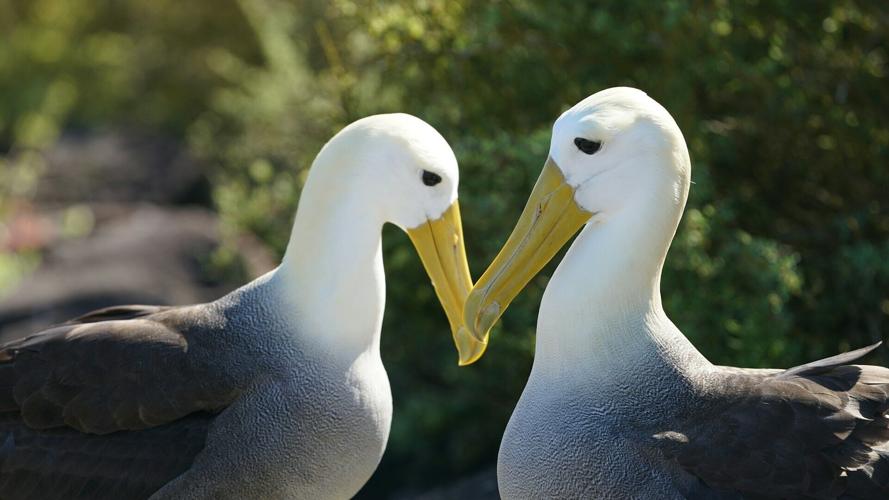
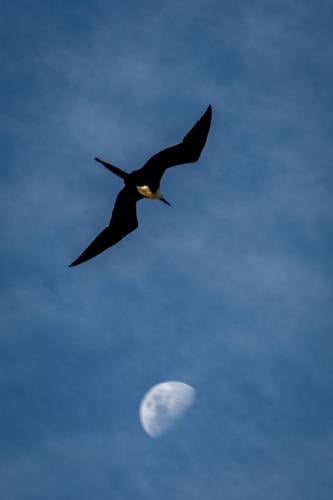
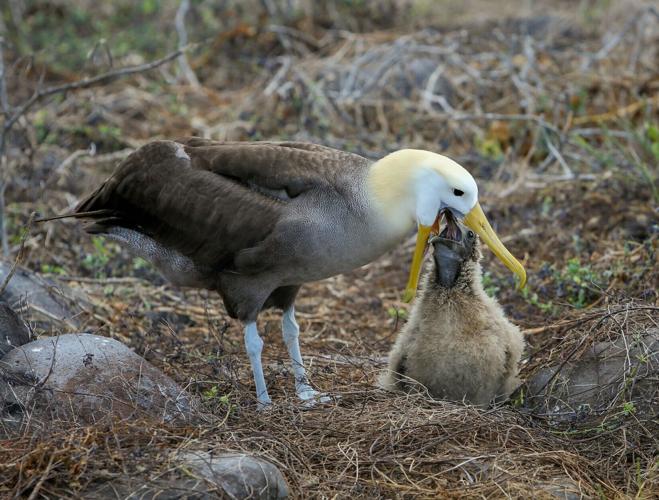
Iconic seabird species including the albatross and petrel face being wiped out by global warming, warns a new study.
Researchers found the seabirds' world is ever shrinking as oceans warm.
They are retreating into smaller areas of ocean and traveling further to find new places to live as Earth's climate rapidly changes, according to the findings published in the journal Nature Climate Change.
Scientists from the University of Reading studied more than 120 species of Procellariiformes, a group that includes albatrosses, petrels, shearwaters and storm petrels.
The research team used evolutionary family trees, ancient climate records and ocean temperature data to track how their ranges and movements have changed throughout history.
The first-of-its-kind study found that when temperatures rose rapidly in the past, seabirds did not get smaller, as some fish and other ocean creatures do.
Instead, they shrank their territories and flew greater distances to reach suitable habitats.

(Photo by Wallace Silva via Pexels)
Study leader Jorge Avaria-Llautureo said: "Seabirds have survived dramatic climate shifts before, but never at the speed we are seeing today.
"We can see from history that when temperatures rise quickly, these birds do not adapt physically.
"Instead, they are forced to abandon parts of their range and travel further to survive."
Avaria-Llautureo, from the University of Reading, added: "Conservation efforts need to focus not just on protecting the places where seabirds live now, but on safeguarding the places they will need to reach in the future."
How fast the climate changes matters more than whether it gets warmer or cooler, according to the study's findings.
Species exposed to the most rapid historical temperature shifts ended up with the smallest ranges and traveled the farthest.
The rate of temperature change alone accounted for 35% of the variation in range size across the species studied.
The research team said today's oceans are warming around 10,000 times faster than the rates seabirds have adapted to over millions of years.

AussieActive
Seabirds have historically coped with warming of around 0.00002°C per decade, but current ocean warming is running at around 0.13°C per decade.
New statistical models developed at the University of Reading, which can track where seabirds lived through millions of years of climate shifts, were used for the first time to inform predictions on how ranges might change by 2100.
Avaria-Llautureo said: "Under a lower-emissions future, fewer species are affected and range losses are smaller.
"Under the worst-case warming scenario, more than 70% of species are expected to contract their ranges, with those losing the most ground forced to travel the greatest distances to survive."
He said four species face a "real risk" of extinction under that scenario: the Galápagos Petrel, the Jouanin's Petrel, the Newell's Shearwater and the White-vented Storm Petrel.
Avaria-Llautureo added: "Seabirds are already among the most threatened groups of birds on Earth and play important roles in ocean ecosystems, including cycling nutrients and supporting fisheries."