


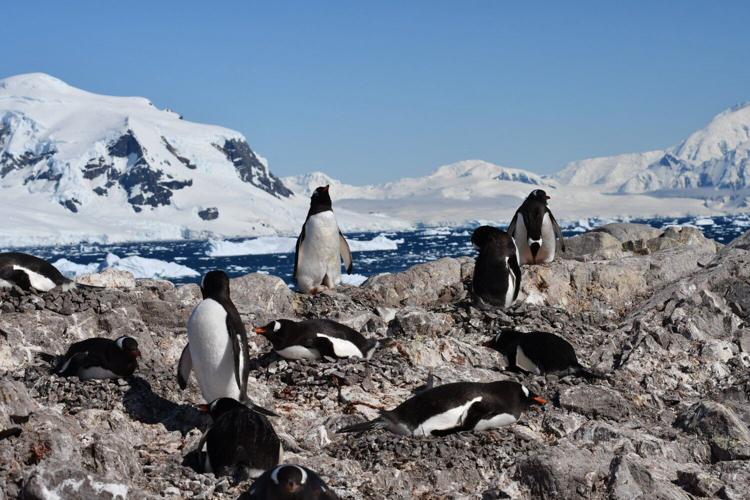

Gentoo colony at Neko Harbour (ES: Puerto Neko). (Ignacio Juarez Martinez via SWNS)
By Stephen Beech
Antarctic penguins’ breeding season has shifted by a record two weeks as a result of climate change, reveals new research.
A decade-long project uncovered the "striking" changes that scientists say threaten to disrupt the birds' access to food as well as increasing interspecies competition.
The results of the study by Penguin Watch were published on World Penguin Awareness Day in the Journal of Animal Ecology.
Penguin Watch is the largest penguin monitoring project in the Southern Ocean.
Initiated at the University of Oxford in 2009 and currently hosted at Oxford Brookes University, it focuses on threats faced by penguins by harnessing time-lapse cameras to monitor colonies all year-round.
Researchers examined changes in the timing of penguin breeding between 2012 and 2022, specifically their “settlement” at the colony - the first date at which penguins continuously occupied a nesting zone.
The three species of penguins studied were the Adélie, Chinstrap and Gentoo, with colony sizes ranging from a dozen to up to hundreds of thousands of nests.
Study lead author Dr. Ignacio Juarez Martínez said: “Our results indicate that there will likely be ‘winners and losers of climate change’ for these penguin species.

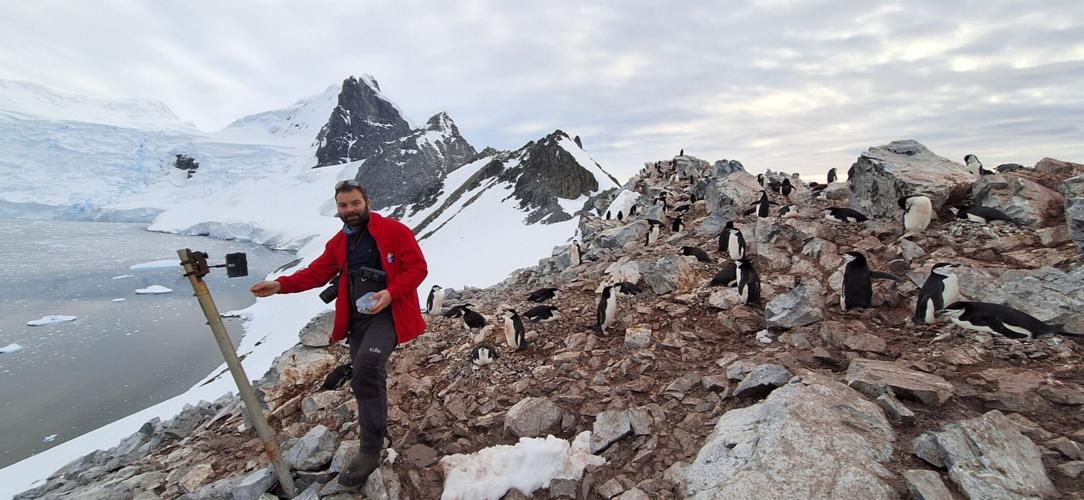
Dr. Ignacio Juarez, leader of the study, servicing one of the monitoring cameras overlooking a Chinstrap colony at Spigot Peak (ES: Nunatak Negro), Antarctica. (Ignacio Juarez Martinez via SWNS)
"Specifically, the increasingly subpolar conditions of the Antarctic Peninsula likely favour generalists like Gentoos at the expense of polar specialists like the krill-specialist Chinstraps and the ice-specialist Adélies.
"Penguins play a key role in Antarctic food chains, and losing penguin diversity increases the risk of broad ecosystem collapse."
The research team used evidence from 77 time-lapse cameras overlooking 37 colonies in Antarctica and some sub-Antarctic islands.
They say that ensures conclusions are relevant to species as a whole and not just specific populations.
The results showed that the timing of the breeding season for all three species advanced at record rates.

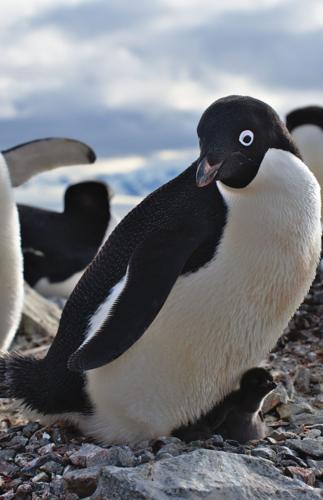
Adélie penguin (ES: Pingüino Adelia) with its chick at Madder cliffs colony (ES: Cabo Madder). (Ignacio Juarez Martinez via SWNS)
Gentoo penguins showed the greatest change, with an average advance of 13 days per decade and up to 24 days in some colonies.
That represents the fastest ever change in phenology recorded in any bird – and possibly any vertebrate, according to the research team.
Adélie and Chinstrap penguins also advanced their breeding by an average of 10 days.
Study senior author Professor Tom Hart, founder of Penguin Watch, said: “Ecologists are good at counting populations to show trends, but often the early warnings of decline can be found in the behavioural change of animals, which can be very hard to monitor.
"The idea of this whole monitoring network is to put something in place that does both; monitoring populations and their behavioural responses to threats.
"This study proves the benefits of monitoring animals at a landscape level.”

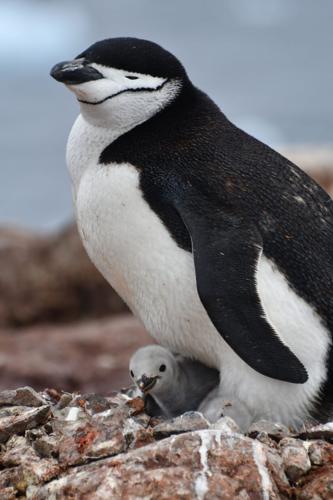
Chinstrap penguin with its chick. (Ignacio Juarez Martinez via SWNS)
Hart, of Oxford Brookes University, says the record shifts are happening in relation to changes in the environment including sea-ice, productivity and temperature.
Each monitoring camera was equipped with a thermometer, enabling the researchers to also track temperature changes at colonies.
The data revealed that colony locations are warming up four times faster (0.3ºC per year) than the Antarctic average (0.07ºC/year), making them one of the fastest-warming habitats on Earth.
Although statistical models suggest that temperature appears to be one of the dominant drivers of the observed shifts in breeding season, the researchers say it remains unclear whether the changes reflect an adaptive response or not - risking a potential "mismatch" with other ecological factors such as prey availability.
Co-author Dr. Fiona Jones, from the University of Oxford, said: “As penguins are considered 'a bellwether of climate change', the results of this study have implications for species across the planet."
She added: "Further monitoring is needed to understand whether this record advance in the breeding seasons of these penguin species is impacting their breeding success.”