


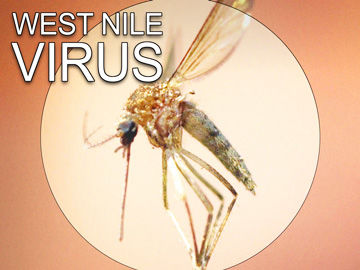
Mosquitoes in the Festus, Imperial and Arnold areas have tested positive for the West Nile virus.
“Flooding earlier this year has given way to extremely hot conditions that are favored by the virus,” said Steve Crawford, Vector Control Program coordinator for the Jefferson County Health Department.
This is the second time this season for positive test results, Crawford said.
“We had some test positive in De Soto in June, but subsequent to that (after treating the area) there have been no additional mosquitoes test positive in De Soto,” he said.
The Health Department’s Vector Control Program has 90 mosquito traps throughout Jefferson County for testing. Three traps, located in Imperial, Arnold and Festus, came up positive in a recent test, Crawford said.
“We highly recommend residents and visitors to the county take steps to protect themselves,” he said.
Health Department officials encourage residents to use insect repellents that contain DEET or Picaridin and wear light-colored clothing.
They also ask residents to remove standing water sources, for example, old tires, cans, buckets or other containers that may contain water where mosquitoes can breed.
“Decorative ponds should be stocked with goldfish or should have a fountain to move and filter the water within the pond,” according to a Health Department press release.
Positive tests for West Nile virus in mosquitoes in Missouri is “not uncommon” during the summer, said Dylan Steigerwald, Health Department epidemiologist. “It usually happens every year.”
So far, two Missouri residents, one in St. Louis County and one in St. Charles, have “probable cases” of West Nile, Steigerwald said.
“Jefferson County has not had any this year, as of July 25,” he said. “We also had none last year.”
When West Nile virus is contracted, it can have serious consequences in rare cases.
According to the Centers for Disease Control and Prevention, “Seventy to 80 percent of those who become infected with West Nile virus do not develop any symptoms.
About 1 in 5 people who are infected will develop a fever with other symptoms such as headache, body aches, joint pains, vomiting, diarrhea, or rash. Most people with this type of West Nile virus disease recover completely, but fatigue and weakness can last for weeks or months.
Less than 1 percent of people who are infected will develop a serious neurologic illness such as encephalitis or meningitis (inflammation of the brain or surrounding tissues).
About 10 percent of people who develop a neurologic infection due to West Nile virus will die.”
People over 60 years of age or those with certain health issues are more vulnerable to West Nile, according to the CDC.
In addition to mosquito repellent and removing standing water, the Health Department recommends residents clean gutters and screen rain barrels. The department also recommends the use of “Torpedo,” “Mosquito Bits,” and “Mosquito Dunks” to treat permanent or semi-permanent water sources, the release said.
The Health Department’s Vector Control Program has treated all three areas and informed officials about the problem in cities that have a mosquito control program. The department will continue to closely monitor the affected areas, Crawford said.
Residents also need to be involved to protect themselves, he said.
"It takes everyone in the community to take responsibility to use insect repellents and to remove or treat standing water sources," Crawford said.
The Health Department plans to continue testing for the virus through the end of September.
For more information, contact the Vector Control Program at 636-797-3737, ext. 150.