


The Arnold City Council had a portion of its Jan. 17 meeting go to the dogs – and to the cats and other animals.
Council members voted to amend three city codes related to service animals, animal bites and disposal of animal fecal matter.
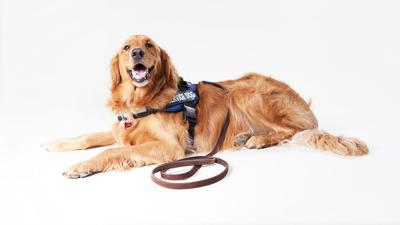
The council voted 6-0 to allow service animals inside city-owned buildings and facilities, as long as documentation can be provided showing they are service animals.
Previously, the ordinance prohibited animals inside city facilities with no exceptions, although in practice, the city did allow people with seeing-eye dogs and other service dogs inside, City Administrator Bryan Richison said.
“Before the code was changed, you could read that as saying service animals are not allowed,” he said. “We wanted to make that change as more and more people seem to be using service animals for various reasons; we wanted to make sure we are ready to accommodate that.”
Richison said the proliferation of emotional-support animals was a primary factor for the city revisiting its service animal laws.
The previous ordinance stated “a service animal whose sole function is to provide comfort or emotional support does not qualify as a service animal.”
The amended ordinance removes that restriction. “It puts us in a position that if we have someone who brings in a dog and says it is an emotional support dog, we can say our code allows that, but you have to provide certification,” Richison said. “It can prevent abuse.”
Also on Jan. 17, the City Council voted 7-0 to close a loophole that did not specifically address an animal biting another animal.
“The way the code was written it was clear your animal biting a person was a violation,” Richison said. “We have always interpreted that to apply if your animal bites another animal, but that wasn’t explicit. This is another potential loophole the city is clearing up to make it explicit. Before, we treated it that way, but it wasn’t crystal clear.”
The City Council also voted 7-0 to approve an animal ordinance that clearly spells out a pet owner’s responsibility to dispose of fecal matter on his or her private property.
“It gives us power to deal with a nuisance,” Richison said. “There was nothing in our code that required you to clean up animal fecal matter off your property.”
Richison said he thinks the new law will rarely, if ever, need to be enforced. He also said it will likely be complaint driven.
“Do I think we will ever use that? I hope not,” Richison said. “I don’t know if it has ever been an issue in the history of the city where somebody had a yard so full of fecal matter that it was a problem. It was a loophole or blind spot if there would be some kind of problem with somebody not cleaning up fecal matter in their yard. Now, we have the ability to deal with that.”
Richison said he doesn’t believe the new rule will be abused since the city has to ask for permission to search someone’s yard to determine if there is a problem, and the property owner can deny that request.
He also said, however, if the problem is visible from public property, such as the street or sidewalk, a citation can be issued without inspecting the property.
Even after a citation is issued, though, the case would go to Municipal Court, and Richison said the city would have to prove a health risk existed for the property owner to be penalized.
“There is subjectivity there. What is too much? When does it become a health problem? It probably will be an issue that only comes up if there is complaint, or if we become aware of some unusual situation where there would be a yard full of it,” Richison said.
“It is there for the extremes, and theoretically, it could be used for something less. But the check on the abuse is the court system. We would have to go before a judge to make our case, and the property owner would make his or her case.”
Ward 4 Councilman Gary Plunk was absent from the meeting, and Ward 1 Councilman Jason Fulbright was not in the room when the service animal amendment vote was taken.