
Even though new rock music is still being produced, young people are increasingly seeking out classic rock.
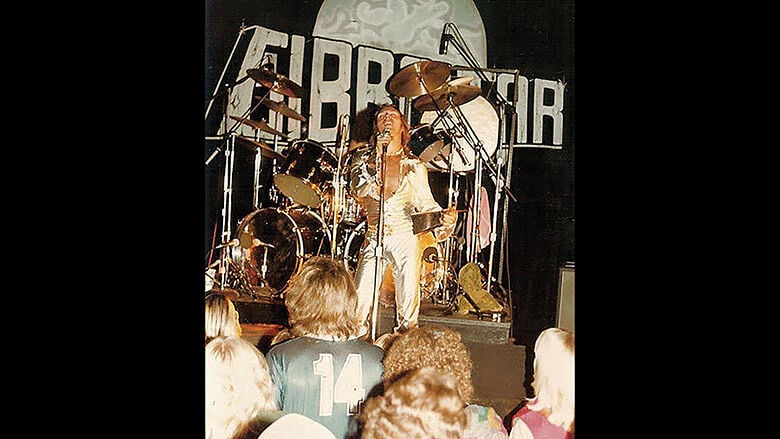
For example, an album recorded in 1974 by a local band called Gibraltar is getting increasing airplay since Riding Easy Records re-released it in November. The album is available on CD and on streaming platforms such as Spotify and Apple Music.

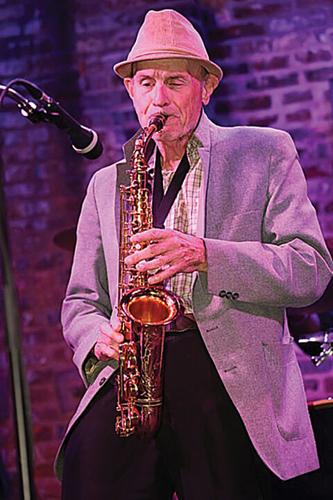
Joe Prichard plays the sax at BBs Blues Bar in 2022.
Joe Prichard, 77, of Festus, a former Athena Elementary teacher and lifelong musician who occasionally played with the band, bankrolled the 1974 recording, which is likely why it is listed as “Joe Prichard and Gibraltar.”
“I wrote out some stuff about the lyrics and the music, and that’s what ended up being used,” Prichard said. “I expected they’d go on and make more recordings. I didn’t think this would be the only one.”
What is it about this nearly 50-year-old recording that has captured the attention of a new generation of rock fans?
“The excitement and emotion of that time just come through in the music,” said original band member Steve Armstrong. “I think people appreciate music that is less processed, more raw.”
Armstrong also said there’s something special about music created by bands.
“Look, a moderately talented guy these days in his basement studio can do it all himself – lay down a drum track, play instruments, do the vocals – and do a pretty clean job,” he said. “But music loses something when it’s not collaborative.”
Coming together
The Jefferson County-based band got its start in the 1960s as Mainline, with the late Jack Pratt on guitar, the late Dave Harmon on bass, the late Norman Pelot on drums and Armstrong on sax and lead vocals.
“I met them in April or May 1969 and was a roadie,” said Gary Holdinghausen, who now lives in Texas. “They were one of the most popular bands in Jefferson County. I worked with them, setting up equipment, and they had practice in my garage in Hematite.”

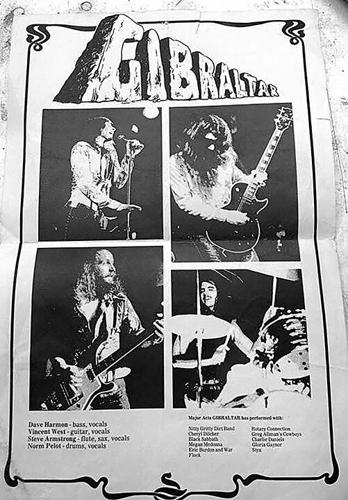
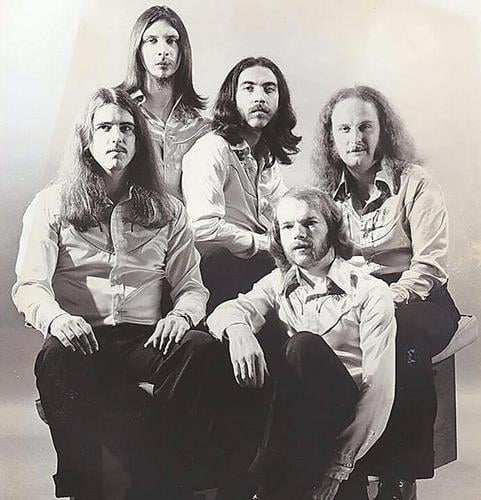
Members of the original Gibraltar band, from left, Norman Pelot, Steve Armstrong, Vince West, Jack Pratt and Dave Harmon.
Holdinghausen, who now manages the Mainline/Gibraltar Facebook page, said he has fond memories of his time with the band.
“On Nov. 28, 1970, Mainline was scheduled to open for Black Sabbath at the Rainy Daze Club in St. Louis,” he recalled. “Black Sabbath called about an hour after the show was scheduled to start and canceled. We never found out exactly why.”
The Mainline band renamed itself Gibraltar in 1972. The late Vince West soon joined on rhythm guitar, and several other local musicians came and went around the core group.
“We had Sugarbear (the late Mark Ellsworth) on guitar, Robert ‘Ferd’ Frank on bass, Tom Knowles on drums, Roger House on guitar, Joe Prichard on sax and keyboards,” Armstrong said.
The band’s reputation grew rapidly, largely because of their talent.
“I remember going to a CYC dance at Sacred Heart gym (in Crystal City) and seeing them for the first time,” recalls local businessman Rick Fischer. “I stood in the front row with my mouth hanging open watching Jack Pratt play guitar like Jimmy Page or Jeff Beck. These guys were mechanically as good as Led Zeppelin, and they just blew me away.”
Working hard
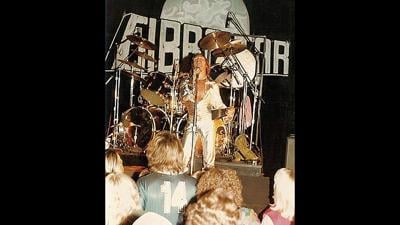
The Continental booking agency in St. Louis booked Gibraltar into venues all around the area, often as the headline act for a new club opening. The band rehearsed three or four nights a week and played gigs every weekend.

Gibraltar headlined a concert at the Caveland roller rink in Festus in 1973. The band played at Caveland alongside acts like Ted Nugent, Bob Seger and the Charlie Daniels Band.
“We played at a small club called Rusty Springs with Mama’s Pride,” Armstrong said. “Sometimes we’d do a set together, and there was such mutual respect. It was a lot of fun.”
The band played with or opened for the Nitty Gritty Dirt Band, Gregg Allman’s Cowboys, Styx, Ted Nugent, Bob Seger. They played on the same bill with Blue Oyster Cult and Black Oak Arkansas at the Kiel Auditorium in 1977.
“In the mid-70s, we were making $150,000 a year,” Armstrong said.
There were downsides, though.
“Nobody got married or had a family; it was too stressful,” Armstrong said.
In addition to the rehearsals and travel, there was the constant scheming and striving to get seen and maybe signed by a record label.
“Today, you can record your stuff at home and put it on the internet and the record labels find you and produce you,” Armstrong said. “Back then, the executives came out and went to clubs and shows to find new talent.”
A musical high
The members of Gibraltar made a few amateur recordings over the years, but little has survived.
Armstrong said Continental was eager to keep the band on the road instead of in the recording studio.
“We were promised a lot of things,” he said wryly. “But you don’t want your best plow horse in the pasture; you want him up front leading the team.
“It’s a shame more wasn’t put on vinyl, because there was a lot of good music.”
In early 1973, band manager Lee Ogle set up some recording time at Jim Rhodes Studio in Cape Girardeau.
The band recorded an eight-song album, but it never saw release.
“By the time I left the band in April 1974, Lee was still trying to find a label, but nothing was happening,” Holdinghausen remembers. “I confirmed with a nephew of Jim’s that all Jim’s tapes no longer exist; everything was either recorded over or thrown out. The one good thing is I made a copy from the original acetate. It’s the only known copy of the full LP to exist.”
A year later, Prichard ponied up $2,500 for the 1974 session, resulting in the five-track album that recently was resurrected.
“The first side was songs the guys in the band had written,” Prichard said. “We realized we didn’t have enough material for the second side, so we took a song I had written and just jammed out – it’s like 10 minutes long.”
The studio pressed 1,000 copies of the album, most of which band members sold for $4 apiece at concerts and around town.
“I sold the last 200 to a guy in Switzerland who was buying up other records,” Prichard said. “It just took off in Europe, I guess.”
Gibraltar mostly petered out in 1985 or so when members moved on with lives and other careers.
Prichard taught until 1991 and played music professionally, even touring nationally with Chuck Berry in the 1980s.
“I don’t play much anymore,” he said. “They call me up sometimes to play my sax on some blues songs at Hammerstones in Soulard (in St. Louis).”
Neither he nor Armstrong are surprised that young people are rediscovering the classic rock of their youth.
“Gibraltar was a very talented band musically,” Prichard said. “Steve’s song, Rose Petal Lady, is a genuine, hard-knocking, powerful blues song. I hope Steve has a copyright on that.”
Armstrong holds a trademark on the Gibraltar name, but isn’t worried much about unauthorized use on a small scale.
“I don’t know if it’s really worth the effort and expense to do a copyright search,” he said. “Anyway, it was never completely about money for any band I was ever in.
“I’m playing with some people now, and there is nothing in life more satisfying than when everything is hitting on all cylinders and everyone is communicating on such a high level. It’s astounding. Nothing in life like standing in front of a crowd and the instrument is your voice.
“It’s a level of high that doesn’t exist any other way.”