


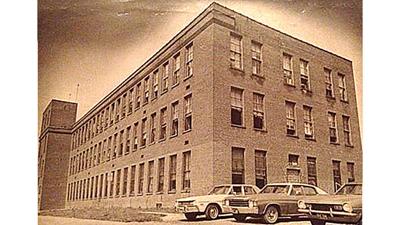
The city of De Soto is buying the property where a shoe factory used to operate.
De Soto City Council members voted 4-0 on Jan. 17 to buy the 1.7-acre property at 301 E. Clement St. from Jefferson County, which had taken over the property because of unpaid taxes.
De Soto will pay $4,004.90 for the land, City Manager Todd Melkus said.
He said Jan. 18 that the council vote gave him permission to carry out the purchase.
“We will get an ordinance over to the county soon, and probably in the next week or two we will take possession of the property,” he said.
Melkus said the city had placed about $100,000 in liens on the property because of demolition and cleanup work it had completed there.
“Other people were interested (in buying it), but we had such big liens on it from the work we did on it over the years, it kept people from buying it,” he said. “The previous owner walked away about four years ago. We had to haul off a lot of things. It wasn’t clean fill, so that adds up.”
Melkus said De Soto officials wanted to buy the property to make sure it was mowed and maintained.
“The property is in the floodway, so there’s not a lot we can do with it,” he said. “But, we were concerned about it just sitting there.”
Melkus said the council will talk about possible uses for the property later, probably when they’re working on the next budget for the fiscal year that will start Nov. 1.
“We have talked about maybe using it for a water detention area,” he said.
De Soto Mayor Kathy Smith, 70, has a strong connection to the old factory because her parents worked there, and Smith, herself, worked at the new factory that replaced it.
Also, Smith said several years ago she spent about a year and a half researching and writing a book about the various shoe companies that operated out of both the old factory and the newer building where it was relocated.
“There was so much history there,” she said.
Smith said the H.W. Peters Shoe Co., which was based in St. Louis, built the old three-story factory building in De Soto in 1907 and operated there until 1911, when it merged with Roberts, Johnson and Rand and became the International Shoe Co. That company folded in 1958.
Then, some De Soto businessmen talked with Penn Hamilton of the Hamilton Shoe Co., also based in St. Louis, and enticed him to reopen it in 1959 as the De Soto Shoe Co. It made women’s shoes under the Penaljo brand, Smith said.
She said the city paid Hamilton $3,000 as an incentive to reopen the factory, which he paid back.
In the early 1980s, the company wanted a bigger, more modern factory and built a new single-story building where SMCI is now housed.
“We called it the new shoe factory,” Smith said.
She said the De Soto Shoe Co. eventually was sold to Pacific Dunlop, based in Australia. After about five years, though, James Norwood and Phillip Knapp, who were affiliated with Pacific Dunlop, bought it and started the Norwood Shoe Co. there. It closed in 1994.
“That was the last of making shoes in De Soto,” Smith said.
She said two other businesses operated out of the old shoe factory building – Soundelier and then Newkirks, which refurbished telephones.
After Newkirks closed, the building sat vacant until Martin Ross purchased it, she said.
“He worked at Chrysler and his intentions were to distribute auto parts out of it, but the bottom dropped out of the economy in 2009, and he let it go for back taxes and the county took it over,” Smith said. “Then John Watkins purchased it from the county for $50 in 2016, and his intentions were to take it down and sell a bunch of brick. He did sell a lot, but then it was sold to Sean Corbett, who wanted to sell the timbers from the building. He was the last owner and let it go, and it went to the county, which sold it to De Soto.”
She said the city had most of what was left of the building demolished a few years ago.
“It had leaks in the ceilings, and the floors were collapsing,” she said.
All that’s left now is the concrete foundation, she said.
Smith said she’s glad De Soto bought the property.
“The city needed to buy it because it had become an eyesore,” she said. “The city’s intention is to maintain it for safety and to keep the town clean. The intention is to clean it up and take out the old foundation.
“Maybe our flood committee might be interested in it to make a green space.”