

The Valle Ambulance District in southern Jefferson County has lost its appeal of a ruling in a lawsuit it filed seeking to get the county government to secure payment of bills incurred by Jefferson County Jail inmates.
In the original suit, filed in January 2019, Valle Ambulance asked the county to pay a $1,108.40 bill for a call the district made to treat a Jail inmate in 2018.
On June 30, 2020, Div. 5 Circuit Judge Victor Melenbrink ruled in favor of the county, denying Valle’s request for a declaratory judgement.
Valle Ambulance filed an appeal on Aug. 6, 2020, in the Eastern District Court of Appeals, but the court ruled on April 20 to uphold the original decision.
Attorney James Kreitler, who represents Valle Ambulance District, said it was something of a test case to help clarify the meaning of current statutes and hopefully solve the growing stack of Jail-related bad debts the district has been forced to write off.
“We have about $150,000 worth of these unpaid bills, about 70 cases,” he said.
It’s about the statute
There is no disagreement over the facts in the case; both parties agree the ambulance district provided a service to the inmate and payment for that service is the inmate’s responsibility.
At issue is who is responsible for actually collecting the debt, with each side citing an interpretation of state statutes in support of its position that the other entity is responsible.
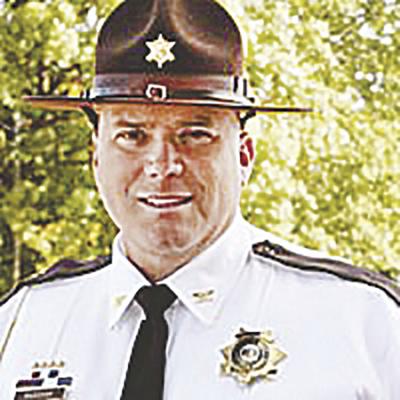
“This is not the first time a case like this has been argued, and I don’t think it’ll be the last,” Jefferson County Sheriff Dave Marshak said. “It needs to be changed statutorily. As (the statute) reads now, it’s the responsibility of the inmate. When the inmate can’t pay their bill, Valle wants us to bear that burden, and we cannot bear the cost of every transport.”
Valle officials point out that many of the inmates who receive services are not residents of the district, or in some cases even of the county.
“You can have 10 guys who live in another district, and we see them on a call at the Jail,” Valle Ambulance Chief Jesse Barton said. “If they don’t pay, we are stuck with the debt, not their home district. We just don’t think it’s fair that the taxpayers here have to bear the whole burden.”
Both sides seem to be doing the best they can to avoid an adversarial relationship.
“It was a little disappointing they felt they had to sue us,” Marshak said. “We’re doing the things we can on the front end to be a good partner, and we maintain a good working relationship with all the first responders in the county.”
Marshak said the county has increased the number of hours medical staff are on duty at the Jail.
“We believe our efforts have resulted in more diagnoses in-house and fewer transports to the hospital,” he said.
Barton agreed.
“Oh, absolutely we have seen a decrease in calls to the Jail,” he said. “And the district appreciates that tremendously.”
But the increase in medical costs at the Jail are hitting the county as hard as unpaid debts are hitting the ambulance district.
“Since 2016, our Jail medical costs have increased 138 percent,” Marshak said. “Nearly 3 percent of our budget – about $879,000 a year – goes for medical costs. So we definitely understand the concept of cost increases.
“We’re being good partners, and we’ve done our part. Because an inmate can’t pay, I don’t know that the county should be on the hook for that,” he said.
The Valle Ambulance Board of Directors voted April 28 on whether to pursue further appeals in the case, but tied 3-3, so no appeal is being sought at this time.
Barton said Steve Bergner, Larry Cain and Tammie Scullin voted yes, while Patrick Bingman, Becky Lowry and Cary Manning voted against the proposal.
“So this is where we are right now,” Barton said. “The system is kind of a mess.”
Kreitler said Melenbrink, in his comments in the original suit, mentioned the possibility of tying costs like ambulance bills to an inmate’s bond, or making it part of the court costs associated with their case.
“That way, we could seek reimbursement through legal action,” he said. “But then, that means we’d be party to a criminal case, and the mechanics of that are just staggering.”
Barton, Kreitler and Marshak all said they hope to see changes to the statutes that lead to a more practical, equitable way to handle the whole situation.
Meanwhile, they are resolved to work together toward a common goal.
“We’ll continue to work well with the Sheriff’s Office and the county,” Kreitler said. “We will continue to provide services to whoever may fall within our district.”