








(Photo by Kinga Howard on Unsplash)
By the age of 32, Americans plan their social calendars around their sleep schedules.
That’s according to a new survey of 2,000 general population Americans, which revealed the average respondent will start prioritizing their sleep over plans with loved ones in their early thirties.
But instead of just saying “no” when a plan would interfere with their shut-eye, some people will turn to creative excuses. The survey asked respondents to share the wildest excuses they've ever used to get out of plans, and one said, “I told someone that an alien spaceship abducted me and put me back after the plans I was invited to.”
Others were simpler, but still effective: “My mom needed me,” “I have to clean my house for guests,” but the inviter “didn’t know the guests were pets,” or “I’ve been arrested.”
Some respondents were more honest, saying they’ll tell people, “I’m too old” or “I don’t want to go.”
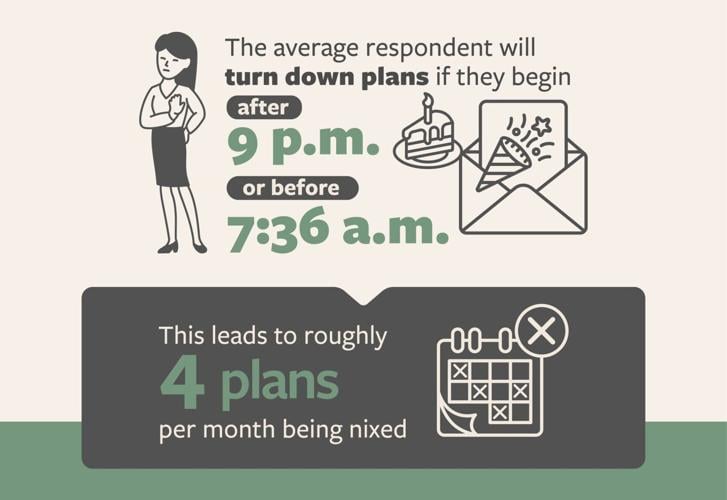
Conducted by Talker Research on behalf of Avocado Green Mattress, the survey found the average respondent will turn down plans if they begin after 9 p.m. Equally, they don’t want to be social too early in the morning — saying “no” to plans that begin before 7:36 a.m.
This leads to roughly four plans per month being nixed, and for almost half of respondents (47%), they do this without any feelings of guilt.
Some respondents share their boundaries upfront: 41% have told their loved ones not to invite them out at certain times because they’ll be in bed.
Younger respondents were much more likely to have done this, compared to older generations: 55% of Gen Zers surveyed have told their loved ones about their time restrictions for making plans, compared to just 29% of baby boomers.
Perhaps baby boomers don’t feel the need to set that boundary, as they were the least likely to feel guilty about turning plans down — 61% said they “never” feel guilty when saying no to sleep instead, compared to 28% of Gen Zers.
“Getting regular, lengthy, quality sleep is essential for our overall health and wellness,” said Laura Scott, director of brand marketing at Avocado Green Mattress. “There shouldn’t be any guilt or embarrassment about setting boundaries to ensure you have the time you need to rest, recharge and catch some z’s.

(Talker Research)
“That doesn’t mean it can’t be difficult to have those conversations, but it’s important to take care of yourself and share your needs with your loved ones — perhaps while scheduling other time to see them and spend time together.”
While 64% said the “best kind” of weekend is one with no plans, respondents were also asked about their “ideal social outing” — if they were to make weekend plans with loved ones.
They’d like for it to be on a Friday evening (25%) — though Saturday afternoon was a close second (20%) — lasting just two and a half hours. And they’d prefer something small rather than a big group, putting their list of attendees at just four other people.
This aligns with other findings in the survey: respondents said their favorite types of plans are dinner plans (37%), going out for lunch (33%) or having a small get-together at someone’s house (27%).
“It’s great to find a balance between seeing loved ones and getting enough sleep: while sleep is important, finding time to be social and connect with friends and family is equally as important,” said Scott. “Outings that aren’t too late or too socially draining are perfect — then Americans can be home and in bed when they want, to ensure a good night’s rest.”
Please note: free text responses have been minimally edited for spelling and grammar.
Research methodology:
Talker Research surveyed 2,000 general population Americans who have access to the internet; the survey was commissioned by Avocado Green Mattress and administered and conducted online by Talker Research between May 6–10, 2026. A link to the questionnaire can be found here.
To view the complete methodology as part of AAPOR’s Transparency Initiative, please visit the Talker Research Process and Methodology page.