
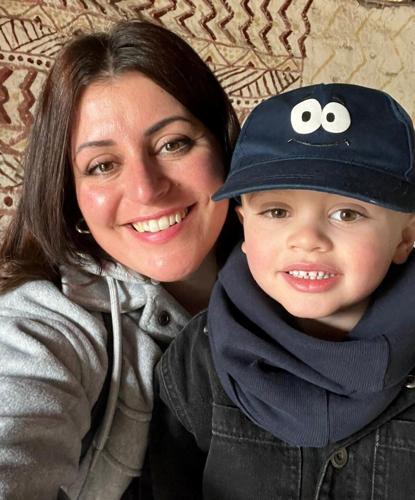
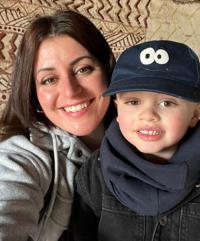
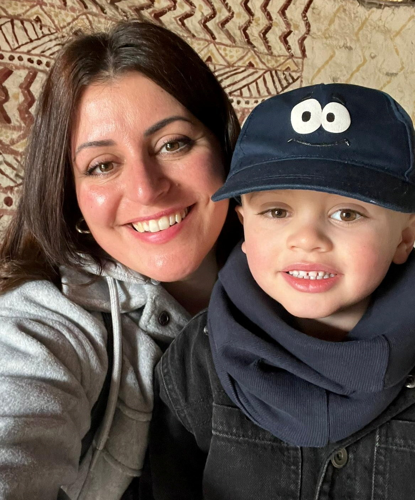
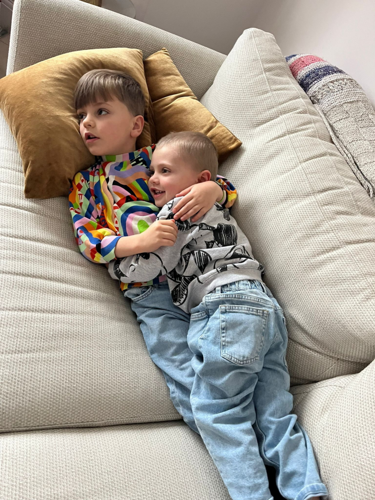
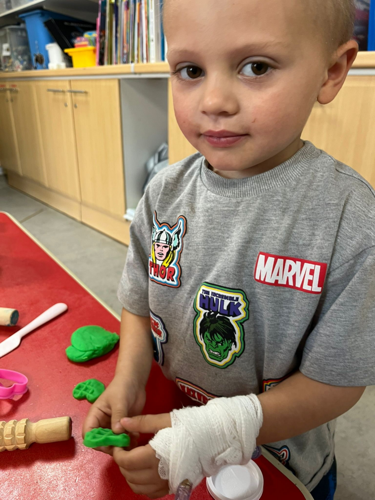

Maria Simeonidis with her son, Isaac. (Maria Simeonidis via SWNS)
By Ben Barry
A 4-year-old boy had his right eye removed after his mother noticed a white glow while watching Paw Patrol.
Maria Simeonidis, 37, noticed a white glow in her son Isaac's right eye while he was celebrating his third birthday on June 8, 2024.
Concerned, she took him to the optometrist, who said they could see something in the back of his eye and transferred him to Royal Bournemouth Hospital.
There, a doctor said he suspected Isaac had a retinoblastoma and referred him to the Royal London Hospital, where he was put under general anesthesia, and Isaac was diagnosed with unilateral retinoblastoma—cancer in one eye.
He underwent six months of chemotherapy, which was successful, but Isaac relapsed twice.
Simeonidis and doctors agreed the best option was to remove his right eye and fit him with a prosthetic one as "he had already been through so much."
Simeonidis, a preschool assistant from Bournemouth, said: "When doctors told me that Isaac had a retinoblastoma, I started crying.
"As a worst-case scenario, I thought it might be a retinoblastoma, but people were telling me it was so rare and it could be a cataract.

(Maria Simeonidis via SWNS)
"I just knew something was wrong, and as a parent, you have to trust your gut.
"I remember Isaac had his pupils dilated; he turned to me and said, 'Mommy, I can't see you, but why are you crying?'.
"I thought he was going to die; I know it sounds dramatic, but that is how I felt—it was awful."
On his third birthday, Isaac was watching Paw Patrol with his older brother, Simeon, 6, when Simeonidis noticed a white glow in his eye.
Initially, she thought it was the light reflecting on his eye, but after mentioning it to her partner, Matthew Comley, 37, he said he had seen it a few times too.
"Matthew said to me, 'Oh yeah, do you mean his right eye?' I immediately thought, sh*t, how does he know what eye I mean?" Simeonidis said.
"He said he noticed it a few times; I thought no matter what it is, it definitely isn't anything good."
Simeonidis immediately booked an appointment at her local optometrist, who said they could see something at the back of Isaac's right eye, and transferred him to Royal Bournemouth Hospital.

(Maria Simeonidis via SWNS)
There, Isaac had an eye test and an ultrasound, and the ophthalmologist said he wanted to refer Isaac to the retinoblastoma center at Royal London Hospital.
Simeonidis said: "After he did his examination, it all went quiet. He called his assistant in, and then I knew.
"The quietness of it all was very unnerving.
"He told me that he can't diagnose Isaac with a retinoblastoma, but if I was to ask him, he was sure it was one.
"That afternoon was horrible for us; we just didn’t know what was going to happen. Would Isaac be okay, or would he die? It was just a horrible day.”
During his visit to Royal London Hospital, Isaac went under general anesthesia so specialists could take a look at his eye.
The specialists confirmed that Isaac had a unilateral retinoblastoma and would need to undergo treatment.
Simeonidis said: "Telling our family and friends was hard, but the hardest part was explaining to Isaac’s brother Simeon what was happening.
“We were given some treatment options, and we decided on systemic chemotherapy, which we felt was the best option for Isaac at the time.
"One of the hardest things for me personally was the fitting of the central line and all the tests before treatment, maybe because everything was very unfamiliar to us.”
Isaac started six months of chemotherapy, which started in June 2024.
After the chemotherapy ended, Isaac was given the all-clear, but in his first check-up after Christmas, they discovered retinoblastoma seeds—pieces of the tumor that have broken off—which they then treated with cryotherapy—a freezing treatment used on small tumors.

(Maria Simeonidis via SWNS)
"Several rounds later, they discovered a small relapse of Isaac’s tumor," Simeonidis said.
"We felt so deflated but decided to give it another try. So, we got booked in for plaque treatment—a tiny piece of radioactive material which is attached to the outside lining of the eye to kill targeted cancerous cells inside.
"It was done at the Royal London Hospital, and we had to isolate for most of our stay. Isaac really struggled with the plaque treatment; he was in pain and very uncomfortable.
"He refused to open either of his eyes for two whole days, but we were hopeful the plaque would finish the tumor off for good."
Sadly, three months after the plaque treatment, a scan showed that Isaac had relapsed again, and a consultation with Simeonidis confirmed the best option was to remove Isaac's right eye, which took place in August 2025.
Simeonidis said: “We decided that Isaac had endured enough and that we were not willing to take any more risks. We opted for an enucleation—removal of the eye.
"It was a hard pill to swallow after over a year of trying to save his eye, which had very good vision, but we just wanted him to have some peace."
Isaac was fitted with a prosthetic eye, and Simeonidis said he is "very happy and confident."

(Maria Simeonidis via SWNS)
She said he understands what has happened to him, and will say he misses his old eye and wants it back.
“Isaac is now nearly 5 and a very happy, confident boy," Simeonidis said.
"Isaac loves everything about dinosaurs and monster trucks; he is very caring and has made some good friends.
"Sometimes he is a bit wary in new locations and realizes that he does not have a full field of vision. But all in all, he manages amazingly. He is aware and understands what happened to him."
The Childhood Eye Cancer Trust (CHECT) is urging parents and healthcare professionals to be aware of the most common possible symptoms of eye cancer—a white glow in the eye, which may appear in a flash photo or in certain lighting, and a squint.
Richard Ashton, chief executive of CHECT, said: “Isaac’s story shows the importance of retinoblastoma awareness among health professionals.
"We are grateful that Isaac’s diagnosis was confirmed and that he was able to receive treatment.
"If you’re worried that your child may have retinoblastoma, please take them to a doctor or optometrist as soon as possible.”