





(Photo by Elements Interactive via Pexels)
Bby Stephen Beech
A breakthrough in treating an aggressive form of prostate cancer could boost survival rates, according to new research.
American scientists have identified a gene that drives the development of neuroendocrine prostate cancer (NEPC).
The study, published in the Journal of Experimental Medicine (JEM), shows that genetic or pharmacological inhibition of Sirtuin 1 prevents the growth of NEPC tumors in mice.
The breakthrough lays the groundwork for future clinical studies aimed at developing new treatments for NEPC in humans, say the research team from Columbia University in New York City.
One in every six men will be affected by prostate cancer in their lifetime.
The current standard of care is androgen deprivation therapy (ADT).

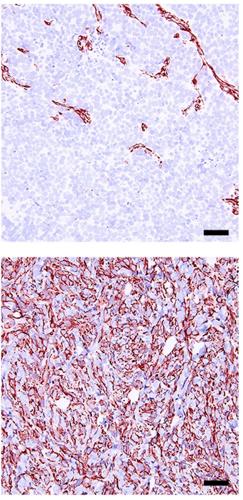
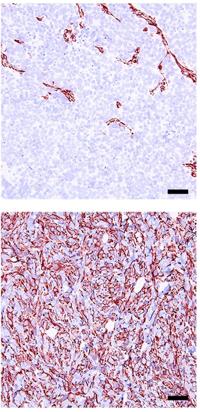
Positively stained NEPC markers (top) are lost when Sirt1 is silenced (bottom). (Nunes de Almeida et al via SWNS)
However, it is well documented that ADT will eventually fail, leading to tumor recurrence and development of the ADT-insensitive aggressive prostate cancer variant, NEPC.
But the process through which ADT-responsive tumors transition towards NEPC tumors — a phenomenon known as lineage plasticity — remains unknown.
Study co-leader Cory Abate-Shen, from Columbia University Vagelos College of Physicians and Surgeons, said: "Elucidating the mechanisms governing this process may improve treatment by overcoming plasticity-associated drug resistance."
Her team performed a genetic screen in mice looking for mutations that recurred across multiple independent prostate cancer tumors.
They identified 75 candidate NEPC-promoting genes, the most promising of which was Sirtuin 1, also known as Sirt1.
Abate-Shen explained that Sirt1 encodes an enzyme with a broad range of functions, including control of gene expression and metabolism.
The research team first looked to a human prostate cancer cell line to characterize the role of Sirt1.

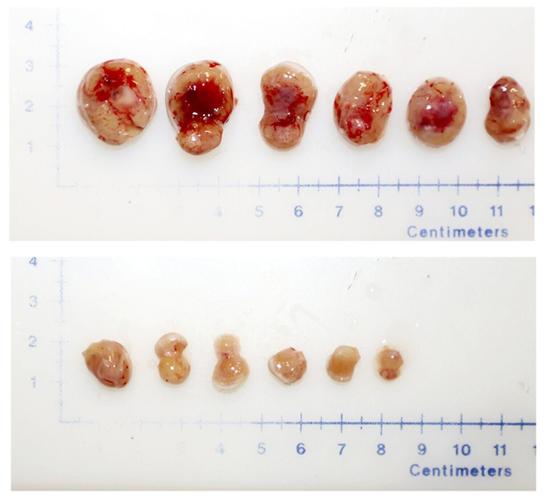
Tumors surgically removed from Sirt1-silenced mice (bottom) are significantly smaller than tumors removed from mice with wild-type Sirt1 expression. (Nunes de Almeida et al via SWNS)
In those cells, the induction of NEPC produced an increase in the expression of genes predicted to be activated by SIRT1 and a corresponding decrease in those predicted to be downregulated by this protein.
Confirming the results, the researchers found that activation of Sirt1 in cells with low SIRT1 expression levels led to a robust increase in key NEPC markers.
Recapitulating their cell line data, the team found that silencing of Sirt1 profoundly reduced tumor growth in mice with NEPC, indicating that Sirt1 is indeed a promising target for NEPC treatment.
They also treated the tumors with the approved SIRT1-inhibitor, Selisistat, which was originally developed for treatment of Huntington's disease.
The team were excited to see that Selisistat administration "significantly" reversed the NEPC phenotype.
Abate-Shen said: "Our findings demonstrate that SIRT1 plays a pivotal role in promoting NEPC, revealing a context-dependent function that extends beyond general tumor growth to the regulation of lineage plasticity and neuroendocrine differentiation."
She added: "This highlights SIRT1 as an attractive and clinically actionable target for lethal prostate cancer that warrants further investigation in future clinical studies."