
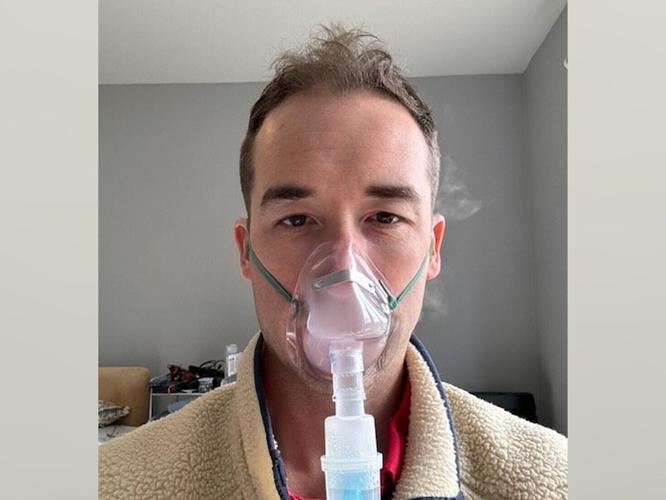
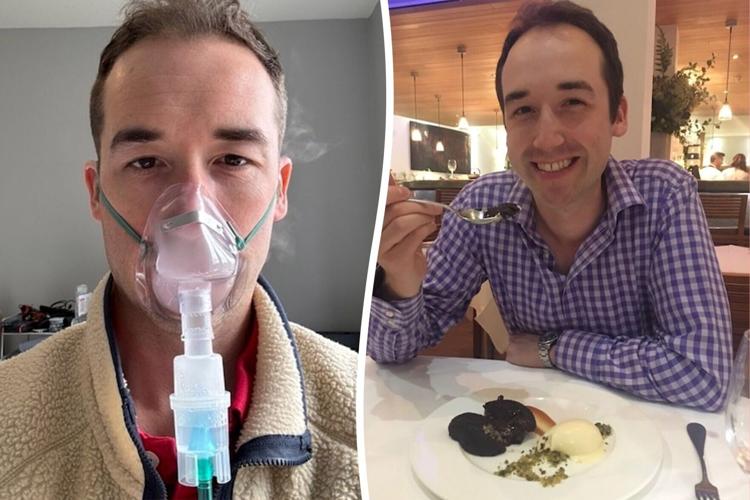
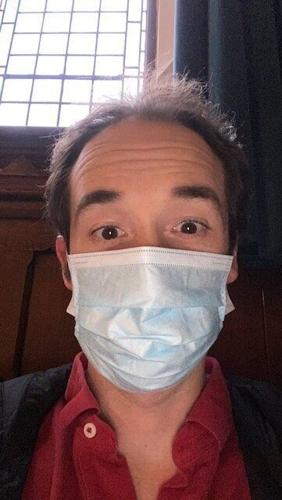
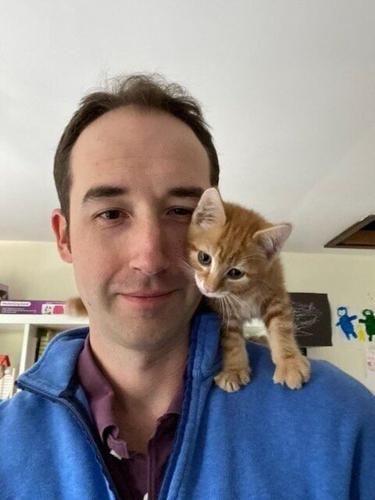
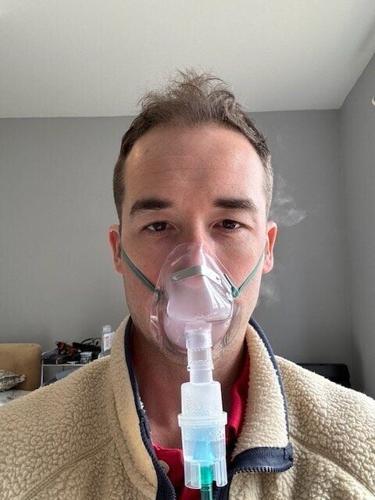
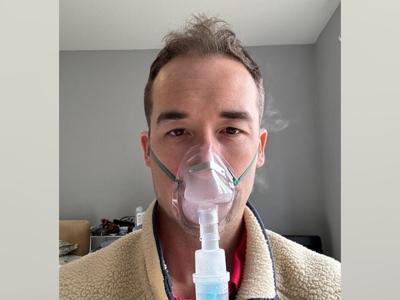

Dr. Paul Wicks used a specially-developed chewing bum to restore his senses. (Dr. Paul Wicks via SWNS)
By Amy Reast
A dad who lost his sense of taste and smell for years after catching COVID-19 and losing his sense of smell has had both senses restored — thanks to specially-developed chewing gum.
The revolutionary clinical trial at the University of Nottingham saw a group of participants chew flavored chewing gums for 12 weeks.
The specially-developed gums had different super-strength flavors — including spicy, minty, sour and sweet.
The successful pilot study, designed by Dr. Nicole Yang, aimed to encourage repair of brain connections associated with smell and taste.
One such participant was Dr. Paul Wicks, 44, who lost his taste and smell after catching COVID-19 in August 2022 — and it never came back.
The dad-of-two, from Litchfield, Staffordshire, could eat the spiciest curries with no effect, and couldn't smell a thing when he changed diapers.
But he longed to smell his favorite smells — coffee beans, shaving cream, his favorite foods, and his children's hair.
After just six weeks of the 12-week trial starting in November 2024, Paul noticed his sense of taste and smell returning — and says it has now been restored to what it was before COVID-19.

Dr Paul Wicks participated in the revolutionary clinical trial at the University of Nottingham saw a group of participants chew flavored chewing gums for 12 weeks. (Dr. Paul Wicks via SWNS)
Paul, a medical researcher, said: "My sense of smell and taste went with COVID — and never came back.
"I couldn't smell anything when taking out the trash or changing diapers — but I also found it sad that everything smelled like nothing.
"Your memory formation is influenced by smells — birthday cakes, your dog, things from your childhood. I was concerned I wasn't making good memories, especially with my kids and wife.
"For the first few weeks of the trial I didn't notice anything, until I tasted a blueberry in my oats for breakfast one day and this sweet flavor exploded.
"That was the first time I had tasted my breakfast in years.
"Over the weeks I started being able to taste and smell things again, and now I'm back to where I was pre-COVID. I feel great.
"Now one of the highlights of my week is refilling my coffee machine with beans.
"When you lose something and then get it back, it gives you a new appreciation. I literally stop and smell the roses."

(Dr. Paul Wicks via SWNS)
Paul first learned about the trial thanks to the charity SmellTaste, for people with impaired smell and taste.
There were 16 people on the pilot and 67% saw their sense of smell improved — and 83% reported an improvement in their taste.
The decentralized clinical trial — meaning it was done from home instead of at the research facility — saw participants being given specially formulated chewing gums.
Paul said: "The theory Nicole [Yang] had was that if you want to train yourself to distinguish flavor, you have to eat things.
"The chewing gums were specially formulated to keep their flavor for longer, and actually change flavor as you chew.
"The flavors were formulated to hit different combinations — like sweet, salty, sour, cooling menthol, a spicy one."

(Dr. Paul Wicks via SWNS)
Paul chewed the gums every morning and every evening, and after six weeks noticed the change when he ate a blueberry for breakfast.
A few days later it was confirmed when he went over dog poo with his lawnmower.
He said: "The dog poo and cut grass assaulted my senses — but it gave me hope something was working.
"Over the next six weeks I started being able to taste food, smell my kids' hair after the shower, and smell my deodorant.
"And by the end of the trial, I had clinically significant improvements."
Paul added: "I'd pretty much accepted I'd never get my taste or smell back.
"Once I had gone for a nice meal for my birthday and they brought out all this lovely food and wine, and I couldn't smell or taste any of it.
"The world felt a bit gray.
"Now, I still say 'hooray!' whenever I smell the trash — until I have to empty it."
The team at University of Nottingham, headed up by Dr. Yang, are now hoping to secure funding for a larger trial.