





Flag bearers, flag wavers and flag burners all have played a part in history, but flag hiders usually aren’t as well documented.
In Jefferson County, as the Civil War approached and allegiances were still being sorted out, one flag caused an unintentional uproar, and another flag went under wraps. Division, tension and rumors were running rampant through Jefferson County in the early weeks of 1861, as outward rebellion was erupting in southern states.
In January of that year, seven southern states declared they would secede from the Union and emotions were high in the state of Missouri, which was brought into the Union in 1821 as a slave state to balance the admission of Maine as a free state. Despite that “Missouri Compromise,” the state was a divided land.
In 1860, right before the start of the Civil War, 114,931 people, about 10 percent of the state’s population, were slaves, according to “Missouri in the Civil War” from Wikipedia.
Many residents in rural and southern parts of the state were pro-Confederate, and those in urban areas like St. Louis, along with German immigrants in eastern Missouri, were pro-Union.
In Jefferson County, many believed “a large majority of the people . . . were in favor of state sovereignty and were in sympathy with the Southern cause, but not to the extent as to make them in favor of secession,” according to the “History of Jefferson County in Goodspeed’s History of Franklin, Jefferson and Washington, Crawford and Gasconade Counties,” published in 1888.
A state convention was called to determine Missouri’s position in relation to the Union and the secessionist states and to take whatever actions were necessary to ensure the sovereignty of the state, according to the history.
Despite the belief that many Jefferson County favored the Southern cause, on Feb. 18, 1861, in an election to name delegates to the convention, “Union delegates carried Jefferson County by an overwhelming majority … The people of Jefferson County preferred to remain in the Union and, if possible, maintain State sovereignty and State neutrality,” according to the history.
Later, when a meeting was held in Hillsboro in the spring of 1861, speeches were given, and a flag with a state’s rights motto inscribed on it was raised. The event caused great excitement all across the county and a rumor spread that a secessionist flag had been raised in Hillsboro, but the flag wasn’t meant to support secession, according to the history.
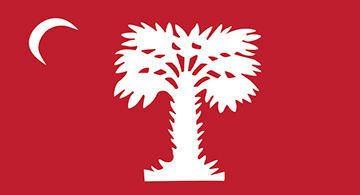
After the Confederates fired on Fort Sumter and President Lincoln called for troops, southern sympathy was high in Jefferson County and a public meeting was called for May 16, 1861, in De Soto. A flagpole was raised and on it, organizers planned to fly a flag with a single star, an emblem of state sovereignty, but it was not raised.
A company of 75 mounted men from St. Francois County arrived to attend the ceremony, and then, before the flag had been raised, a train stopped alongside the gathering and a company of Union troops under the command of Capt. Nelson Cole got off.
“When these soldiers began to emerge from the cars, the men from St Francois County mounted their steeds and quietly retired, and thus avoided a collision. The flag had not yet been raised, but the (Union) soldiers at once cut the pole down, and then began a search for the flag, and the meeting called for the occasion was ‘declared off,’” according to the history.
A search was conducted for the flag and it was “finally found” in the possession of a woman who kept it hidden by sitting on it for most of the day.
Cole’s company then went on to Hillsboro to capture the “so-called secession flag” that had been raised earlier, but after the soldiers saw the flag, “they declared that it was not a secession flag.”
The flag continued to fly until it could fly no longer.
“After being much worn, it was taken down, and having become historic, it passed into the possession of the ladies of the vicinity, many of whom soon had a piece of it in their bed quilts,” according to the history.
Missouri provided 110,000 troops to the Union and at least 30,000 troops for the Confederate Army, as well as additional bands of pro–Confederate guerrillas, according to the article “Missouri in the American Civil War” on Wikipedia,
Both the Union flag and the Confederate flag had a star for Missouri.
Overall, according to the Civil War Trust organization’s website, and estimated 620,000 people died in the American Civil War, more than the American deaths in World War I and World War II combined.