
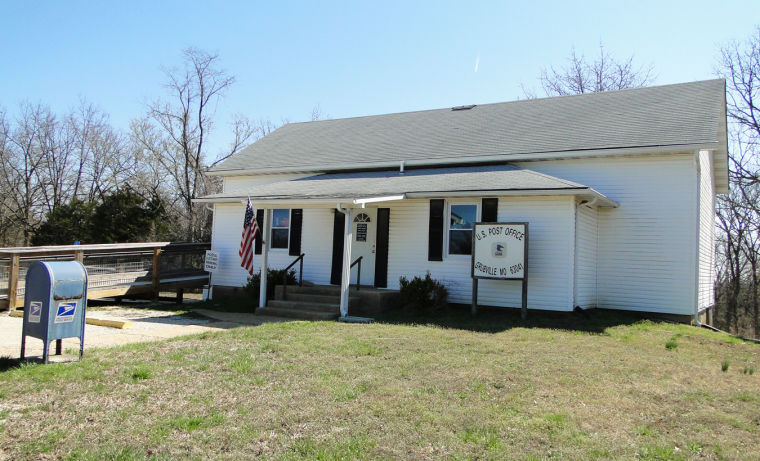

During the Civil War, Missouri was a border state, and tensions were high among neighbors who found themselves on opposing sides of the conflict. Helping the wrong people could get you in a lot of trouble, and in fact, landed Jefferson County’s public administrator and an esteemed Grubville resident E.F. Frost in prison.
Edmund F. Frost was the first postmaster of Grubville when the town was established in 1853. Born in Kentucky in 1820, Frost was brought by his family to Missouri when he was just a toddler in 1822. He was raised in Crawford County, but somewhere along the line he met a woman named Catharine Wilson from west Jefferson County whom he married in 1841, according to the History of Franklin, Jefferson, Washington, Crawford and Gasconade Counties.
It may have been Catharine’s father who named the town because “a man by the name of Wilson had been grubbing or digging out small post oaks, known locally as grubs, and suggested the name Grubville,” according to Ruth Welty in Place Names of St. Louis and Jefferson County.
Frost settled in Jefferson County on government land in 1844 and at one time had 600 acres that he later divvied up among his children. Although Frost was a cabinetmaker for awhile, he also did carpentry work, raised cattle and was a blacksmith. He soon became a leader in the community and was elected public administrator for the county in 1860, according to the History of Franklin, Jefferson, Washington, Crawford and Gasconade Counties.
Unfortunately, in 1861, the Civil War got underway, and Frost found himself on the wrong side of the conflict just a little too close to the Union stronghold in St. Louis.
According to “Missouri’s Union Provost Marshal Papers,” Frost, said to be a blacksmith, was charged on July 30, 1862, with “shoeing horses stolen from loyal citizens to aid the rebellion and leading rebels, with prisoners, around a Union roadblock.”
He was taken to Gratiot Street prison in St. Louis. The prison not only held Confederate prisoners of war, but civilians suspected of disloyalty and Union deserters.
J.W. Fletcher and Oscar Dever testified that Frost had tipped off men who were traveling south. C.S. Beeler testified about the shoeing of the horses and it is said that George Green of Grubville also testified against Frost. There were others who testified in his favor, including Norman Pounds. In addition, testimony included a note from Jefferson County court clerk S.A. Reppy.
Jefferson County Court justices wrote to St. Louis to say that Frost’s work as a public administrator needed his immediate attention. There was a petition for his release.
Finally, Christopher Frost arrived with $3,000 surety for the release of his brother on Sept. 16. Frost, arrested for giving aid to the enemy, however, had his movements restricted to Jefferson, Franklin and St. Louis Counties. He was made to state an oath of loyalty before he was released, according the state "Union Provost Marshal Papers."
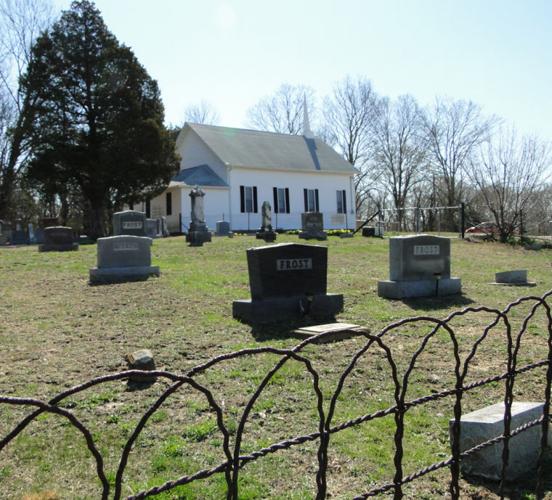
Sometime after the war, Frost was elected as a representative to the state Legislature, on which he served one term. He died on Oct. 21, 1904. He and his wife Catharine, who died in 1901, are buried in the Grubville Baptist Church Cemetery.
The Frost family continued to serve the Grubville community at its post office for the next 100-plus years. Although the Frosts were not the only postmasters, five different Frosts wore that hat, beginning in 1853, when E.F. Frost held the position, according to U.S. Appointments of U.S. Postmasters. The last one, Richard Frost applied for a transfer to the Lonedell Post Office in 1958.
Send submissions to LOOKING BACK to nvrweakly@aol.com or bring or mail them to the Leader office, 503 N. Second St., Festus (P.O. Box 159, 63028). Please include your name, phone number, a brief description of what’s in the photo and tell us how you came by it. Please also include when it was taken, where and by whom (if known). A new LOOKING BACK photo will be posted each week.