


All right, let’s get this out of the way up front.
I am a saltaholic.
In my continuing recovery from a life-threatening heart arrhythmia episode more than 10 months ago, I am way more aware of my dietary health, after years of cavalierly consuming every delicious-but-dangerous food in any quantity I desired.
By far the biggest revelation I’ve had is the ridiculously high sodium intake of my favorite foods.
We know too much fat (especially saturated and trans fats) is bad for your heart and overall health. Cholesterol, ditto. Sugar and processed carbohydrates, double ditto. But did you know sodium is also on the medical community’s 10 Most Unwanted List?
We’ve known for a long time that excess sodium can jack up your blood pressure, increasing your risk of stroke. But it also contributes to higher levels of heart disease of all kinds. There is also emerging evidence connecting it to gastric cancer, obesity, osteoporosis and kidney disease. The more we learn about it, the badder it gets.
We got a reminder of this earlier this month when the World Health Organization released its first-ever report on sodium intake reduction. The 91-page report states that the world is “off-track to achieve its global target of reducing sodium intake by 30 percent by 2025.”
The headline on the release of the report was blunt: “Massive efforts needed to reduce sodium intake and protect lives.”
The report glumly notes that only nine countries globally have any kind of comprehensive policies to cut down sodium consumption. And surprise! The United States is not one of them.
The line in the report that really grabbed me (and I did not read all 91 pages) was this: “Eating too much salt makes it the top risk factor for diet- and nutrition-related deaths.”
Here’s another revelation: I can almost guarantee that you are a saltaholic, too.
Ninety percent of the sodium we take in is in the form of salt (sodium chloride, as you may recall from high school chemistry). Sodium is an essential nutrient, but we only need about 500 milligrams per day. The average daily intake by Americans 2 years old or older is 3,400 milligrams per day. That’s the official number from the federal Centers for Disease Control and Prevention. I’d bet my last dollar the actual number is much higher.
So what are we supposed to do? After an honest discussion of this with your doctor, I suggest three steps, all starting with the letter “A.”
■ Awareness. Look up the sodium content of your favorite foods. The numbers will shock you.
The average sodium content in one slice of restaurant cheese pizza is conservatively estimated at 500 milligrams. Add pepperoni and it doubles.
The federal government (CDC and the Department of Agriculture) recommends a daily limit of 2,300 milligrams. So if you typically eat three slices of pizza for a meal, as I used to do, that’s your daily sodium limit, right there.
I also love chili. Until my heart episode, I would wolf down a can of chili once or twice a week. I just rechecked how much sodium is in a 15-ounce can of Hormel chili. The number almost gave me another heart scare: 1,980 milligrams. Canned soups are nearly as bad.
So start paying attention to those mandatory labels on all packaged foods. You will quickly realize how difficult it is to limit your daily intake to that 2,300 number.
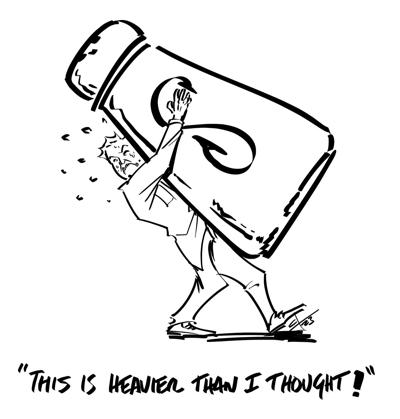
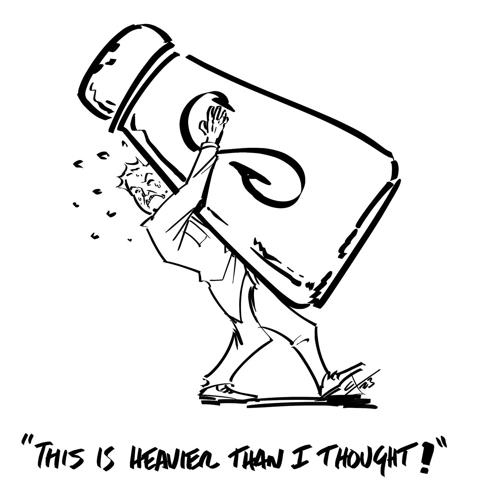
■ Avoidance. The first step in our saltaholic recovery is simple, but not easy. Take that salt shaker on your kitchen table and throw it away. Toss it over your shoulder if you want, for good luck. Or at least stash it in the darkest corner of your pantry.
The cook in your home has likely already salted your meal. That’s enough.
Adding salt to anything you eat, when you want to limit sodium, is like trying to put out a fire with gasoline. If you do nothing other than permanently ban table salt, you are taking a major step in the right direction.
■ Action. Stay away from the obvious sodium bombs I mentioned earlier, and learn what other ones are lurking in your diet (cheddar popcorn, anyone?). Any food with more than, say, 250 milligrams per serving is a no-no.
I say this recognizing that we can’t quit sodium cold turkey. I have not completely given up pizza (frozen or restaurant) for good, nor salty chips or crackers. I cut back on them. The experts agree we can break our high-sodium habits if we work on it gradually over time.
Restaurants and processed-food manufacturers have to do more to help us, too. For example, I now eat low-sodium meats from the deli (and kudos to stores that offer them).
I honestly can’t believe how much sodium I blindly consumed in my pre-arrhythmia life. I especially liked the “meat lovers” pizzas offered by more than a few restaurant chains – “I’d like a large with extra sodium, please.”
Years ago, I took a job in Cincinnati and commuted home to St. Louis most weekends. The highlight of my four-hour drive was stopping at an Italian restaurant in Terre Haute, Ind., and ordering a full pepperoni pizza, of which I’d eat half – plus a couple of delicious (and salty) breadsticks.
Those were the bad old days.
Two thoughts to close with:
A quote from the Bible seems apropos: “Remember Lot’s wife” (Luke 17:32). Read what happened to Ms. Lot in Genesis 19:26.
The chemical symbol for sodium is Na. Let’s add a letter.
“Nah.”