
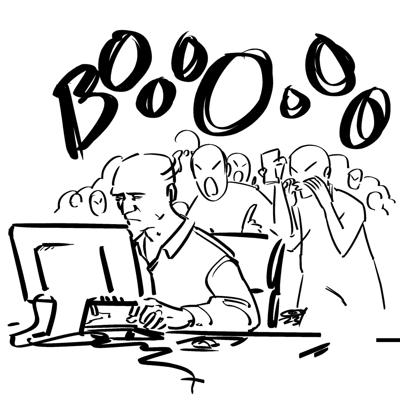
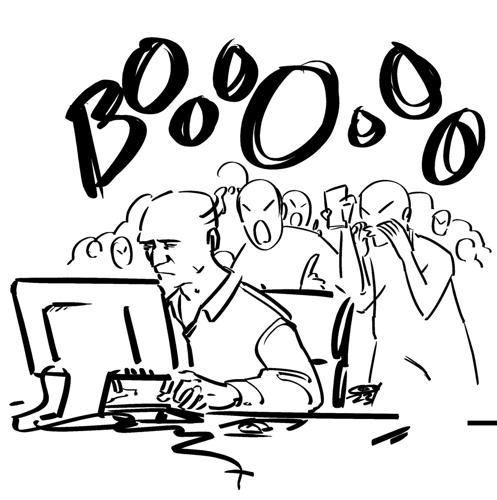
I am a newspaper reporter and at times have covered sports, so I think I can say with some degree of authority that in the eyes of the public, my job is similar to that of a baseball manager or football coach.
Some fans believe they have a better understanding of how to lead a sports team, and I’m no exception. I’ve often questioned the decisions of the management of the Cardinals, Blues and Mizzou Tiger football and basketball teams. I’ve probably second-guessed them all, with the exception of Whitey Herzog. I thought Herzog always did the best with what he had.
As a news reporter, I have heard again and again from people telling me how to do my job ever since I became a professional journalist after departing from Mizzou in 1984 with a bachelor’s degree in journalism in hand.
Other than a couple of years in the 1990s when I worked in public relations for a national lobbying organization, my career has been writing stories for newspapers.
So, here are some of the people I’ve encountered through the years.
■ People who tell me I should be investigating something.
Keep in mind that what is very important to one person is not necessarily so to others. I typically carry such suggestions to my editor, who may or may not think it is a good idea. I will on occasion lobby to do a story, but I am not the final authority.
Sometimes, people obviously are trying to get the paper to do their dirty work. In the weeks leading up to an election, we are subject to calls questioning whether a candidate has met residency requirements or other transgressions. Most journalists I know are wary of any such calls, particularly in the weeks before people go to the ballot box.
■ People who suggest – sometimes in no uncertain terms – that the paper should print the names of suspects in crime stories, even though they have not been charged with a crime.
No.
The papers I’ve worked for have uniformly had the policy of not printing the names of suspects unless and until formal charges have been filed in court. If charges have been filed, it means that authorities believe they have evidence that a person has committed the crime.
Would you want to see your name in print as a crime suspect based solely on someone’s suspicions?
Whether “everyone in the neighborhood knows” someone is guilty, as I have heard people claim, the policy to wait to print the name until formal charges are filed is a good one. We report on crimes, we do not adjudicate them.
■ People who are appalled that errors of fact or spelling appear in newspapers.
Well, the goal is to not make errors. But it happens. We’re humans.
And, when mistakes occur, critics cannot wait to ridicule us.
I wonder how some of these critics would function under the conditions we work under. Most members of the public have no idea of the time pressures that journalists work under.
(Of course, I concede that I have little knowledge of the problems that many other occupations labor under.)
When I worked in public relations, when my boss wanted me to write a story for our magazine, he’d give me a couple of weeks to turn it in.
At a newspaper, I’d have a few hours to contact sources, gather the information and type out a story. Any paper I’ve worked for has needed a steady stream of copy and even writers I haven’t considered particularly industrious churned out more copy than people in most other lines of work.
■ Public figures who inform you that “This is not a story.”
Saying this is like waving a cape at a bull. Admonishing a reporter in such fashion almost always ensures that the reporter will pursue it. When you hear this statement, you have to wonder if the person who says it is sincere or is actually trying to provoke the news reporter to pursue the story.
I have never pulled up on a story because someone I was interviewing told me this. Most often, I repeat that conversation to an editor, who usually directs me to keep digging. It’s almost always a story.
■ People who tell you to write a story based on what they saw on the internet.
Now and then, something from the internet turns out to be worth investigating. However, so much on social media is speculation or outright lies you need to take anything from it with a grain of salt. Make that many grains of salt.
Even an old reporter like me has learned to use the internet in my work. But I know that photographs can easily be altered and online stories are probably not vetted.
■ People who try to convince a newspaper to cover something by letting us know a TV news crew will be there.
This is actually a turnoff to many newspaper folks. Typically, if a TV reporter does show up, the people involved generally pay more attention to him or her than the local newspaper reporter who regularly covers the beat. Assuring me equal access to the information I need to write my story is a good policy.
While I’m getting these things off my chest, please understand I’m not asking for sympathy. I have a good job that I enjoy doing. I’m providing this as a public service to those who communicate with us.