


I feel better now that my old Boy Scout self can stop nagging me.
For years, I told myself it’s time to assemble an emergency supplies kit. I heard the radio spots encouraging people to visit the ready.gov website, maintained by the Federal Emergency Management Agency, and learn how to put together a grab bag of items you’ll be glad you have when disaster strikes.
Procrastination got me every time I thought about it. Then I’d remember the Boy Scout motto I learned at age 10: BE PREPARED.
I wasn’t. But now I am – at least a little. In the process, I got quite an education in how Jefferson County is itself prepared for all manner of calamities. More on that later.
Besides my inner Scout hounding me, I found additional motivation from two disasters dominating the recent news, one natural (the earthquake in Turkey and Syria) and one man-made (the train derailment in East Palestine, Ohio).
So, I clicked on ready.gov. The feds have packed the site with a ton of information, almost too much. I noted the long list of recommended emergency supplies and started gathering items.
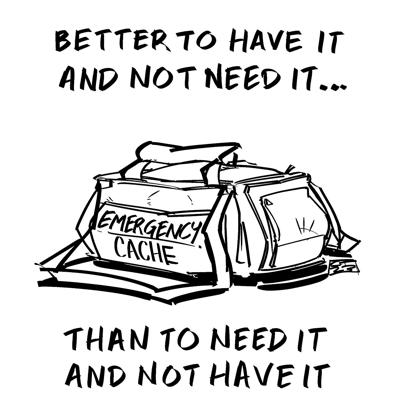
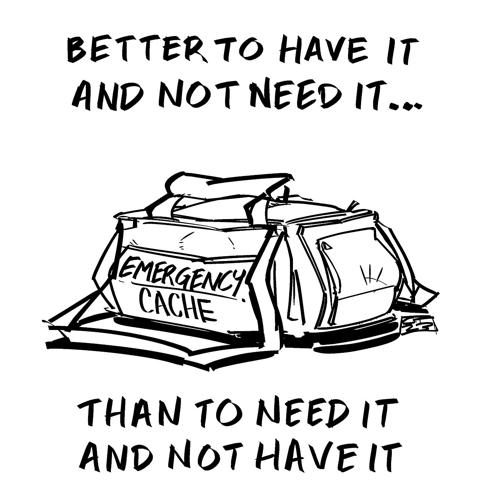
Into a large plastic bin they went: Radio (with extra batteries), food (protein bars and other quick-energy prepackaged stuff that will last awhile), water (one gallon, in a large plastic bottle), flashlight (more extra batteries), a whistle, a pocketknife, two pairs of scissors, a small crescent wrench, a small screwdriver, sanitary wipes, matches, emergency cash (ATMs might not be working), a list of family members’ phone numbers, two pairs of gloves and two blankets.
I still need to add a first-aid kit. For more portability, I put everything in a duffel bag that fits inside the bin. In doing so, I jettisoned the blankets. You can overdo it on this if you’re not careful (or I should say, if you’re too careful).
The full kit bag weighs just under 15 pounds. I keep it inside the bin, parked in our coat closet near the front door of our Festus home.
Next I visited our local authority, the county’s Office of Emergency Management, at jeffcomo.org/222/public-engagement. There you’ll find the county’s Community Emergency Preparedness Guide. At seven pages, it’s a much more concise resource than FEMA’s info-bomb.
The guide boils preparedness down to three essentials: Make an emergency plan (what to do and where to go in an emergency), assemble a disaster supply cache and stay informed.
I’m still sketchy on a plan, so I have work to do there. The stay-informed piece is available through the CodeRED emergency notification system, also known as Reverse 911. Residents anywhere in the county can sign up for the free service through Jefferson County 911 Dispatch by calling 636-797-9797 or visiting the agency’s website, jeffco911.org. The notifications come by phone call, text message, email and social media.
FEMA’s 2022 National Preparedness Survey found that only 41 percent of the U.S. population have spent time planning for emergencies and only 33 percent have put together an emergency supply cache.
I had a great email exchange on this with Warren Robinson, director of the county OEM, and he told me his No. 1 wish “is honestly just seeing more people taking steps to learn about local hazards and to prepare.”
From his perspective, more households getting prepared is good for everybody.
“When individual households take time to prepare,” he said, “it reduces service demand on public safety by heightening overall community resiliency.”
Robinson noted that disasters tend to have similar impacts – think flooding, thunderstorms, tornadoes, winter storms and utility outages – which simplifies the task of preparing for them.
“Taking steps now to ensure fundamentals are covered, like access to food, clean water and shelter will be beneficial to anyone impacted by a disaster, regardless of its type,” he said.
He told me the most common mistake people make when getting prepared is starting too big.
“The 72-hour supply cache is promoted as the ideal baseline for preparedness, but depending on household size and other factors, the cost of going from no-supply cache to a 72-hour cache can become prohibitively expensive,” he said. “Personal preparedness should not be looked at as an all-or-nothing project, but a process. If at the end of each week or each month a person is more prepared than they were before, that’s a victory.”
My research into this topic also educated me on the county agencies charged with emergency preparedness. Robinson’s OEM is the umbrella organization, but branching from it are the Jefferson County Public Safety Commission, the Local Emergency Planning Committee and the Hazardous Materials Response Team.
These should not be misunderstood as just so much bureaucracy; visit jeffcomo.org/221/emergency-management and see for yourself. The planning, preparedness and professionalism are there if and when disaster strikes Jefferson County.
One other thing: Anyone interested in supporting community preparedness can volunteer for the Community Emergency Response Team (CERT) and participate in 24 hours of courses on local hazards, first aid, search-and-rescue techniques and much more.
“CERT volunteers have the potential to be called up during significant incidents,” Robinson said, adding that multiple teams helped with recovery efforts after the devastating 2011 Joplin tornado.
“We plan on having another round of CERT training later this year and anyone interested in getting more information or signing up should contact the (OEM),” he said.
Get prepared, folks.
“Better to have and not need,” wrote renowned author Franz Kafka, “than to need and not have.”