
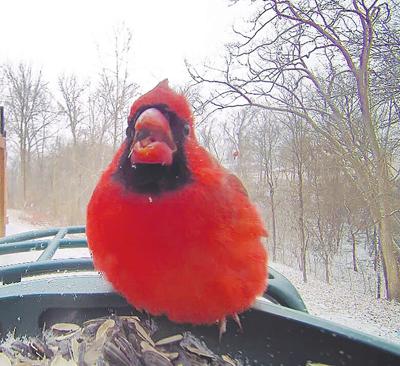
What started as a backyard event has gone global over the past 30 years, and more people are always being invited to the party. The Great Backyard Bird Count has added participants around the world and keeps tabs on more bird species every year.
Established by Cornell Lab of Ornithology and National Audubon Society, GBBC takes place on Presidents’ Day weekend each year. The community science effort began in North America in 1998 and now counts birds from New Zealand to Greenland. Birds Canada added its collaboration in 2009.
Around the world last year, groups and individuals counted 8,078 different species of birds, an increase of 158 unique species over 2024. More than 838,000 participants from around the world represented 217 countries or regions. First-time participants came from Angola, Iraq, Samoa and Malawi, according to birdcount.org.
More than 400 reports came from community events, and anyone who is interested in participating but needing some guidance can join the GBBC at Powder Valley Conservation Nature Center in Kirkwood from 8:30 to 10:30 a.m. on Saturday, Feb. 14. Advanced registration is required, and the group is limited to 40 people. The family-friendly activity is open to anyone ages 7 or older.
The Great Backyard Bird Count at Powder Valley will begin with a short introductory overview, followed by a real bird counting adventure. Instructor David Bruns will provide simple tips for spotting and identifying different birds, and he will include instructions for entering data on the eBird app.
For registration or more information, visit mdc.mo.gov and go to Discover Nature events to search for the Great Backyard Bird Count in St. Louis County. Powder Valley is at 11715 Cragwold Road. The telephone number is 314-301-1500.
For those who are interested in taking part in the GBBC as individuals, Audubon is holding two free webinars through YouTube. The live events are scheduled at 2 p.m. on Feb. 5, and 6 p.m. on Feb. 11. The beginner-friendly presentation will focus on the joys of backyard birding and will include information on participating in the count from Feb. 13-16.
Joining the citizen science effort is as simple as selecting a location and committing to watch the birds for at least 15 minutes over the four-day event. Identify as many different birds as you can and provide that information through one of several available tools provided by Cornell Lab and Audubon.
For beginners who are learning their identifications, the free Merlin Bird ID app provides the best introduction. Download the app on a smartphone and then add the Bird Pack for your region. Create a free Cornell Lab account and use the Explore option to see photos of birds in your area. When you find a picture that matches, you select the green “This is my bird” button.
More experienced birders can choose to eBird Mobile app. Old-timers like me transfer lists from a notebook to the lab through a laptop or desktop computer. All of the procedures result in the same thing: more information for researchers to understand bird trends in our backyards and around the world.
Bird brains like me who already use Merlin or eBird for reports like Project FeederWatch will have our data entries added to the GBBC if reported during the long weekend. There is no need to sign up for the count separately, according to birdcount.org.
One more great feature of the event and website is the opportunity to share photos of birds and the people who are watching. All photos are added to the Cornell Lab Macauley Library. The smiling faces from around the world are fun to see, and the bird pictures are amazing.
John Winkelman has been writing about outdoors news and issues in Jefferson County for more than 30 years and was the Associate Editor for Outdoor Guide Magazine. If you have story ideas for the Leader outdoor news page, e-mail ogmjohnw@aol.com, and you can find more outdoor news and updates at johnjwink.com.