


As we drove around on Sunday, April 16, after tornadoes swept through our area, I tried to avoid any finger-wagging affirmation when I saw that so many of the big broken branches came from Bradford pear trees.
I do not want to sound flippant about the significant damage caused mostly by the many mighty oaks that fell on power lines, structures and vehicles in a swath across Jefferson County. But the other evidence had me thinking, “I told you so.”
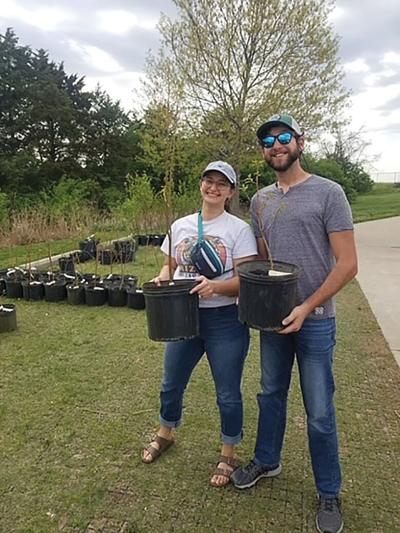
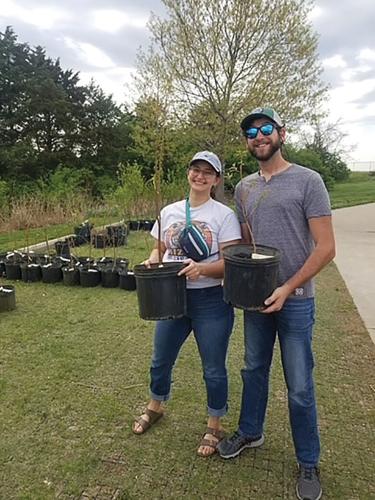
Coincidentally, the storms blew through on the same day that the Missouri Invasive Plant Council was giving free trees to area residents who provided evidence that they had cut down a Callery pear tree on their property. I wrote about the program in March as the bountiful blooms filled roadside ditches.
Those wild offspring of a landscaping plant that was supposed to be sterile were too small and flexible to be negatively affected, but in subdivisions throughout our region, yards were littered with limbs of the weak-wooded Bradford/Callery ornamental. Meanwhile, the native dogwood and red bud trees kept their branches, and even held on to their fragile-looking flowers.
National Arbor Day is celebrated on the last Friday in April every year, so we should be talking about planting trees instead of cutting them down. In Missouri the “holiday” is acknowledged on the first Friday of the month. Since Arbor Day took root in 1872, special recognition has gone to reforesting the United States.
I don’t remember which days I celebrated in the first week of April, but the evening I found a cardboard box from the George O. White State Forest Nursery on my front porch, I immediately took my shovel to the spots I had marked in the back yard. Before it was too dark to see, I had planted 10 white dogwood seedlings near the border of the tree line.
The next day, I strategically located 10 wild plum trees in two similar wood-edge patches. I make sure the upstarts have adequate water, and I am happy to report that more than half of them are showing significant new growth.
The seedlings look suspiciously weak when they arrive as thin sticks, with their stringy, fine roots clumped in a bit of moist mulch. The dogwoods even come with a warning about the challenge of growing them to maturity. Fortunately a few of them are beginning to make buds.
It may be years before I can enjoy a springy showcase of bright white flowers and decades until any one of them reaches the grandeur of our dead dogwood tree they replaced. On the other hand, they were cheap. Including tax and shipping to my door, the 20 trees cost me just $43.
The free trees that were given away by the Forest ReLeaf of Missouri Program and Forrest Keeling Nursery through the Callery pear buyback program were much further along than my plantings. Nurseries also sell the flowering natives. Unfortunately they still sell too many pear trees and other plants that are invasive species.
Placing restrictions on the invasive trees doesn’t seem likely, but continuing to educate consumers about the troubles caused by plants that originated on the other side of the planet may begin to move the needle.
Hopefully the homeowners who faced the aftermath of the big storm with chainsaws, and now have de-limbed Bradfords in their yards, will reconsider their replacement and convince their neighbors that native options are better in every way.
John Winkelman has been writing about outdoors news and issues in Jefferson County for more than 30 years and is the Associate Editor for Outdoor Guide Magazine. If you have story ideas for the Leader outdoor news page, e-mail ogmjohnw@aol.com, and you can find more outdoor news and updates at johnjwink.com.