


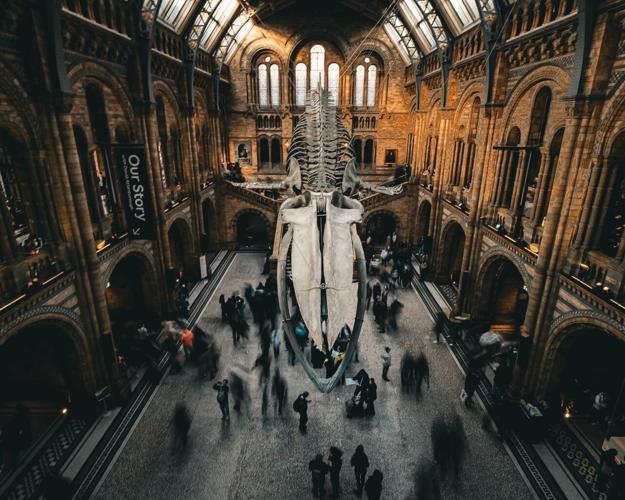



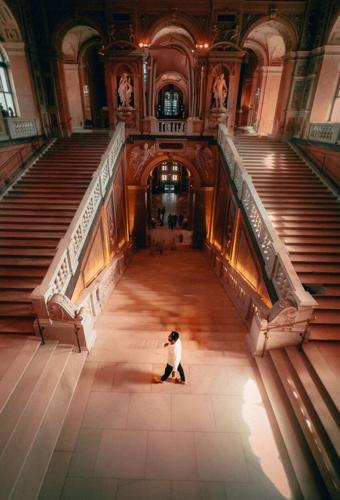
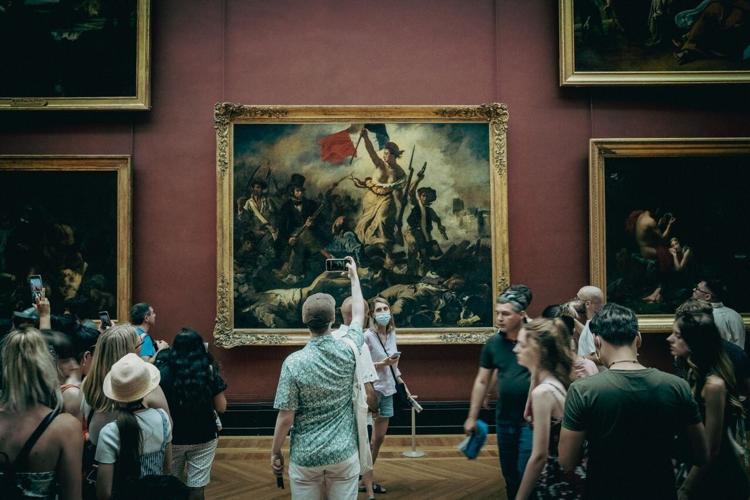
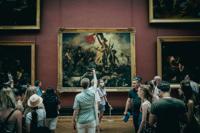
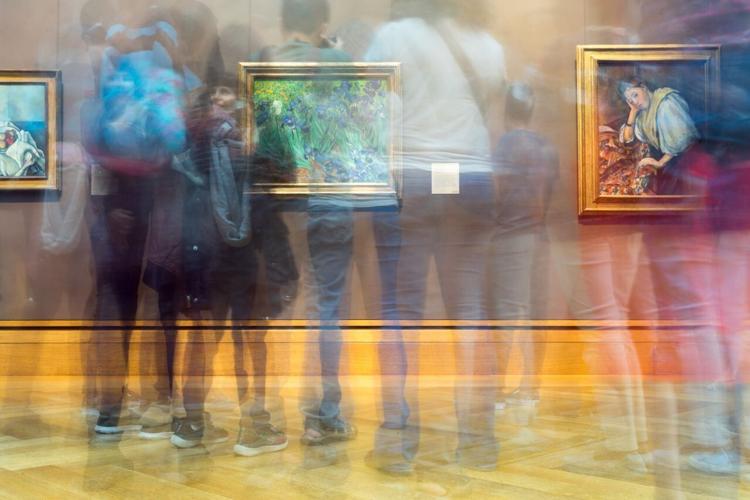


(Photo by Hasan Lütfü Örsdemir via Pexels)
By Stephen Beech
Museum visitors get bored if they are under- or over-stimulated, reveals new research.
The study involving more than 1,200 people found the majority of people were rarely bored inside cultural centers.
But some were very bored — often triggered by being under-stimulated, and sometimes by being over-stimulated, according to the findings.
Too much text and hot, cramped rooms led to over-stimulation, while too little information and bare rooms led to under-stimulation.
Those who were bored also learned less during their museum visit, according to the research published in the journal Scientific Reports.
The international study, led by psychologists from the University of Vienna in Austria, is the first to systematically investigate boredom in museums, what causes it and what its consequences are.

(Photo by Nataly Nagorska via Pexels)
Participants ages 18 to 91 were surveyed via a questionnaire immediately after their museum visit, while in-depth interviews were also conducted with 72 visitors.
The findings showed that while visitors are, on average, only slightly bored, that boredom has a clearly negative impact on knowledge acquisition and their assessment of the museum visit.
The good news for museums was that, overall, boredom was relatively mild, with an average score of 1.74 on a scale of 1 (not at all bored) to 5 (very bored).
Ten positive and negative emotions — including joy, surprise, frustration and anger were also assessed.
The comparison revealed that boredom was one of the most intense negative emotions, yet significantly weaker than all positive emotions experienced in the museum.

(Photo by Warre Van de Wouwer via Pexels)
Despite the relatively low average score for boredom, there were a number of people who reported very high levels of boredom, right up to the maximum value.
The findings showed that both being overwhelmed and under-stimulated can have causes relating to both the physical space and the content.
Too much text or an excessive amount of information, as well as cramped and stuffy rooms, led to visitors feeling overwhelmed.
Too little information and bare rooms led to visitors feeling under-stimulated.
Under-stimulation was more pronounced in museums than feeling overwhelmed.
In line with the assumptions, people who felt significantly over- or under-challenged reported feeling significantly more bored than those with lower levels of over- or under-challenge.
Study leader Thomas Götz, from the University of Vienna, said: “The study clearly shows that boredom has a negative impact on the museum visit.

(Photo by Wellington Silva via Pexels)
“If visitors were bored, they learned less, which was reflected in poorer results in the knowledge test.
“Furthermore, they rated the quality of the museum significantly lower.
“What constitutes the right amount of information to avoid visitors feeling either under- or over-stimulated varies from person to person.
“The same applies to the relevance of the content.
“To reduce boredom in museums, museums could cater more effectively to the diversity of their visitors.
“This could be achieved by offering a depth of information and content tailored to the individual.
“For example, via barcodes or augmented reality applications, or through tours of varying levels of difficulty and content — ranging from a short ‘pocket tour’ to an in-depth ‘deep dive’.”

(Photo by Sergei A via Pexels)
Educational psychologist Götz added: “Our findings show that it is important for museums to reduce boredom among their visitors.
“However, this should, of course, always be viewed against the backdrop of museums’ overarching objectives; they should, for instance, naturally not become mere venues for entertainment.
“Museums are key venues for informal learning outside schools and universities.
“Our findings show that boredom plays a previously underestimated role here too — and thus form part of a growing body of evidence demonstrating that boredom is detrimental to learning and performance in a wide variety of areas of life.”