



The UAE's largest oil refinery closed on Tuesday after a drone attack, as Iran defiantly vowed that no crude exports would leave the Gulf if the United States and Israel kept up their bombardment.
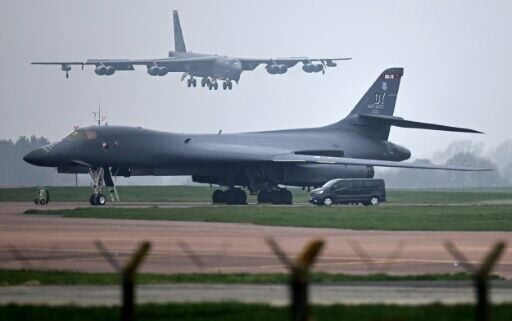
But the regional war that has rattled world markets showed no sign of relenting, with US Defense Secretary Pete Hegseth saying that Tuesday would "be yet again our most intense day of strikes inside Iran".
Oil prices have surged since Iranian attacks on shipping closed the key Strait of Hormuz in the wake of the February 28 US-Israeli strikes that killed Tehran's supreme leader and triggered the regional conflict.
The price increase also followed strikes on oil depots in Iran and attacks on energy infrastructure in wealthy Gulf countries, previously seen as safe havens in a turbulent Middle East.
The region's biggest single-site oil refinery, at Ruwais in the United Arab Emirates, was closed on Tuesday as a precaution after a drone attack on the industrial complex that houses it caused a fire, a source familiar with the situation told AFP.
A driver working at the complex, who requested not to be named, told AFP they saw "bursts of fire rising from the complex, with loud sounds like explosions".
Qatar, where a suspension of LNG exports has sent European energy prices sky-high, said Iranian attacks on its civilian infrastructure were ongoing, with AFP journalists reporting explosions in Doha.
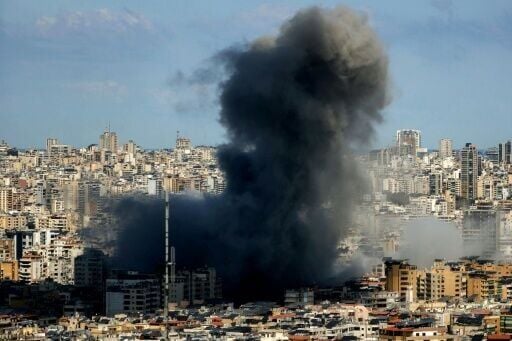
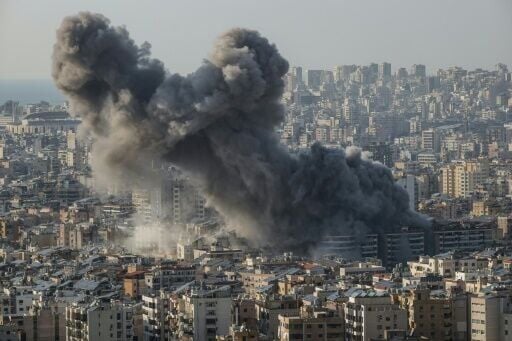
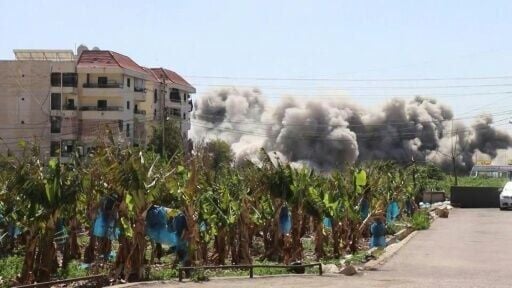
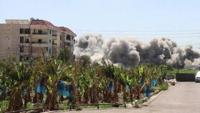
The Israeli military announced a new wave of attacks on Tehran and Beirut, where AFPTV footage showed smoke rising from the southern stronghold of Iran's Lebanese ally Hezbollah.
Iran's Revolutionary Guards, meanwhile, said a fresh salvo of missiles had been launched at Israeli cities and US targets in the region.
- 'Catastrophic consequences' -
Traders and energy policymakers are nervously following the exchanges of fire in the Gulf, where a quarter of the world's seaborne oil and a fifth of all LNG pass through the narrow Strait of Hormuz.
"There would be catastrophic consequences for the world's oil markets the longer the disruption goes on, and the more drastic the consequences for the global economy," Saudi oil giant Aramco's president and CEO Amin H. Nasser told journalists.
"It's absolutely critical that shipping resumes in the Strait of Hormuz."
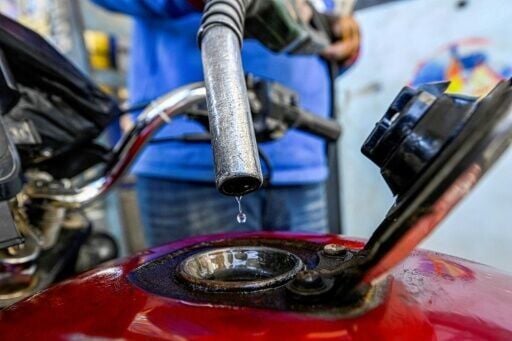
Egypt increased the cost of fuels by up to 30 percent and Pakistan said it would provide naval escorts to commercial shipping. France has dispatched warships to the region.
World oil prices fell on Tuesday, a day after US President Donald Trump's suggestion that the war could soon end, which steadied a spike that had neared $120 per barrel.
But Iran's Revolutionary Guards mocked Trump's apparent bid to lessen the economic impact of the war.
"The Iranian armed forces... will not allow the export of a single litre of oil from the region to the hostile side and its partners until further notice," a Guards spokesman said.
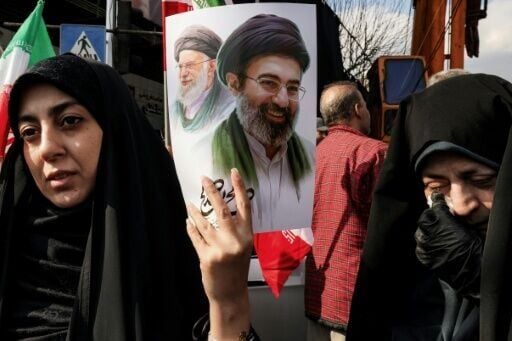
"It is we who will determine the end of the war," the Guards, seen as close to Iran's new supreme leader Ayatollah Mojtaba Khamenei, said in a separate statement carried by Iranian media.
Iran's parliamentary speaker Mohammad Bagher Ghalibaf warned on X that attacks on the Islamic republic's infrastructure would be met "with the rule of 'an eye for an eye', without compromise, without exception".
- Rare volatility -
Trump warned on his social media platform that if Tehran interfered with oil exports, the US military would bomb the country in such a way as to "make it virtually impossible for Iran to ever be built back, as a nation, again."
Israel's Prime Minister Benjamin Netanyahu predicted the conflict would continue, expressing hope that the Iranian people would seize the opportunity to "cast off the yoke of tyranny".
"Ultimately, it depends on them. But there is no doubt that, with the actions taken so far, we are breaking their bones, and we are not done yet," he said.
Experts warned the economic outlook remains extremely volatile.
"Rare are days in the markets when you get this much volatility," said Ipek Ozkardeskaya, an analyst for Swissquote Bank, warning that investors were overreacting to every bit of news, even when officials' statements contradicted each other.
"The conflict in the Middle East continues at full speed, political developments are not pointing to a near-term resolution, and there is little clarity about the US plans."
The International Energy Agency's member states were due to meet on Tuesday for crisis talks to assess "the current security of supply" and the potential release of emergency stocks, the Paris-based body's chief said.
Iran's intelligence ministry announced that 30 people, including a foreigner, had been arrested for alleged spying.
The foreigner, whose nationality was not revealed, allegedly passed on information about the locations of police, army and military installations for two Gulf countries "in the name of the American-Zionist enemy", the ministry said.
burs-imm/smw