



(NASA/ESA/CSA/STScI/A. Pagan via SWNS)
By Dean Murray
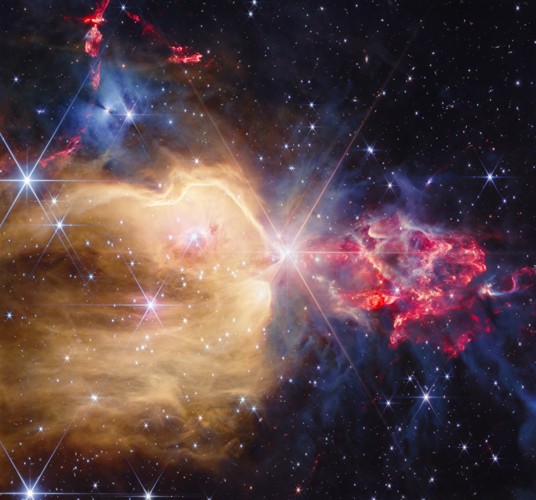
Space scientists have revealed a "cauldron of cosmic creation" in an incredible new space image.
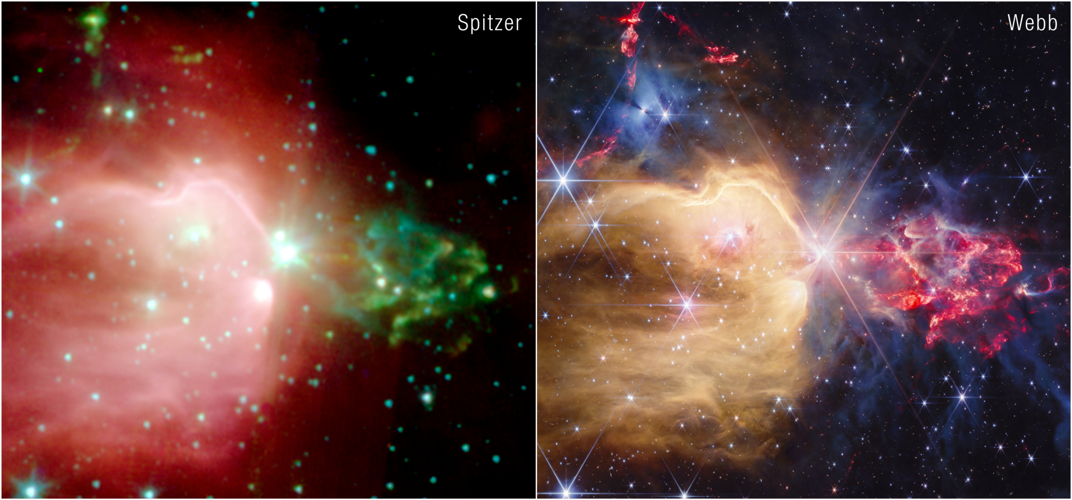
The James Webb Space Telescope has captured numerous stars formerly hidden by clouds of dust in a stellar nursery known as NGC 7129.
Researchers said that the region, which resides about 3,300 light-years from Earth, features many protostars and stars within its glowing gases.
The observation shows how young stars are shaping their surroundings: their powerful jets and radiation heat, shock and stir the hydrogen gas, giving astronomers a glimpse into the violent early stages of star formation.
The golden regions show hot atomic hydrogen, while the red areas reveal cooler molecular hydrogen heated by shocks from newborn stars.

(NASA/ESA/CSA/STScI/A. Pagan via SWNS)
The European Space Agency (ESA) said on Tuesday (Oct. 6): "Webb captures commotion from nebula's stellar jets.
"The stars in this cluster have different ages – although they are all born from the same cloud, they formed at different times.
"The very luminous central star, LkH(alpha) 234 is especially influential. This pre-main-sequence star weighs around 5 to 8 times our Sun.
"Outflows from this star carved out the golden cavity seen to its left, compressing it and creating the conditions for even more stars to form."
The image offers a rare view of how newborn stars transform the vast clouds of gas and dust from which they are born.