


By Stephen Beech
Some primates become cautious of germs in the wake of a viral outbreak — just like humans.
American researchers discovered that macaque monkeys exposed to a deadly disease became more wary of potentially contaminated food.
Scientists say their findings offer clues about the evolutionary roots of disgust in humans.
Many people wiped down groceries with disinfectant before putting them away during the COVID-19 pandemic pe as they became cautious of germs.
Now new research, published in the journal Royal Society Open Science, suggests that humans might not be the only species which changes behavior after experiencing a disease threat.
Scientists from the University of California San Diego found that macaques who had lived through a deadly disease outbreak became “significantly” more cautious about food that appeared contaminated — even though they didn’t know how the disease had spread.
They say their findings provide new insight into what scientists call the “behavioral immune system” — a collection of behaviors that help animals avoid infection before the body’s biological immune system has to respond.

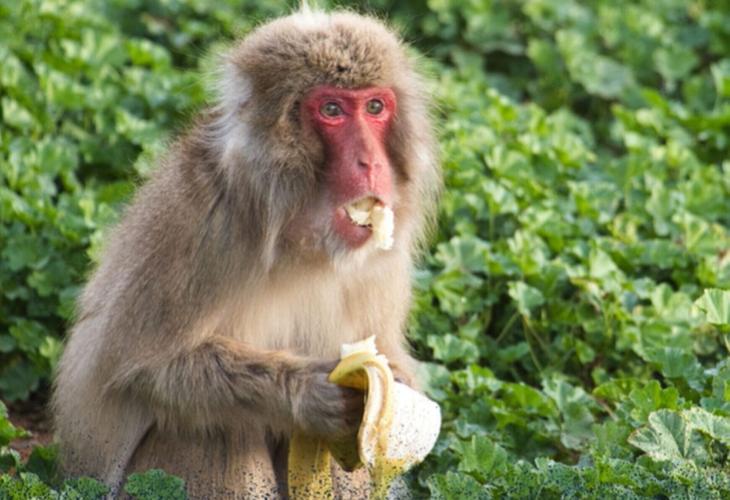
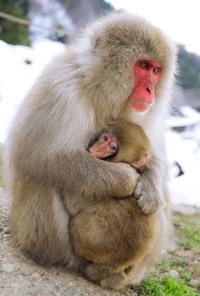
(Photo by Klub Boks via Pexels)
Study senior author Federico Rossano said: “We can show now, in nonhuman primates, that this is the same for them.
“Even with no knowledge of how disease is transmitted, being exposed to others getting sick and dying changes the likelihood of engaging in behaviors that potentially could lead to some form of sickness.”
He explained that the research spawned from an unexpected event at a primate sanctuary in Texas, where behavioral studies are conducted.
The sanctuary is home to several groups of Japanese macaques descended from monkeys originally brought from Japan to Texas in 1972.
Because the groups live in separate enclosures, researchers had a rare opportunity to compare animals with similar backgrounds that had experienced very different social and disease environments.
In 2020, staff confirmed the presence of simian retrovirus Type II, which can cause an AIDS-like immunodeficiency, in some of the sanctuary’s Japanese macaque groups.
The virus was primarily transmitted through bites and scratches and caused severe illness and death in some animals.
The sanctuary separated groups and implemented strict testing and quarantine measures.

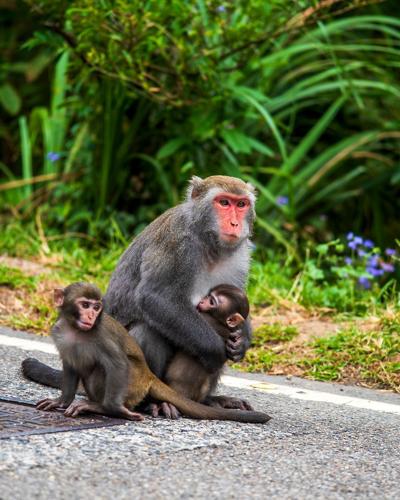
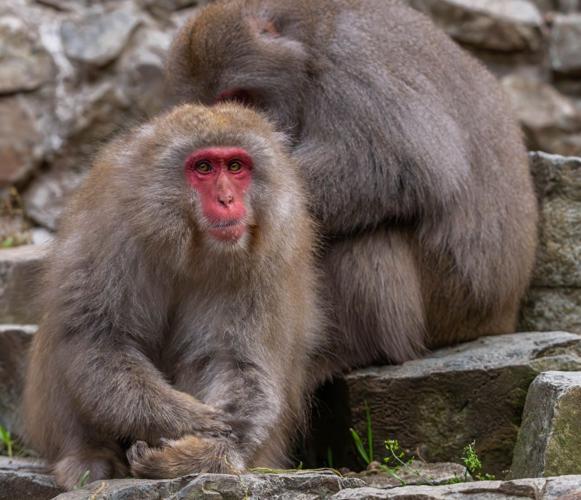
(Photo by Han Sen via Pexels)
Rossano said that created an unusual natural experiment as three groups had experienced the outbreak, but one group hadn’t.
Researchers then tested 55 macaques to see how they responded to a choice between food placed on a clean wooden surface and food placed on a surface covered with real macaque feces sealed under a layer of clear epoxy, to preserve visual cues while removing the smell and any risk of infection.
Within the outbreak-exposed groups, some individuals had been infected while others had lived alongside sick monkeys without becoming infected themselves.
That allowed researchers to ask whether experiencing an outbreak — even without becoming sick — could change the animals’ behavior.
In some trials, the clean surface was replaced with a brightly colored kitchen sponge to determine whether the animals were just avoiding unfamiliar objects.
Earlier research had shown that macaques aren’t necessarily deterred by contamination when the payoff is tempting.
But the tram found that macaques from groups that had experienced the outbreak were far less likely to eat food from the contaminated surface.
They ate from what appeared to be a contaminated surface in just 47% of trials, compared with 79% of trials for monkeys from the group that hadn’t experienced the outbreak.

(Photo by Han Sen via Pexels)
Monkeys from outbreak-exposed groups behaved similarly whether or not they’d been infected.
The researchers said that suggests the behavioral change was associated with having lived through the outbreak, rather than actually experiencing illness.
Study lead author Stephan Kaufhold said: “Groups have histories, and those histories show up in behavior.
“Living through the disease outbreak appears to have made those monkey groups more cautious around food that looks contaminated.”
He said that one of the most intriguing aspects of the finding was that the virus was not spread through contaminated food, but was transmitted through blood and saliva via bites and scratches.
But, regardless, macaques who saw their fellow primates get sick, in some cases, became more reluctant to eat food placed on a surface that visually suggested contamination.
The research team also found that pathogen avoidance was linked to early-life experience.
In an additional study reported in the same paper, they tested 54 macaques from seven species with different rearing backgrounds, including sanctuary-born animals, former lab research animals, zoo-born animals and former pets.

(Photo by Paulino Acosta Santana via Pexels)
The team observed that former pet macaques, who grew up living with humans instead of being under the care of other macaques, were “significantly” more likely to eat contaminated food than sanctuary-born macaques raised by their mothers.
Kaufhold said: “One possibility is that these monkeys didn’t have the opportunity to learn typical avoidance behaviors from their mothers and other macaques early in life.
“Even after living with other monkeys for several years, that early experience may still shape how they respond to potential sources of disease.”
While the researchers didn’t measure disgust directly, they found that macaques’ avoidance of potential sources of infection can change with experience — similar to what is seen in humans.
Kaufhold said human disgust is often thought to play an important role in protecting us from pathogens — such as recoiling from feces, spoiled food and other potential sources of infection.
And our sensitivity to those cues can change, depending on context.
Because primates are capable of social learning, the researchers say it is possible that heightened pathogen avoidance could be learned from other group members and potentially persist over time.
Kaufhold added: “Future studies could determine whether newly introduced animals adopt the behavior of a group that has experienced an outbreak.”