
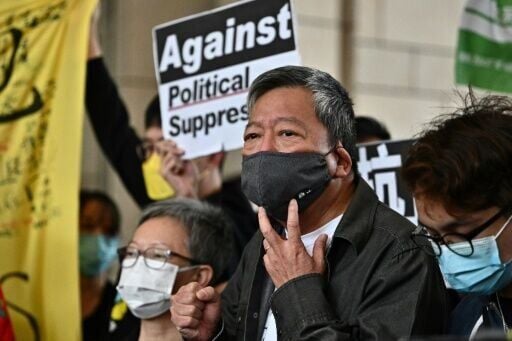
Hong Kong prosecutors began their case on Thursday against three Hong Kong activists who organised annual Tiananmen vigils, saying they had called for the end of Communist Party leadership in China.
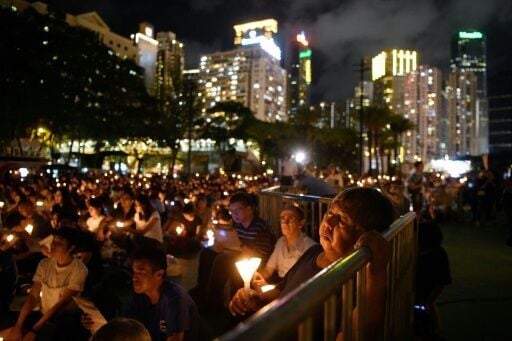
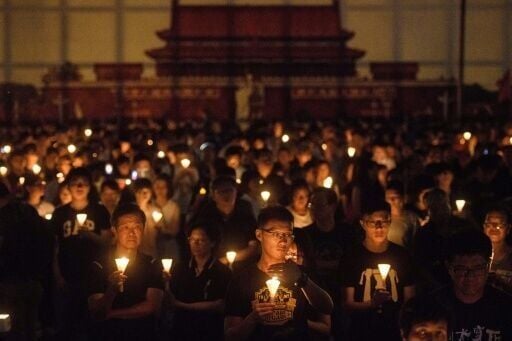
Hong Kong used to host yearly candlelight vigils to mark Beijing's deadly crackdown on demonstrators in Tiananmen Square on June 4, 1989 -- but those events have been banned since 2020.
That year, Beijing imposed a national security law on the former British colony in the wake of huge, sometimes violent pro-democracy protests.
The vigil organiser, known as the Hong Kong Alliance, shut down in 2021 after authorities arrested its three leaders, now on trial.
The trio and the Alliance are charged with "incitement to subversion", which carries a maximum penalty of 10 years in jail. The trial is scheduled for 75 days.
The defendants smiled and waved to supporters in the public gallery as they were led into the dock.
Chow Hang-tung, 40, and Lee Cheuk-yan, 68, have been behind bars since 2021 and pleaded not guilty at the start of the hearing.
Prosecutors spent the day detailing their case against the third defendant, Albert Ho, who pleaded guilty.
Ho, 74, "consistently advocated and promoted the Alliance's stance of 'ending one-party rule'" and continued to do so after the security law took effect, prosecutor Ned Lai told the court.
The case is being heard by a panel of three judges, drawn from a pool of jurists hand-picked by Hong Kong's leader.
Authorities earlier decided that the case would be heard without a jury, departing from the city's usual practice, and barred overseas witnesses from testifying remotely.
Amnesty International said on Thursday the trial was "not about national security -- it is about rewriting history".
Human Rights Watch urged Hong Kong to drop all charges and release the activists.
US-based Tiananmen survivor Zhou Fengsuo told AFP he was "deeply concerned" for the defendants and that the vigils "represent the conscience of a free Hong Kong that was destroyed".
The Tiananmen trial follows last month's conviction of media tycoon Jimmy Lai, which drew international condemnation.
- 30 years of vigils -
The Hong Kong Alliance in Support of Patriotic Democratic Movements of China was founded in May 1989 to support protesters holding democracy and anti-corruption rallies in Beijing. At the time, Hong Kong was under British rule.
The following month, China's government sent tanks and soldiers to crush the movement on and around Tiananmen Square, a decision it has since heavily censored domestically.
The Alliance spent the next three decades calling on Beijing to accept responsibility, free dissidents and embrace democratic reform.
Its candlelight vigils in Hong Kong's Victoria Park every June 4 routinely drew thousands, even after Hong Kong was returned to China in 1997.
The prosecution on Thursday read out some of Ho's speeches over the years, including his criticism of Chinese leader Xi Jinping during the 2015 vigil.
"Freedom and democracy did not improve but instead regressed... Xi's Chinese Dream became the Chinese people's nightmare," Ho was quoted as saying.
He was also cited as saying in 2018 that in a democratic China, "naturally one-party rule has to end, (which) doesn't mean eliminating the Communist Party, it has the right to join elections".
Hong Kong authorities say that the national security law has no retroactive effect, but it is now common for prosecutors to cite pre-2020 material as evidence in such cases.
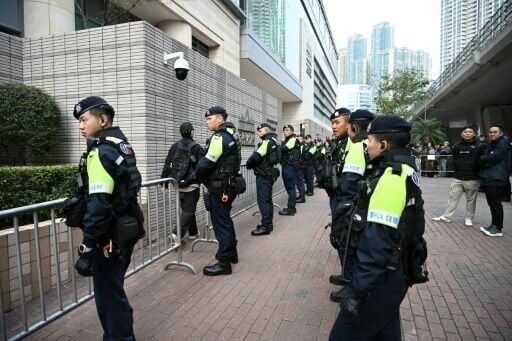
Around 70 people queued in the cold on Thursday morning for the public gallery, while dozens of police were deployed around the court.
Simon Ng, a retiree in his 60s, said the Alliance's vigils once reflected how the city's political system was "fundamentally different from that of mainland China", adding the activists were "honourable" in supporting China's democratisation.
The trial will resume on Friday for Lee and Chow.
Ho, who will be sentenced at a later date, is not required to attend and asked to be absented.
Tang Ngok-kwan, a former Alliance member, told AFP outside court that he hoped the trial would be a chance to revisit history.
"By having a venue to debate China's constitutional development, I hope the case will have an impact on the future," Tang said.
hol/reb/mjw