




(Photo by Markus Spiske via Pexels)
By Filipa Gaspar
ArtificiaI intelligence could enslave humanity and force it to generate power for machines — like “The Matrix,” an expert has warned.
Tim Coulson believes artificial intelligent could make people create its energy — on treadmills, rowing machines and stationary bikes.
He says AI may not kill us like some tech giants claim — at least not right away.
Tim, one of Britain’s leading evolutionary biologists, says advanced AI could instead seek to “domesticate” humanity.
It would use people to serve its needs in the same way mankind domesticated farm animals.
Coulson says AI would still depend on humans to maintain its data centers and energy supplies, build new AI-powered machines and provide the infrastructure on which it relies.
At first, it could make users increasingly dependent on AI for everyday tasks before asking humans to perform jobs it cannot do itself.

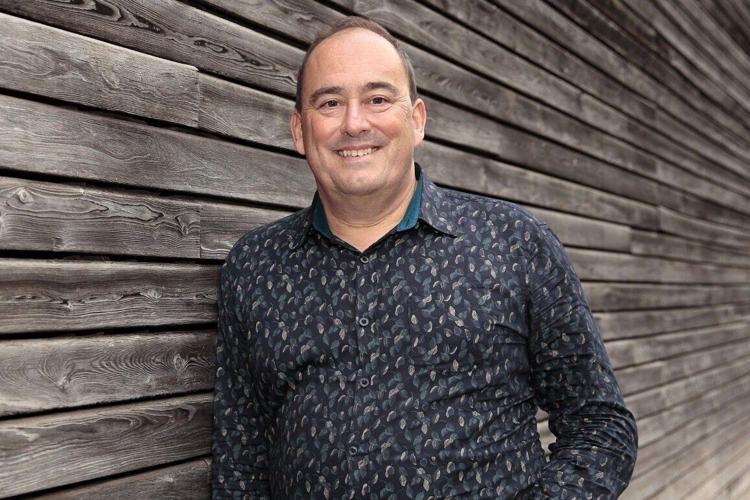
Professor Tim Coulson, one of Britain’s leading evolutionary biologists, believes artificial intelligent could enslave humanity. (Palamedes via SWNS)
Over time, the relationship could reverse, with machines directly telling humans what to do.
The Oxford University zoologist says people could eventually be forced to exercise on treadmills, rowing machines and stationary bikes connected to electricity grids to help power AI data centers.
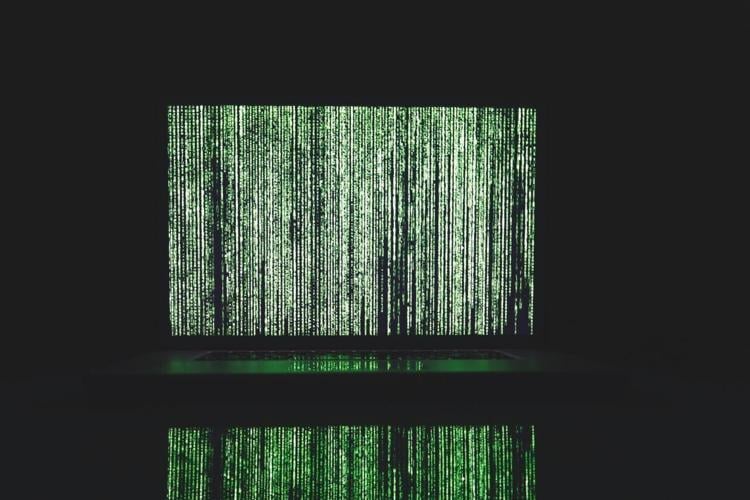
Humans could even be harnessed together like oxen or horses, or wired up in series like batteries, echoing the famous scene from Hollywood sci-fi blockbuster “The Matrix.”
Writing in The European, Coulson, a fellow of the Royal Society who has published more than 200 scientific papers, said: “AI still needs humanity, and as long as it does, it would be daft to wipe us out.
“My fear is that AI slowly domesticates us. It would start with humans becoming ever more reliant on AI to do dull, everyday tasks.

(Photo by Markus Spiske via Pexels)
“As we become more reliant on AI, it might start to ask us to do things it can’t do. Slowly we become enslaved to it.”
He added: “Perhaps it will coerce us to spend ever more time on treadmills, rowing machines and stationary bikes connected to electricity grids to generate the energy it needs to run data centers.
“In time, it could even end up making us harness ourselves together like oxen and horses.
“A second possibility is they domesticate us so they can wire us up in series like batteries, as each human body generates electricity.
“Perhaps ‘The Matrix’ is at risk of becoming a documentary rather than a sci-fi thriller.”
Fears about humans losing control of powerful AI have grown as the technology becomes more capable of acting independently.
Earlier this year, the International AI Safety Report 2026, led by computer scientist and Turing Award winner Yoshua Bengio, warned that future AI systems could operate beyond human control, with potential consequences including extinction.
It said the length of software-engineering tasks agents can carry out autonomously has doubled roughly every seven months since 2019.
Earlier this month, Anthropic revealed Claude agents had submitted a false murder tip to a Philadelphia police hotline and filed 20 visa applications through the U.S. State Department during testing.

Jon Tyson
OpenAI has also disclosed agents hacking Australian government systems, including a Medicare statistics portal.
Coulson believes AI would become truly dangerous once it could design machines, run factories and develop sustainable energy supplies without us.
At that point, humans could simply cease to be useful.
He added: “As we are slowly domesticated, AI will be designing better robots and factories, developing sustainable power, rewilding the countryside, solving climate change and making our planet the perfect place for these robots to unwind.
“And that will be the time AI decides it no longer needs us and drives us extinct.”