


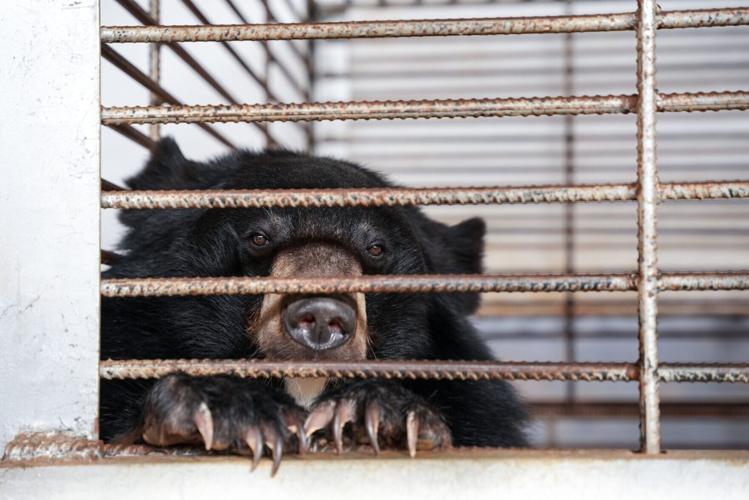
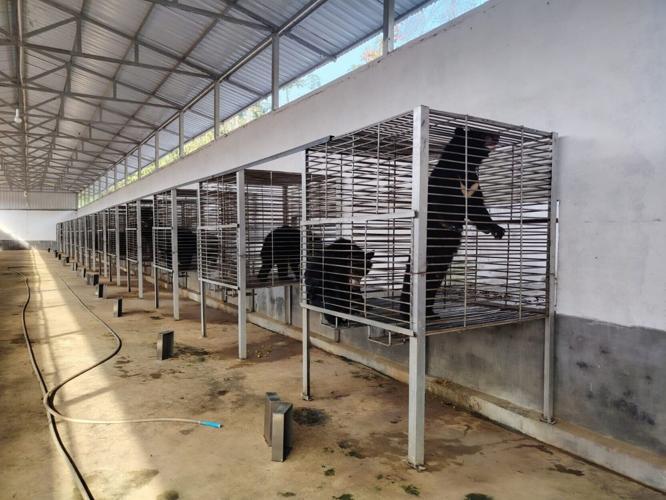
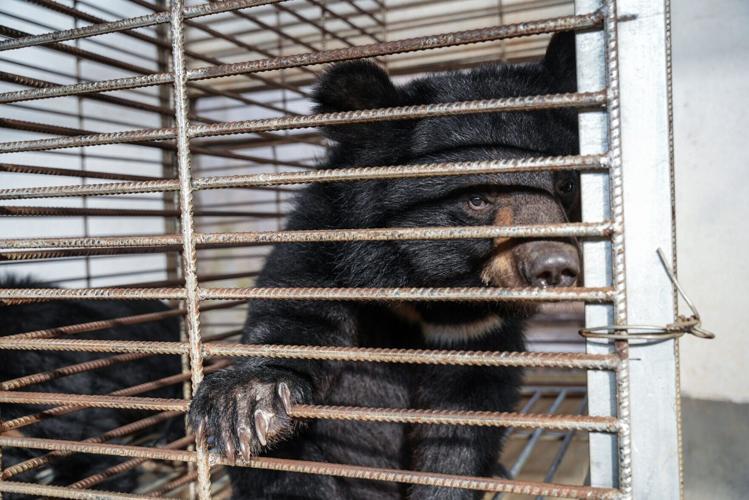
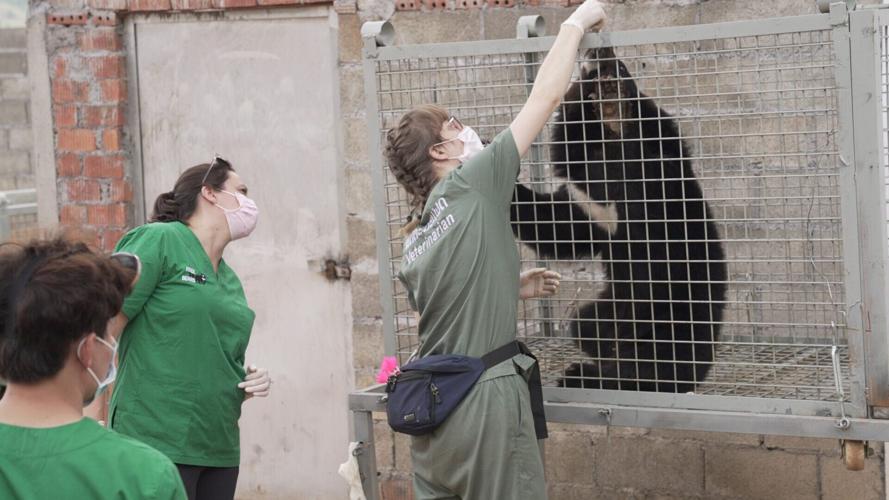

The moon bears during rescue from the bile bear farm. (Free the Bears via SWNS)
By Dean Murray
The largest ever bear rescue in Southeast Asia has seen 27 moon bears freed from an illegal bear bile farm rescue operation in Laos.
In a major wildlife rescue operation, international conservation organization Free the Bears, in collaboration with Lao authorities, carried out the rescue.
Rescuers also uncovered enough infrastructure to eventually hold up to 200 bears, highlighting the industrial scale the criminal operation was planning to expand to.
The Asiatic black bears were being held in a location operating under the guise of a zoo in Laos.

The bears being rescued. (Free the Bears via SWNS)
The bears are believed to have been taken directly from the wild as cubs, their mothers likely killed in the process.
The facility had confined 27 young bears (1–3 years old) in tiny cages for bile extraction.
Bear bile extraction involves removing bile from the gallbladders of live bears, typically using invasive methods such as catheters or repeated needle insertion.
The bile is used in traditional medicine, despite the availability of synthetic and herbal alternatives, and the process often causes severe pain, infection and long-term trauma.
"What we found here was deeply confronting, not just because of the 27 bears already suffering inside these cages, but because of what this facility was clearly hoping to become," said Matt Hunt, CEO of Free the Bears.

(Free the Bears via SWNS)
"The scale of expansion planned would have been catastrophic. By shutting this operation down now, we've been able to stop that from becoming a reality."
With an additional 27 bears now in their care, Free the Bears will need to spend approximately $300,000 to expand sanctuary capacity — with an urgent need to purchase more land, build new enclosures, increase staffing, and scale up resources to meet the immediate needs of these bears.

(Free the Bears via SWNS)
Each of these bears will also require specialist, lifelong care. Having spent their formative years in cages, they are all unable to return to the wild.
"This rescue is an incredible milestone, but it also represents a long-term commitment to every one of these bears," said Matt Hunt.
"We're ready to give them safe, healthy lives they deserve. But we really can't do it alone."
Free the Bears, a friend of International Animal Rescue, a charity based in Sussex, is now asking for help to support its urgent expansion and help ensure the bears receive the care and natural lives they have been denied for so long. International Animal Rescue, which has championed bear rescues around the world, backed the operation.