



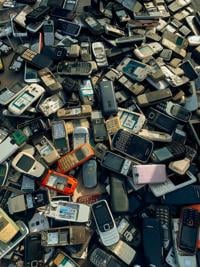
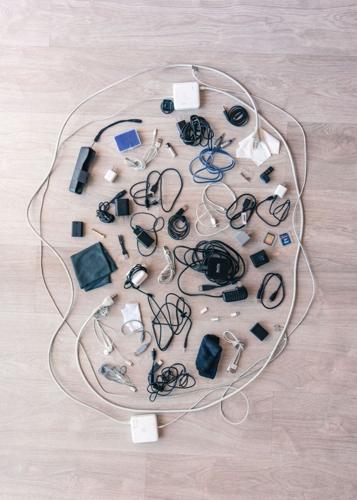

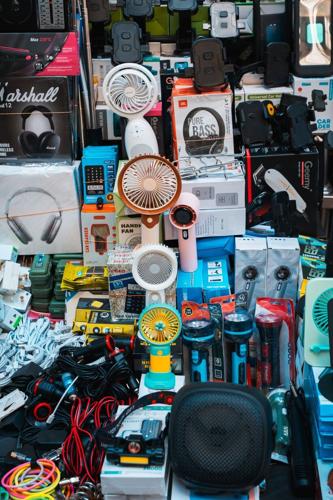
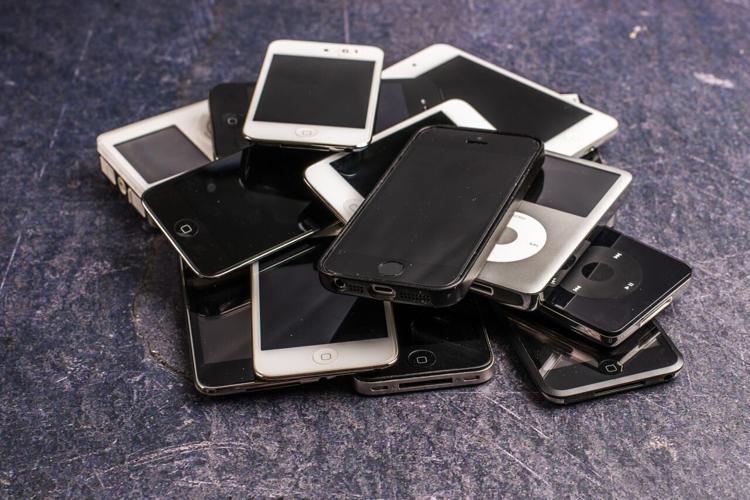

A new study reveals cheap electronics has led to an increase in electronic waste. (WEEE Forum via SWNS)
By Stephen Beech
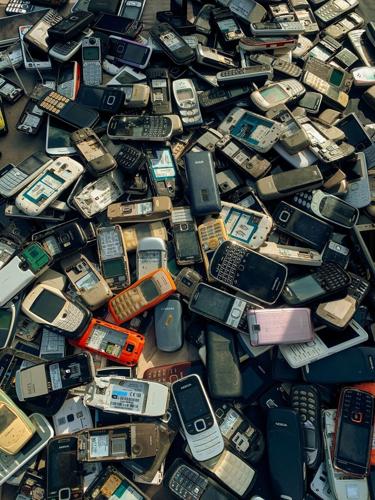
Millions of cheap gadgets are fueling a surge in dumped electronic waste, reveals new research.
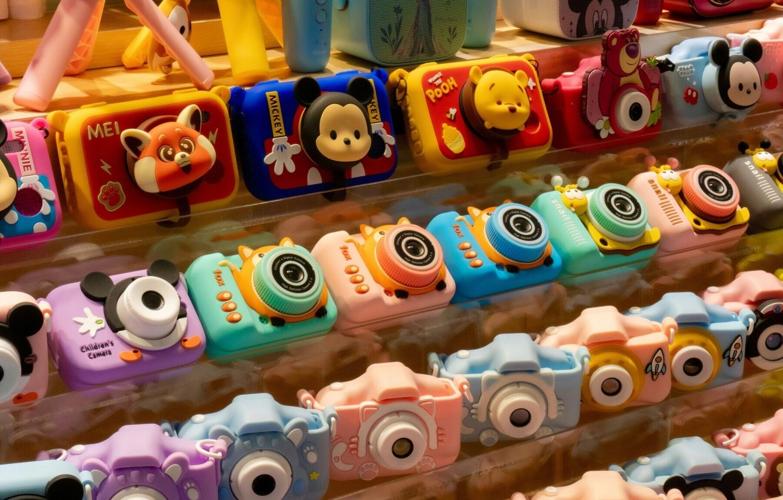
The growth of “Fast Tech” — USB adapters, mini fans, LED lights, electronic toys and other small, inexpensive devices — has led to an increase in e-waste, say experts.
Research to mark International E-Waste Day on Wednesday, Oct. 14 shows that nearly 90% of people own at least one Fast Tech device, and 78% bought one in the past year.
Findings show that in the U.K. alone more than half a billion small Fast Tech electrical items have been bought — around 16 items per second.
But when they become obsolete, broken or simply no longer wanted, many are tossed into household trash or hoarded in drawers instead of being recycled.
More than one in four hoard unused devices at home (29%), according to the research.

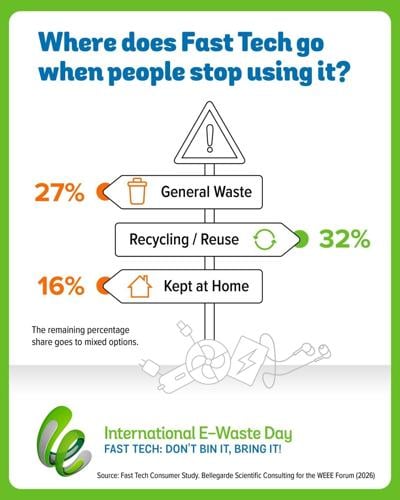
Unwanted Fast Tech often goes astray: 29% keep it at home, 27% use only waste routes, and 32% recycle or reuse. Some even discard it believing theyre protecting the environment. (WEEE Forum via SWNS)
Experts are urging people to recycle every unused electrical and electronic item.
A survey of 10,245 adults in 12 European countries found that Fast Tech has become a “routine” consumer purchase, driven largely by low prices, convenience and modest expectations of how long products need to last.
More than half the people polled (58%) could recall a Fast Tech product they had used for no more than six months, including 39% who recalled one they discarded unused, after a single use or within a month.
The study found strong age differences with 93% of 18- to 29-year-olds having bought Fast Tech during the previous year, compared to 61% among those 65 or older.
With Black Friday promotions followed almost immediately by the Christmas shopping season, the International Association of Electronic Waste Producer Responsibility Organisations (WEEE Forum) says the coming weeks will see another surge in fast tech purchases.
Pascal Leroy, director general of the WEEE Forum, said: “Fast Tech is the blind spot of the e-waste world.
“Black Friday and Christmas will bring another enormous wave of electronic toys, decorative lights, mini gadgets, chargers and other inexpensive electronics into our homes.

(Photo by Leo Arslan via Pexels)
“Their low price doesn’t mean they have no environmental cost.
“We need them to be collected and recycled when they’re no longer in use.”
The survey shows that while 46% of shoppers expect Fast Tech to have a shorter lifespan than more expensive alternatives, only 21% consider it more environmentally harmful.
Just 16% simultaneously associate Fast Tech with both shorter life and greater environmental harm.
Dimitri Naczaj, co-founder of Bellegarde Scientific Consulting, said: “Consumers understand perfectly well that an inexpensive electronic product may not last forever.
“Much less visible is what happens when those millions of individual purchasing decisions become millions of discarded cables, earbuds, lights, toys and gadgets.”
The study found no single dominant route for unwanted Fast Tech.

(Photo by Hana Brannigan via Pexels)
Keeping devices at home was most common, reported by 29% of buyers.
Just 27% took products to recycling centers or municipal facilities, while 19% used in-store collection points.
But incorrect disposal was also widespread:
Almost one in four put Fast Tech in household waste (23%), 21% in plastics recycling and 7% in street bins.
But the findings suggest that incorrect disposal is not always deliberate.
Among people who reported using only waste-disposal routes, 21% also said they did so to protect the environment — suggesting confusion about where small electronics belong.
WEEE Forum, which leads the International E-Waste Day — a global awareness campaign now in its ninth year, highlights a growing structural problem: electronics sold online by companies that may not be registered under national producer-responsibility legislation.
Where sellers fail to comply, required recycling fees may not be paid, take-back responsibilities may go unmet and collection and recycling systems are left to deal with the products at the end of their lives without the corresponding financing.
Only 29% of those surveyed knew that online platforms selling electronics are legally required to contribute financially to e-waste collection and recycling.

(Photo by Thilina Alagiyawanna via Pexels)
Just 14% had heard of the requirement but did not know the details, while 57% were unaware of it.
Leroy said: “The principle should be straightforward: if you make money selling electrical and electronic products into a country, you should contribute to the cost of collecting and recycling those products when consumers are finished with them.
“Responsible producers already pay into these systems.
“Online marketplaces should not provide a back door through which electronics can enter a market without anyone taking financial responsibility for what happens to them afterwards.”
The WEEE Forum says that it is both an environmental issue and a question of fairness.
Firms that comply with extended producer responsibility requirements bear costs that non-compliant competitors can avoid, potentially putting responsible businesses at a disadvantage.
Leroy said: “Consumers shopping online this Black Friday should not have to investigate the environmental compliance of every seller.
“The platforms facilitating those sales are in a powerful position to ensure that sellers comply with the rules and that the recycling costs associated with the products they sell are covered.”

(Photo by Skyler Ewing via Pexels)
According to findings from the WEEE Forum’s Batteries Roundtable, 36% of e-waste operators surveyed reported experiencing a battery-related fire at their facilities during the previous year.
Single-use vapes, wireless earbuds, small electronic toys and other battery-powered products are among the items of particular concern.
Magdalena Charytanowicz, of the Brussels-based WEEE Forum, added: “A tiny battery-powered gadget tossed into a household bin may seem inconsequential.
“Multiply that by millions of products and it becomes a serious problem, both in lost resources and in fire risks for the people and facilities handling our waste.”
She added that anything with a plug, cable, circuit board or battery should be treated as electronic waste at the end of its useful life regardless of how small or inexpensive it is, and it shouldn’t go into general household waste or bins.