


A cast iron skillet can avoid rust, dents and years of neglect that would finish off almost anything else in the kitchen. The one thing it cannot avoid is an owner who loves it too hard and follows advice that sounds right but wears the seasoning down with every use. That advice gets a few specific things wrong, and most owners never find out until the seasoning on the pan is already suffering.
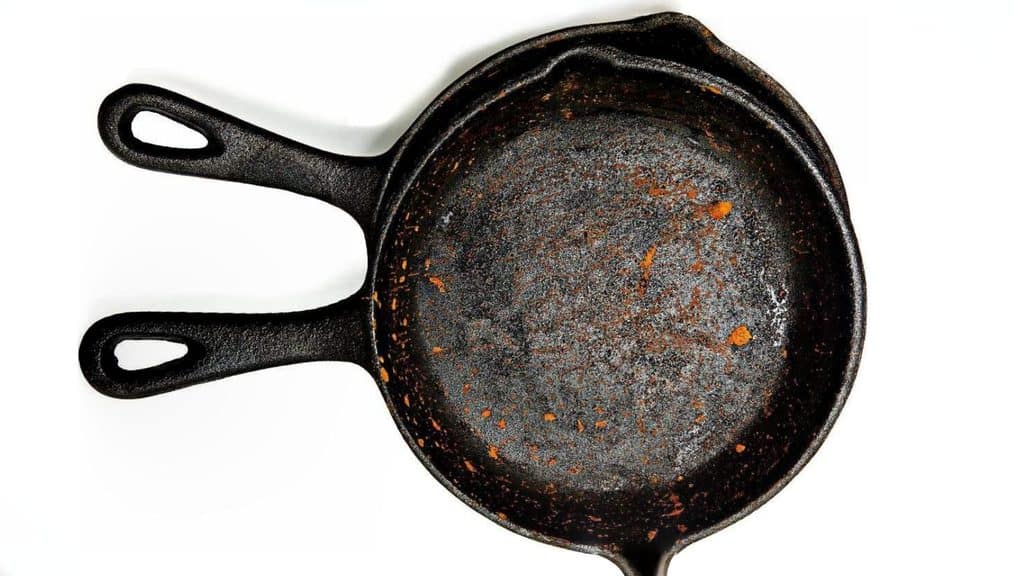
Lodge and other manufacturers season new cast iron at the factory before it ships, which makes it easy to assume the hard part is already done. It isn’t. Most of what circulates online afterward is a mix of decades-old kitchen habits and posts that contradict each other, and sorting out which advice actually holds up takes more than a quick search.
Connecticut’s new label law adds one more piece to that landscape. Beginning July 1, 2026, cookware sold in the state with intentionally added PFAS must carry a warning label and a manufacturer notification to the state, stopping short of an outright ban that won’t take effect until 2028.
Colorado and Maine went further, banning the sale of PFAS-containing cookware outright starting Jan. 1. Bare cast iron, with no coating to disclose, sits outside all three rules, which is one reason it keeps coming up as an option for buyers rethinking what’s in their kitchen. Many of those buyers are starting from zero, and season their pans with advice from a search result.
Extra oil is not extra protection
A sticky, gummy cooking surface usually traces back to too much oil, not too little. After washing, the impulse is to load the pan up, on the theory that more oil means more protection. In practice, it does the opposite, leaving a tacky film that never fully polymerizes and reads to a first-time owner as a ruined pan.
The fix is almost aggressively simple: wipe the excess off until the surface looks dry, not slick, then bake it upside down for about an hour at 450-500 degrees Fahrenheit if it has already gone gummy. Less oil, wiped thoroughly, builds seasoning. More oil, left sitting, undoes it.
Tomatoes are not the enemy; time is
The real math behind cooking acidic food in cast iron comes down to pH and time, not a blanket ban. Canned tomatoes sit around pH 4, milder than the wine or vinegar most cooks assume are equally risky, and keeping cooking time under 30 minutes is a reasonable ceiling for a well-seasoned pan, with more established seasoning able to handle a bit more.
Vinegar sits closer to pH 2.5 and citrus closer to pH 2, acidic enough that the standard advice is to dilute them with water or stock, or reach for a stainless pan for anything vinegar-heavy. A quick shakshuka or fast pan sauce isn’t the threat. An hours-long simmer of tomato sauce, in a thin or newly seasoned pan, is where the seasoning actually starts to erode.
Storage habits do their own damage
One habit most owners never think twice about is stacking cast iron pans and pots directly on top of each other. The iron itself can take a beating, but sudden impacts and the prolonged weight of one pan resting on another can wear down the seasoning underneath. A folded towel, a pan protector or simply hanging pieces separately solves the problem with less effort than most people expect. It is a storage habit, not a cooking one, which may be why it gets overlooked.
A cast iron pan that costs less than dinner for two can still last decades, but only if the habits protecting it are the right ones. The three habits covered here, namely using more oil, avoiding acid altogether and careless stacking, are not neutral. Each one wears down the very layer it is supposed to protect. As PFAS labeling changes what shows up on cookware shelves this year, first-time cast iron owners will need exactly this kind of basic guidance.
The fixes aren’t complicated: wipe off excess oil, do a little math on acid and store pans so they aren’t touching. What changes is whether the seasoning actually holds up over time. Cast iron cared for this way is built to outlast the kitchen it started in, generations of dinners from now, with the same pan still doing the work.
Jennifer Allen is a retired professional chef and long-time writer. Her work appears in dozens of publications, including MSN, Yahoo, The Washington Post and The Seattle Times. These days, she’s busy in the kitchen developing recipes and traveling the world, and you can find all her best creations at Cook What You Love.
The post Cast iron care advice is mostly wrong, and it’s ruining pans appeared first on Food Drink Life.