


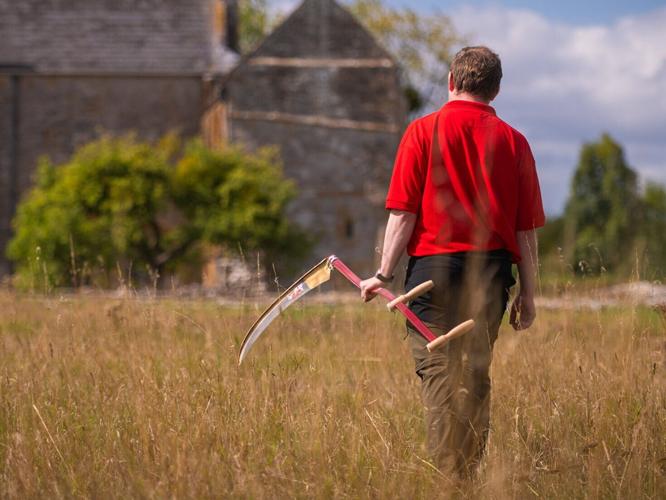
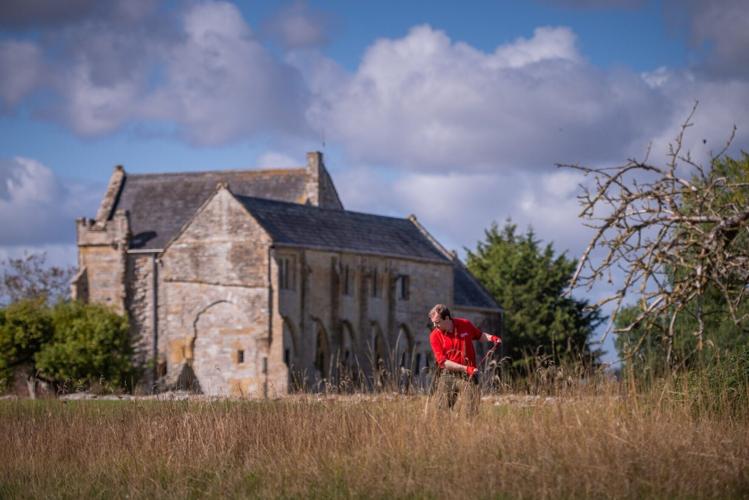
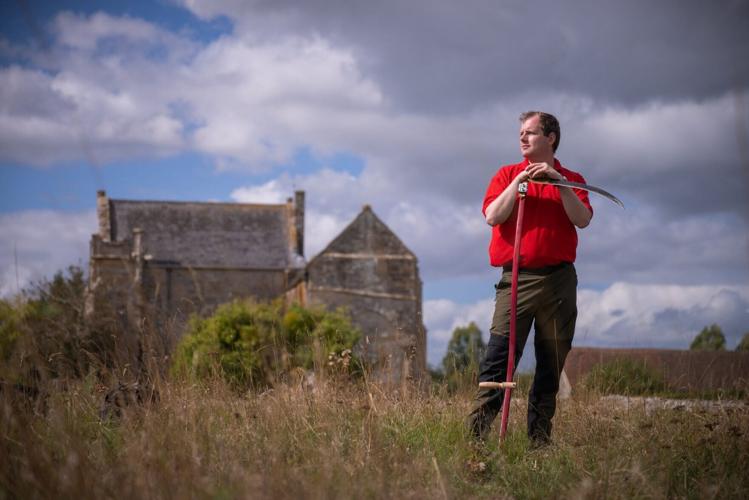
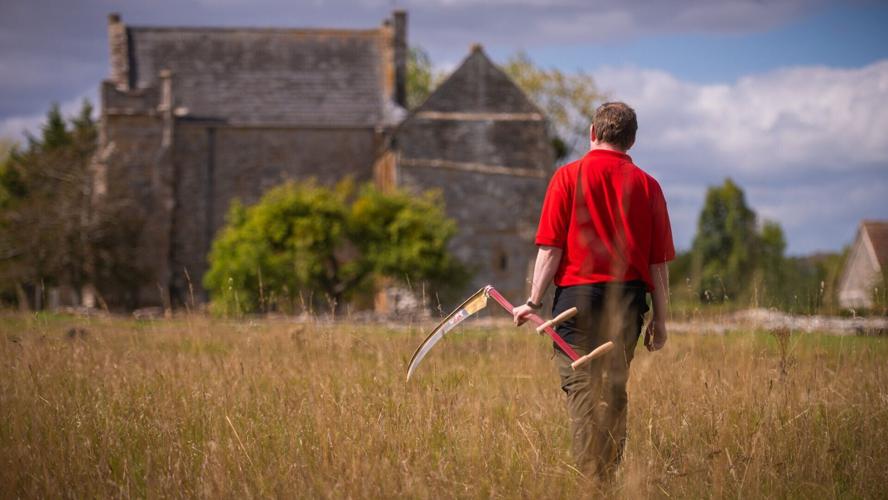


English Heritage volunteer practices centuries-old scything method on the meadows at Muchelney Abbey in Somerset to improve habitat for the Shrill Carder bees. (English Heritage via SWNS)
By Ed Chatterton
Heritage bosses have reintroduced ancient scything methods at a historic abbey to help protect one of Britain's rarest bumblebees.
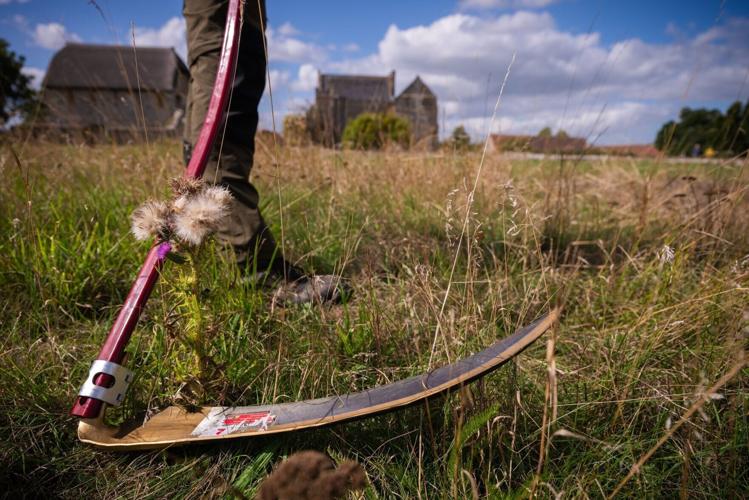
The centuries-old countryside tradition is being revived by English Heritage to help restore meadows at Muchelney Abbey in Somerset, England.
It is part of a three-year plan with the Bumblebee Conservation Trust to improve habitat for shrill carder bees.
The species has suffered significant declines due to the loss of flower-rich grasslands and it is hoped the project will help restore their numbers.

English Heritage volunteer practices centuries-old scything method on the meadows at Muchelney Abbey in Somerset to improve habitat for the Shrill Carder bees. (English Heritage via SWNS)
English Heritage has now recruited a new team of volunteers to undertake work at the site, which dates back to the 7th or 8th century.
The newly formed scything team will use the ancient skill to help care for the meadow and create healthier habitats for wildlife.
Volunteer and community engagement manager, Ginny Slade, said: "Scything is a wonderful example of how traditional skills can still have a role in addressing modern challenges.

English Heritage volunteer practices centuries-old scything method on the meadows at Muchelney Abbey in Somerset to improve habitat for the Shrill Carder bees. (English Heritage via SWNS)
"We hope to help create the diverse, flower-rich habitats that pollinators need while also preserving knowledge and skills that have shaped our landscapes for centuries."
Trained by the Exmoor National Park Authority, the scything volunteers will eventually travel between selected English Heritage sites in Somerset to trial the use of traditional cutting techniques.
Historically, traveling scythers moved from meadow to meadow during the summer months, using hand tools to cut grass and hay.
They were often rewarded for their work with food and drink, including bread, cheese and cider.
Volunteers will also carry out detailed wildlife surveys after being trained by the Bumblebee Conservation Trust.

English Heritage volunteer practices centuries-old scything method on the meadows at Muchelney Abbey in Somerset to improve habitat for the Shrill Carder bees. (English Heritage via SWNS)
An English Heritage spokesperson added: "Rather than simply recording bee numbers, volunteers will monitor the relationship between bees and the wider meadow ecosystem, including which flowers are in bloom, which plants the bees are using, how far bees travel from their nests and how the habitat changes over time.
"Somerset is one of only a small number of areas in Britain where the Shrill Carder bee can still be found.
"By improving habitat at Muchelney Abbey, the project aims to strengthen the conditions needed for this rare species to thrive."
The meadow at Muchelney is one of the 100 meadows that English Heritage pledged to create and enhance to celebrate the coronation of King Charles III in 2023.