


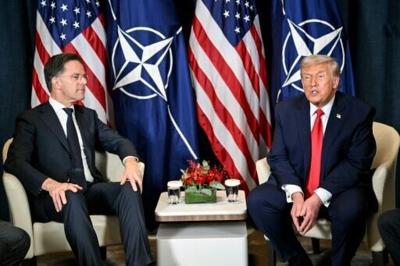
NATO chief Mark Rutte appeared to have pulled off a diplomatic coup by talking US President Donald Trump down from his Greenland demands -- but swirling questions over a purported deal left European allies wary Thursday.
Trump's threats over the vast Arctic territory -- an autonomous part of NATO member Denmark -- had plunged relations between Europe and its key ally Washington into their deepest crisis in decades.
While Europe breathed a sigh of relief that the immediate threat to NATO seemed to have passed, details remains scant on what might have been agreed.
"What is this deal exactly," asked one EU diplomat, speaking as others on condition of anonymity.
The EU's 27 leaders will still hold an emergency summit in Brussels on Thursday evening to discuss how to handle the unpredictable US leader as the sense lingers ties were now damaged irreparably.
"Trump crossed the Rubicon. He might do it again. There is no coming back to what it was," the diplomat said.
"It's good leaders will discuss it as things are unfolding. They all need to understand we need a plan B."
The US leader backed down Wednesday both on threatening to seize Greenland by force and on imposing tariffs against European allies, saying he had reached a "framework" of a deal on the island that satisfies him.
Trump made the startling turnaround after talks with NATO Secretary General Mark Rutte in Davos, who told AFP afterwards that there was "still a lot of work to be done".
The US president insisted the deal gave Washington "everything we wanted" -- however, there was no sign he had succeeded in his repeated vow to make Greenland part of the United States.
NATO insisted Rutte "did not propose any compromise to sovereignty" in his talks with Trump.
That was backed up by Danish Prime Minister Mette Frederiksen who said she was "informed" the issue was not discussed.
"We can negotiate all political aspects: security, investment, the economy. But we cannot negotiate our sovereignty," she said.
- 'Firmness' -
A second senior European diplomat insisted that the threat of a strong EU reaction had weighed on Trump after calls to unleash the bloc's trade arsenal against the US.
"EU firmness and unity have contributed to get him to change his position. Obviously also internal political pressure in the US and market reaction," he said.
While the furore over Greenland might have gone off the boil there were still key questions over the US approach to Ukraine and Trump's mooted "Board of Peace" on Gaza.
Though details remained scant, there was some early praise for Rutte's careful handling of Trump.
"It seems Rutte had a few further tricks up his sleeve," a senior NATO diplomat told AFP.
The alliance chief had raised eyebrows by assiduously avoiding any criticism of Trump and turning the subject to a discussion on bolstering Arctic security more broadly.
"We are not yet 100 percent out of the woods, but I guess we can say another war was prevented," summed up a second NATO diplomat.
del/ec/jxb