
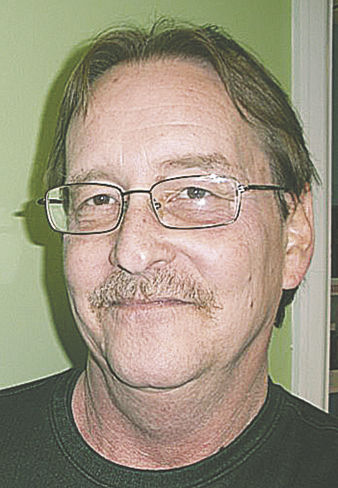
Craig Henning came to his life’s work by a rather whimsical route, said his wife of 10 years, Cherese.
“When he was in high school, he wanted to get into the work/study program to get out of school a half-day, and the only placement the faculty adviser was able to offer was at the state hospital (for the disabled),” she said. “None of the other kids wanted to do it, but Craig was game. And that’s how he got started working with people with disabilities.”
Mr. Henning died Jan. 9 at age 54 of a pulmonary embolism.
He was one of the organizers of the countywide Disability Resource Association, which has headquarters in Festus, in the mid-1990s and served as its executive director since 1999.
Mr. Henning grew up in Florissant and went to Webster University. He worked at a state hospital, then in vocational rehab and finally for Developmental Services of Jefferson County.
“He was part of the group of people who started up the DRA,” Cherese said.
Suzan Weller, director of programming and resources with DRA, worked with Mr. Henning for more than 25 years. She said he was “definitely a guiding force” for the agency.
“He had such strong passions,” she said. “We’d come up with an idea and he’d say, ‘OK, now, let’s figure out how we’re going to get there.’”
From a fledgling group with a tiny staff, Mr. Henning helped shepherd the DRA
to expand its programs and impact.
“We went from a small organization with four core services to this group that has more than 20 programs,” Weller said. “It’s definitely something that we all believed in. We’ve come a long way and done things that seem to break the barriers that nobody would attempt to do.”
Cherese said her husband did not initially envision the job as long-term.
“The (DRA) board asked him to be the interim executive director for ‘a year,’ in 1999,” she said with a laugh. “And he just never stopped. If you asked him why, his answer with a perfectly straight face was, ‘Because nobody else could do it as well as I can.’
“He was not a person who had any notions of false modesty. But then, it’s not bragging if you can really do it.”
Weller said Mr. Henning’s most important role was in speaking up for those with disabilities.
“His biggest asset was his advocacy,” she said. “I worked with him closely on dealing with legislators. That was his thing; the ones who can’t fight for themselves are the ones who get cut first when it comes to programs.”
Weller said about half the DRA staff have disabilities themselves, and Mr. Henning treated them with dignity.
“He had a kind heart,” she said. “He treated everyone equally in the sense that he didn’t see any difference in their spirit or their intelligence. Everyone has something to offer; they just need help and some encouragement. He felt each individual had the right to live the best life they could.”
And he wasn’t afraid to get involved on a personal level.
“There was a man who needed to get to dialysis three days a week and couldn’t find any transportation in the area to take him,” said Nancy Pope, another original DRA staffer who is still with the organization. “Craig would get up early and pick him up and take him at 6 a.m., then go back later in the day and take him home.”
Away from the office, Mr. Henning spent time fishing, going to baseball games and hanging out with his stepson, Travis Ruckman, 25.
When Travis’ mother and Mr. Henning were married in 2006, the two males quickly bonded.
“He was a good dad,” Travis said. “He made me feel like his own, and we did everything together. My son, Konnor, was his pride and joy.”
The three generations worked together on Mr. Henning’s main hobby, breeding and selling tropical fish.
“He had more than 80 tanks,” Travis said. “He has a ‘fish room’ downstairs with racks built of cinder blocks and landscaping timbers. Then he had outdoor pools as well.”
A 30-year member of the Missouri Aquarium Society, Mr. Henning was self-taught.
“He started out small, just breeding bettas,” his son said. “He never took any classes; he just learned it all on his own on the fly.”
Mr. Henning found his “fish room” a place of refuge.
“I’d get up in the middle of the night and there’d be a note on the counter: ‘Fish room. Back in five.’ but I knew it wasn’t going to be just five minutes,” Cherese said. “It was basically his way of decompressing.
“And he was fascinated with the genetics side of it. He was interested in biology and zoology in college, and he often said if he hadn’t stayed in disability services, he would have gone into animal work of some kind.”
Mr. Henning was diagnosed with lung cancer about a year ago, and underwent chemotherapy and radiation.
“It was going really well,” Travis said. “Then, that day, he wasn’t feeling well and woke up my mom. They decided to go to the ER, but the doctors didn’t find anything and were going to keep him for observation. Then, just out of the blue, a pulmonary embolism happened that afternoon.”
Cherese said her husband loved to visit Sanibel and Captiva islands off the coast of Florida, and wanted to retire there.
“In the last few years, he started focusing more on his family. He started figuring that it would be good to relax a little bit.”
Weller said the DRA will miss Mr. Henning’s leadership, but the mission continues.
“We have the same vision he did, so we’re going to continue the work,” she said. “We’ll get bigger, help more people. We see that as a tribute to him.”
“Life Story,” posted each Saturday on Leader Publications’ website, focuses on one individual’s impact on his or her community.