



Jefferson County’s state legislators have accepted $47,947.84 in gifts from lobbyists over the past four years.
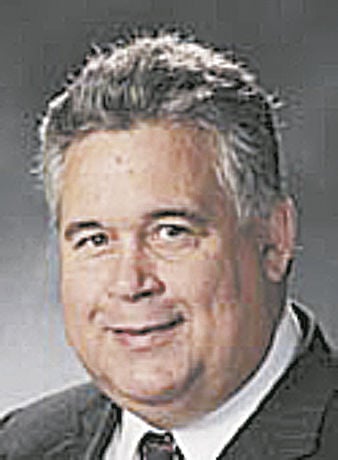
State Sen. Paul Wieland (R-Imperial) is the county’s top gift-getter, receiving $23,690 in lobbyists’ gifts between 2015 and 2018, according to reports lobbyists have filed detailing gifts to state legislators.
In fact, Wieland tops the list among all members of Missouri’s General Assembly, including 43 senators and 214 representatives, the reports show.
Mike Revis (D-Fenton), who was elected in a February special election to replace 97th District state Rep. John McCaherty (R-Fenton), is at the bottom of the list. He hasn’t received any lobbyists’ gifts so far, according to the reports.
Most of those reports show lobbyists forking over lots of money to lawmakers for food and drink.
“It is the peak season for the restaurant industry in Jefferson City, to be sure,” said state Sen. Gary Romine (R-Farmington), who received $9,230.70 in gifts from lobbyists over the past four years, ranking 10th on the list of the Missouri senators who got gifts during that period.
Romine’s District 3 takes in the south part of Jefferson County while Wieland’s District 22 takes in north Jefferson County.
By law, registered lobbyists are required to file monthly reports with the Missouri Ethics Commission detailing what they give to elected officials, their staff members and their family.
Wieland
Wieland said his spot at the top isn’t what it appears to be.
“I believe in total transparency. That’s why I’m No. 1, if really I am No. 1,” he said. “I believe I’m the most honest politician in Jefferson City. I don’t play the games with these figures, and it’s a very simple game.
“I go to every dinner, every event that the others go to, but others, when they get the reports back from the Ethics Commission, will call that lobbyist and say, ‘You spent $200 on that’ and write that lobbyist a check for $200, but then turn around and say, ‘You need to send my campaign fund a $200 check.’ That’s dishonest, and a lot of people play that game. Then they stand in the hall and say, ‘I don’t take lobbyists’ gifts.’
“But I want my constituents to know if Joe Schmo bought me a 50-cent cup of coffee or if another guy paid $75 for me to go to a baseball game.”
Dedrick Lee, a professor of political science at Jefferson College, said there are two ways to look at the issue.
“I think the mystery lies in the intent of something like that,” he said. “There are times when legislators need to do research and fact-finding. In one sense, a dinner or social event could be time when they are trying to learn about issues they’re facing. In another sense, you can see where someone is going to think that someone’s trying to use their influence.”
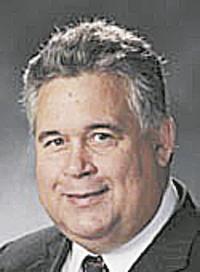
State Rep. Dan Shaul (R-Imperial), who ranks 57th among the state’s representatives surveyed over the last four years, was the top gift-getter among Jefferson County’s seven-member contingent in the House of Representatives, with $4,246 accepted since 2015. (See list for all county legislators.)
Lobbyists provide information
Shaul said he’s interested in finding facts when dealing with lobbyists.
“When I speak with a lobbyist, my question is how is this going to affect the people of my district and the people of the state and why should I vote the way they’re asking me to vote,” he said. “I want to hear both sides of the issue. But it doesn’t work the way people probably think it works. No one says, ‘You vote this way and you’ll get this.’
“My job as the representative of the 113th District is to learn as much about the issues that affect my constituents as I can. You can go out to dinner with someone, away from the hustle and bustle of the Capitol building where someone’s always calling, or popping into your office every couple of minutes. Sometimes it takes going out to dinner or even a baseball game to get some uninterrupted time to learn about an industry.”
Wieland agreed.
“Mainly, lobbyists want to be heard,” he said. “They want a chance to tell their story on behalf of who they’re lobbying for. And we deal with so many topics, I can’t be an expert on everything, so it’s a chance to learn about an issue before I have to vote on it.
“Another thing people don’t understand about lobbyists is that most of them don’t represent big corporate giants who don’t care about people. There are lobbyists for unions, for nonprofit groups, for other groups that represent everyday people. Like any other profession, I think 90 percent of the lobbyists want to do a good job. It’s the 10 percent that you hear about that cause all the problems.”
Romine said the public’s conception of a high-priced dinner at a swanky restaurant is usually far from the truth.
“A lot of it is done in the office, having something brought in,” he said. “Sometimes it’s as simple as bringing in Jimmy John’s (sandwiches) or pizza. It’s more efficient to try to get things done in the office. Most of what I’m interested in hearing is how a piece of legislation will affect the real world, and lobbyists can fill in a lot of that information.”
Wieland echoed his Senate colleague.
“A lot of people have a lot of misconceptions on how this works,” he said. “I might actually go out to dinner with a lobbyist maybe one night a week. The other nights, we’re at the capitol, working. A lobbyist may say, ‘Can I order in some pizza for you and your staff?’ They’ll order in a few pizzas, report that they spent $45 on pizza for me, but I may have eaten a piece or two and I’m sometimes not even in the office at all because I’m on the Senate floor rather than in my office.”
Wieland noted that the biggest-ticket item on his reports were two tickets, valued at $330 each, for him and his wife to attend the Winter Classic outdoor hockey game in January 2017, courtesy of the Major Brands Premium Beverage Distributors group.
“To tell you the truth, they’re more social events than they are talking about business,” Wieland said. “Someone wanting to know you more as a person, asking general questions like, ‘How’s it going this session?’ or ‘How’s your family?’ Someone who wants to sit at a sporting event and talk about the nuts and bolts of a policy decision, that’s probably going to backfire on them.
“And really, that’s not what most of the dinners are about, either. Usually the finer points of policy are discussed when someone makes an appointment with me in my office.”
Shaul said generally, he’d prefer not to attend entertainment and sports events on a lobbyist’s dime.
“Sometimes that’s not such a great deal,” he said. “I have to talk business, rather than just watch the game, which is what I’d prefer to do.”
Shaul said his biggest gifts didn’t end up going to him.
“Every year, the Windsor School District charters four or five buses and bring their fourth-graders (who are studying state government) up to the Capitol,” he said. “The first year (Shaul took part in their visit), they brought bag lunches and it was terrible. I said, ‘Let me see what we can do about this.’
“I went to the Association of Missouri Electric Cooperatives and they were willing to buy pizzas for the kids. I think I might have gotten one slice. The Missouri Beverage Association offered to chip in for water for the kids and soda for the teachers.
“My district doesn’t even have an electric cooperative, but that group wants to get kids up to the Capitol and learn about the process. The taxpayers shouldn’t pay for their lunches and I don’t think I should, either. I’m happy that someone else is paying for them.”
Gifts don’t mean influence
Romine, whose family owns the Show-Me Rental chain, said the custom of mixing business and pleasure isn’t a foreign one for him.
“It’s just part of the process,” he said. “That said, it is embarrassing that some of my colleagues have taken a large amount of gifts. I understand why constituents aren’t happy seeing that.”
Shaul said lobbyists understand that giving him a $15 meal isn’t going to buy his vote.
“And I can’t be bought with baseball tickets, either, or anything else. I’m not going to be bought,” he said.
Wieland agreed.
“In most respects, it’s not even necessary in my case because I have an open-door policy,” he said. “Almost anyone who wants to come in and talk with me, I welcome, even if I don’t necessarily agree with you. And that doesn’t matter whether you buy me a pizza or not.”
Why not just refuse?
State senators and representatives receive a $35,915 annual salary, plus mileage and $113 per day in expenses for each day the General Assembly is in session. So, wouldn’t it be easier to decline all gifts from lobbyists?
“It’s very easy to say you shouldn’t accept gifts, and maybe we shouldn’t,” Shaul said. “But those are the rules we have in place now. I’ve voted every time to get rid of accepting lobbyists’ gifts, and I will again. But until the rules are changed, I’ll play by the rules we’re given. We all might hate the designated hitter rule, but when the Cardinals go to play the Royals in Kansas City, they’re going to use the DH because the rules allow them to.”
He said lobbyists play an important function.
“Because of my position in the House (including serving as vice chairman of the financial services committee), I take it as a sign of respect that people want to educate me on their industries,” Shaul said. “If I can sit down with the executive vice president of CitiBank and find out about how legislation on the banking industry affects the people of my district and Jefferson County, I think it’s my duty to educate myself. I’m not a passive legislator, someone who just sits there and watches things happen. I try to get things done. My job as a representative is to learn what I can before I cast a vote.”
Romine said he, too, supports efforts to change rules regarding lobbyists’ gifts.
“It would be easier not to take gifts,” he said. “I would be in support of any piece of legislation passed that would prohibit gifts of any kind. For many of us, it’s not a problem, but some are taking it to the extreme. Again, coming from the business world, talking business over lunch or dinner is a normal thing. But it’s a practice that should be looked at. I can see the frustration from the public.”
Wieland said interacting with lobbyists is an integral part of the lawmaking process.
“Yes, it might be (easier not to accept gifts),” he said. “But in Jefferson City to get anything done, knowledge is power. If I learn over a slice of pizza with Lobbyist Q that Senator X has a problem with a bill that I’m trying to pass, that’s information that I need to know. I could sit in my office and not socialize with anyone and on these lobbyists’ reports look like a good little choir boy, but I wouldn’t be getting anything done. I’d be a terrible legislator.”