


The effort to connect Jefferson County to a prescription drug monitoring program started by St. Louis County is gaining momentum.
The Jefferson County Council is scheduled to discuss the idea at its work session on Monday, Nov. 14.
The work session, which will begin at 6 p.m., will be followed by the council’s regular meeting at 7 p.m. Both will be held at the Jefferson County Administration Center, 729 Maple St., Hillsboro.
The monitoring program is a database that tracks the distribution of controlled medications prescribed by doctors and dispensed by pharmacists and can be accessed by both.
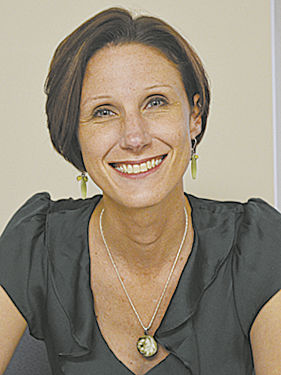
Such efforts elsewhere have been linked to a reduction in prescription drug abuse, said Kelley Vollmar, director of the Jefferson County Health Department, who noted that Missouri is the only state that does not have a prescription drug monitoring program.
Vollmar will give the presentation before the County Council.
County Council chairwoman Renee Reuter (District 2, Imperial), who sets the agenda for work sessions, said the council would likely hear the presentation on Nov. 14 if there were “no foreseeable changes,” but she declined to comment on the program yet.
“I’ve heard from citizens who are both for and against it,” she said. “I’m really interested in hearing the presentation.”
Those lining up on the proponents’ side, in addition to the Health Department, include Mercy Hospital Jefferson, Comtrea and the Jefferson County Drug Prevention Coalition, Vollmar said.
“We’ve had tremendous support,” Vollmar said. “The pharmacists want it; the doctors want it. It’s not just social services that want it, but the individuals (physicians and pharmacists) who will be most greatly impacted by it.
“(Registries) lead to a dramatic reduction in prescription abuse – double-digit reductions,” Vollmar said.
County can join existing system
Although Missouri does not maintain a statewide database, St. Louis County set one up earlier this year and has invited other counties to participate.
The Jefferson County Council would need to pass an ordinance to join. The cost to the county is estimated at $2,400 per year, Vollmar said.
The database prevents people from getting multiple prescriptions for controlled medications that could then be abused or sold, Vollmar said.
St. Louis County’s database is accessible to both doctors, who file information about prescriptions issued, and pharmacists, who add information about controlled substances that are filled.
Linda Hardgrave, chair and program coordinator for the Jefferson County Drug Prevention Coalition, said that the program’s main purpose is to reduce the practice of “doctor shopping,” defined as a patient going to seven or more doctors or seven or more pharmacies within 90 days, and abusing or selling excess medications.
The ability to track prescriptions will help patients, she said.
“It could be that a patient is finding they need more and more medication to take care of the pain or the person has gone too far and become addicted,” she said.
Having access to a database will allow doctors and pharmacists to intervene and help people get help for addictions, she said.
“The program also prevents people who are drug dealers from getting the drugs to sell out on the street,” Hardgrave said.
After Arkansas started a database in March 2013, instances of “doctor shopping,” fell by 73 percent, Vollmar said.
Prescription opiods, a gateway drug to heroin
According to the National Institute on Drug Abuse, the use of prescription opioids is a risk factor for heroin use. A poll of young urban intravenous drug users in 2008 and 2009 indicated that 86 percent said they abused prescription opioids before they used heroin.
In Jefferson County, deaths from overdoses continue to climb. In the first nine months of 2016, 21 people died from an overdose of heroin, morphine or other opiate. Another 18 people died from an overdose of the prescription drug fentanyl, a statistic that is climbing, according to the Jefferson County Medical Examiner’s Office.
Fentanyl is a synthetic opioid similar to morphine but 50 to 100 times more potent. Most fentanyl that is abused is made in underground laboratories, officials said.
Opting in
Other counties in Missouri are joining St. Louis County’s program, including St. Louis city and St. Charles County.
While Jefferson County would need to pass an ordinance to join St. Louis County’s program, individual cities in Jefferson County also would have to pass their own legislation.
“We have a unique situation in that we have several independent municipalities that will have to pass a resolution in order to join the county,” Vollmar said.
Two cities, Kimmswick and Arnold, have passed resolutions so far, Vollmar said.
The Arnold City Council’s resolution, which urges the county to join the St. Louis County program so that Arnold then could opt in, passed unanimously on Oct. 20.
At least three more cities – Crystal City, Hillsboro and Pevely – already are considering resolutions.
Program set up to help
Vollmar said the purpose of a monitoring program is to help those caught in the cycle of drug abuse – not to catch people breaking the law.
“This is not a system that is going to punish people,” she said. “Its purpose is to identify and intervene.”
She conceded that a possible consequence of the county joining a monitoring program is that some abusers of opioid pain medications will instead turn to heroin, Vollmar said.
“Initially, heroin use will rise but that’s in the short term. Then it should reduce quickly,” she said.
Vollmar said Jefferson County officials need to step up to fight drug abuse.
“We want to make sure this gets through. This is important,” she said. “There are a lot of ripple effects for having a large drug issue in your area. The social implications of not having this in place are huge.”